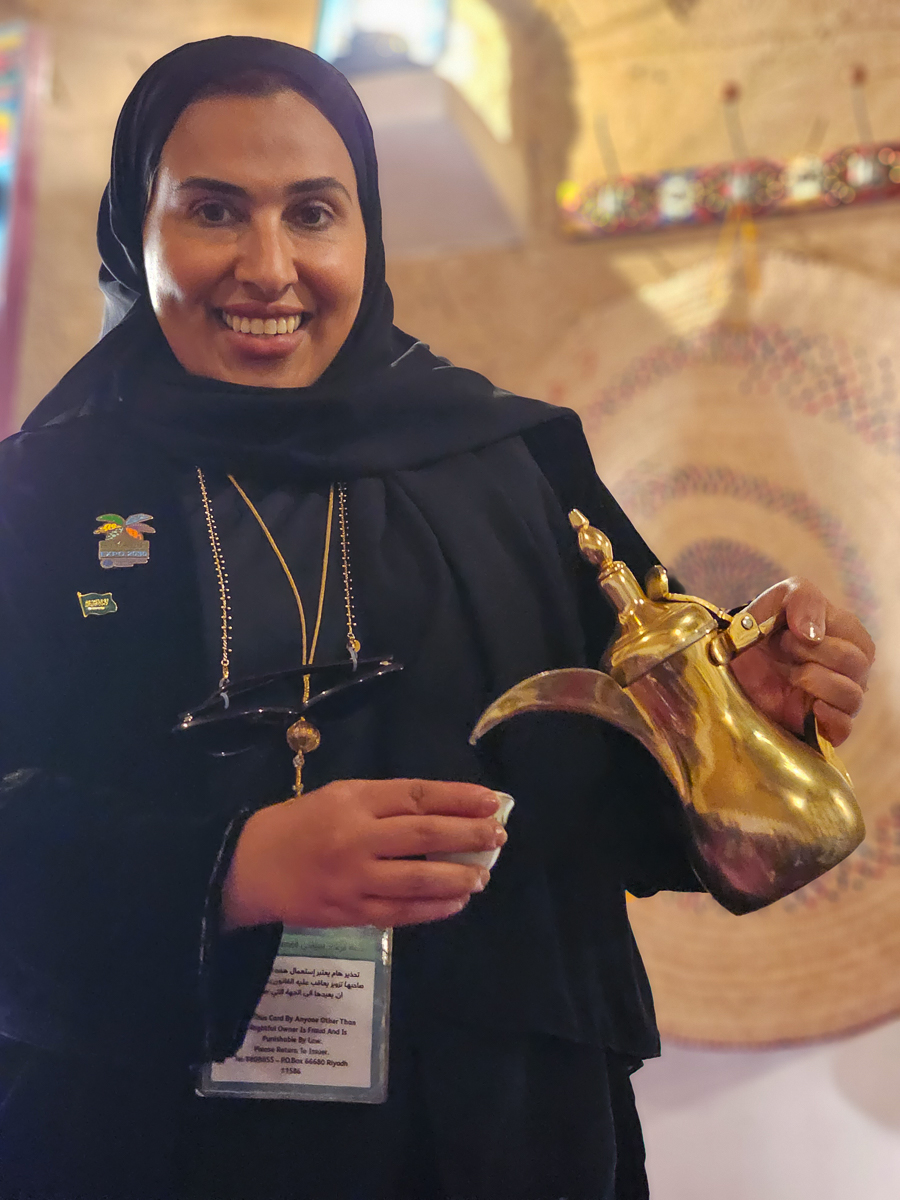
Our guide explained that it is normal to have Arabic coffee before and after the meal, but since we were running late, we only had it after. Also, the server brought in some burning oud wood incense, which is passed under clothing and around a person to mask the food smell. I noticed that the whole area had the smell of oud incense. After lunch, we headed to experience the Sky Bridge.
RIYADH CON'T
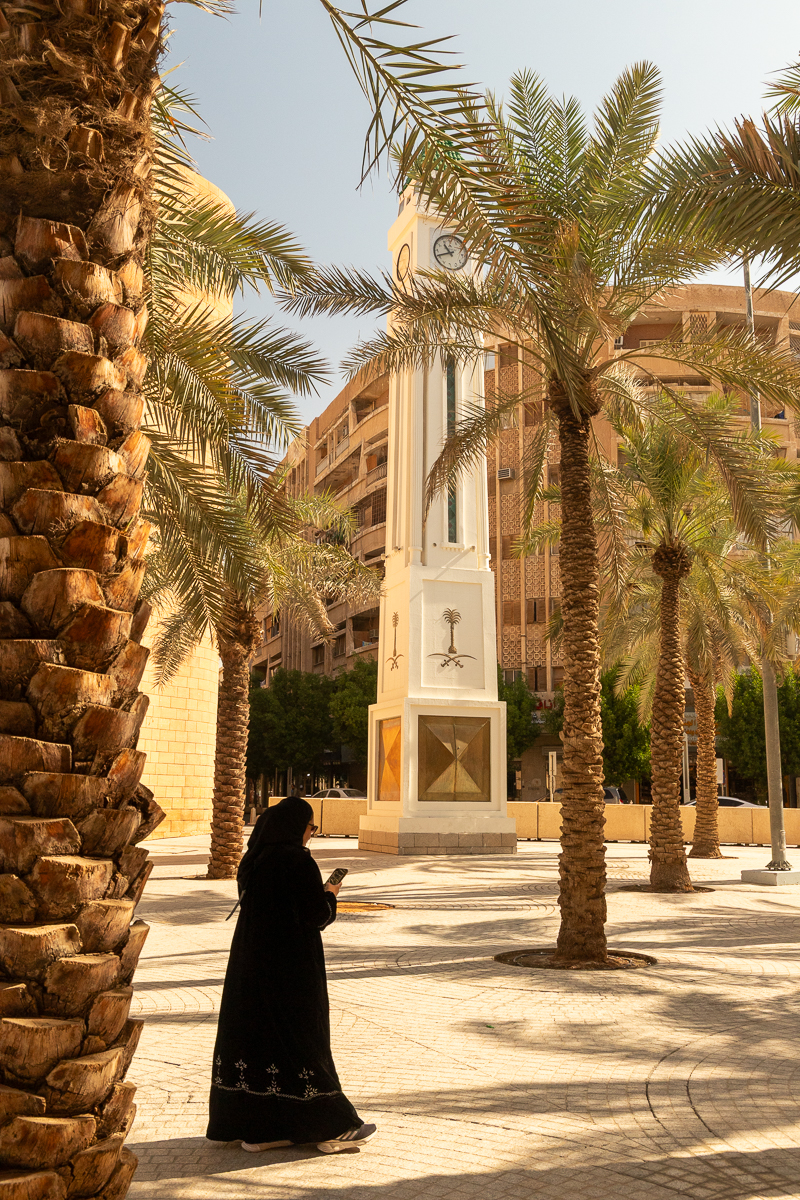
After visiting the museum, we wandered through the men’s market. Along the way, we saw the national emblem displayed once again. In the photo on the right below, our guide is on her cell phone. The ubiquity of cell phones still catches me off guard. I think I’m in a very “remote” place—like the African desert—only to spot a shepherd chatting away on a mobile phone.
I had imagined, incorrectly, that Saudi women might be somewhat sheltered from the more modern twenty-first-century technology. Not so. Many of them seemed more adept with their phones than some of their American counterparts.
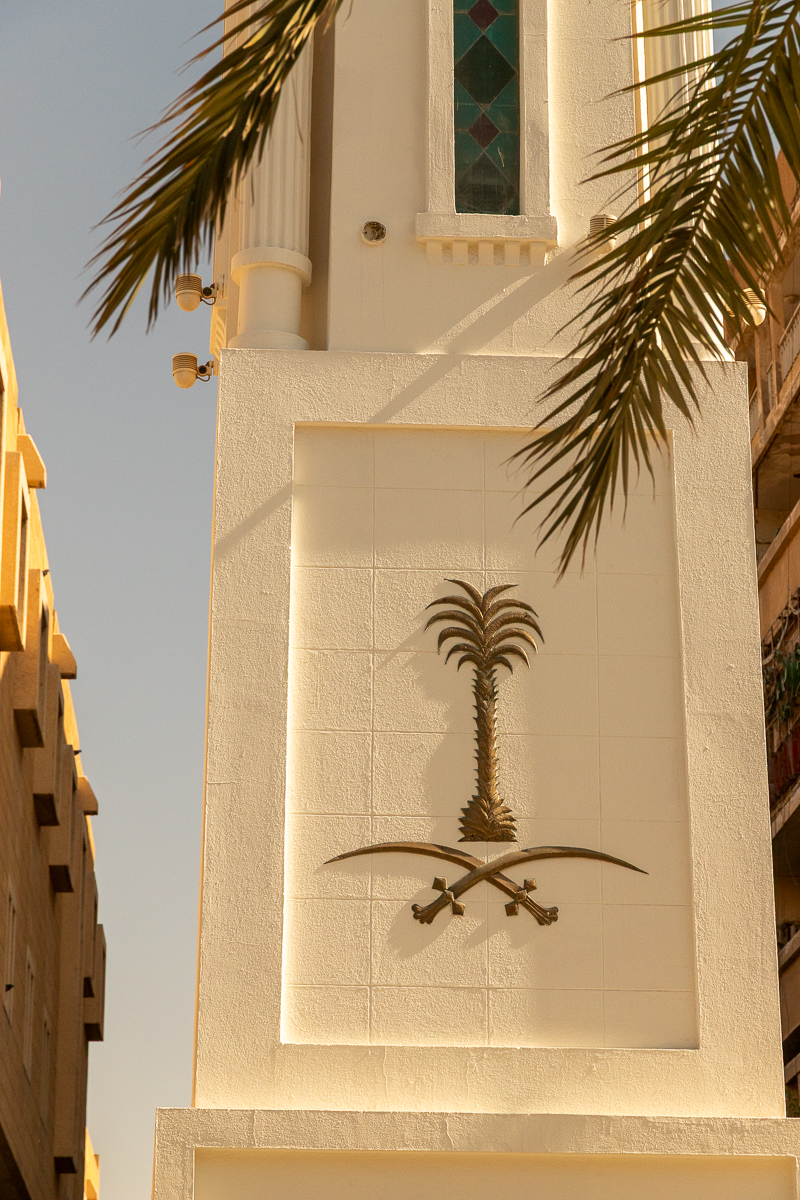
SAUDI ARABIA'S EMBLEM
We started at a rug shop and had a great time looking, and each of us left with one or two rugs. The bright colors were just so attractive. Now, of course, I need to pack them in a suitcase to take back to Dubai and then to the US. We also toured a shop that sold men’s headscarves, called kaffiyehs, and the owner showed us how he made the black bands, called iqals, that hold the scarves in place. These are made from camel hair.
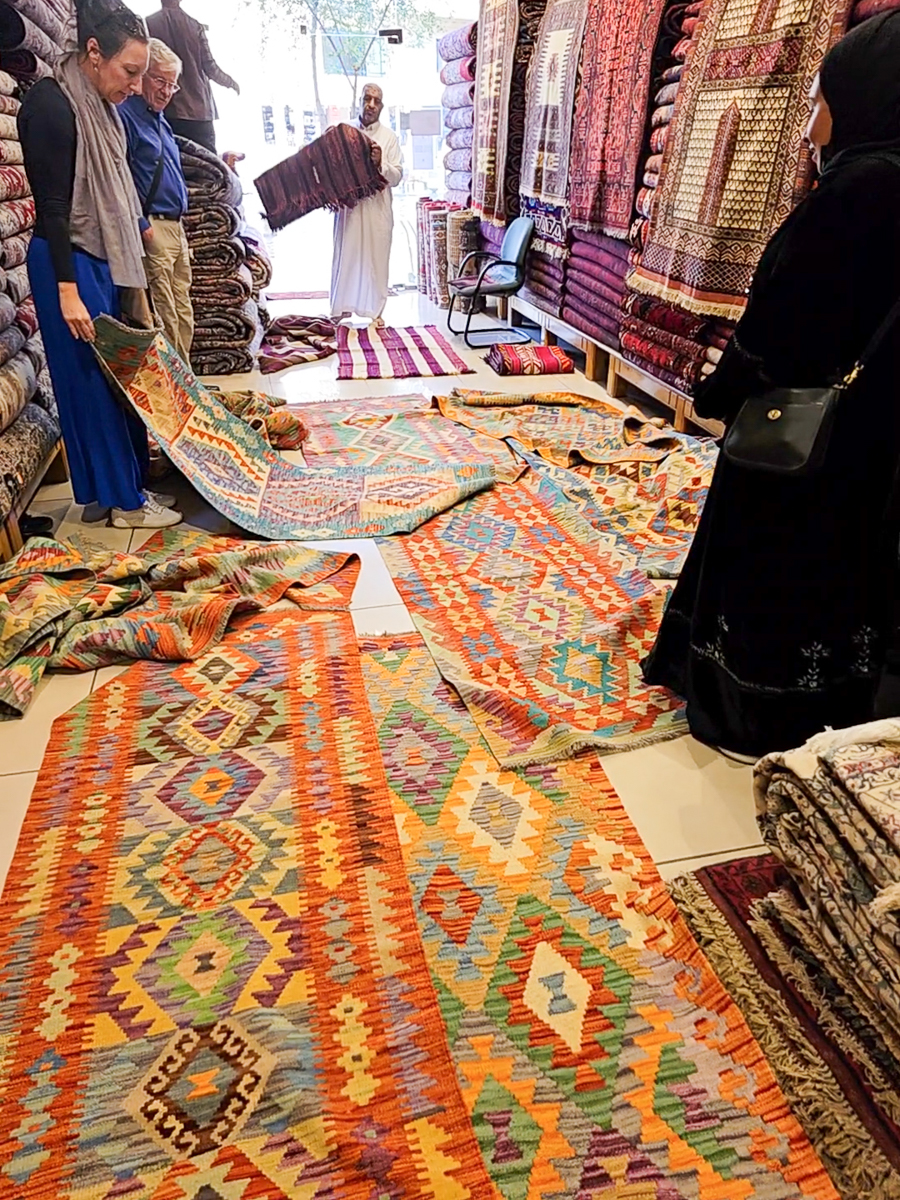
ARABIA RUGS
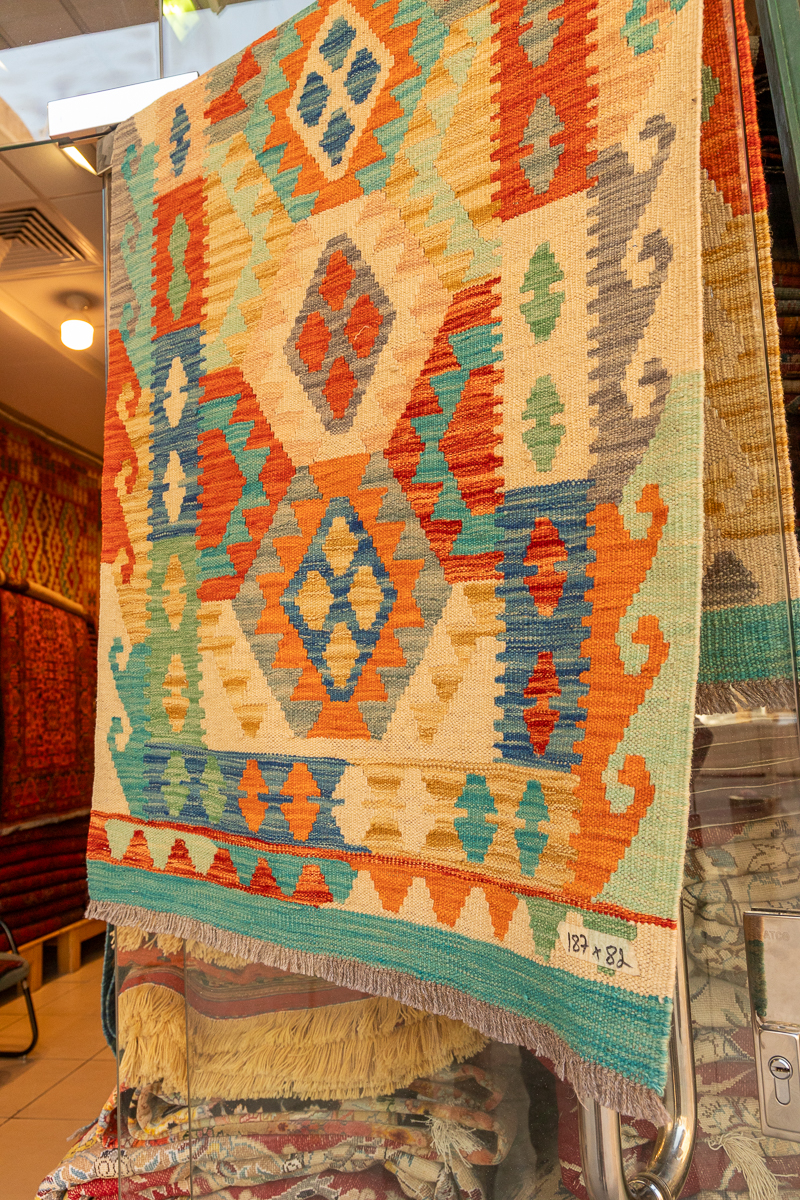
ARABIA RUGS
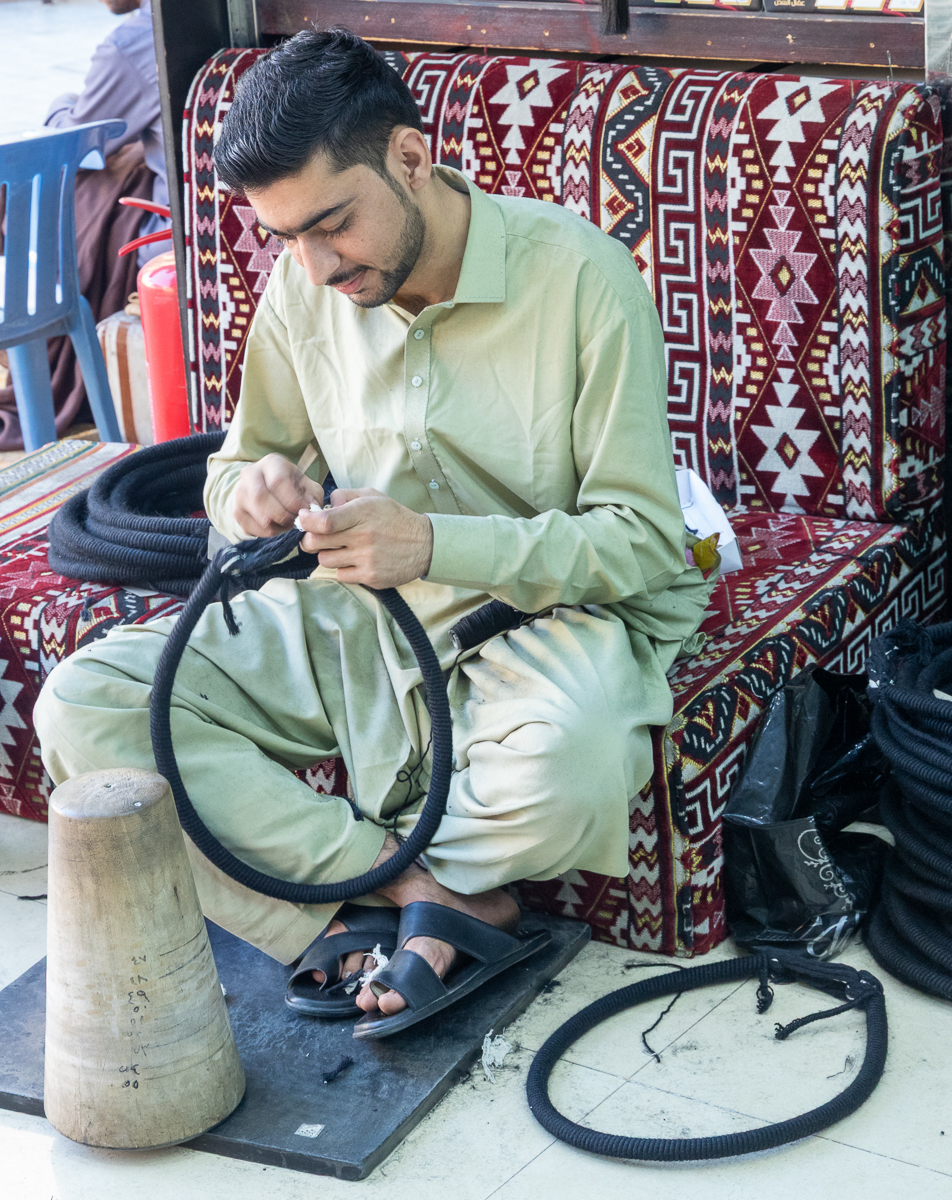
MAKING THE IGAL
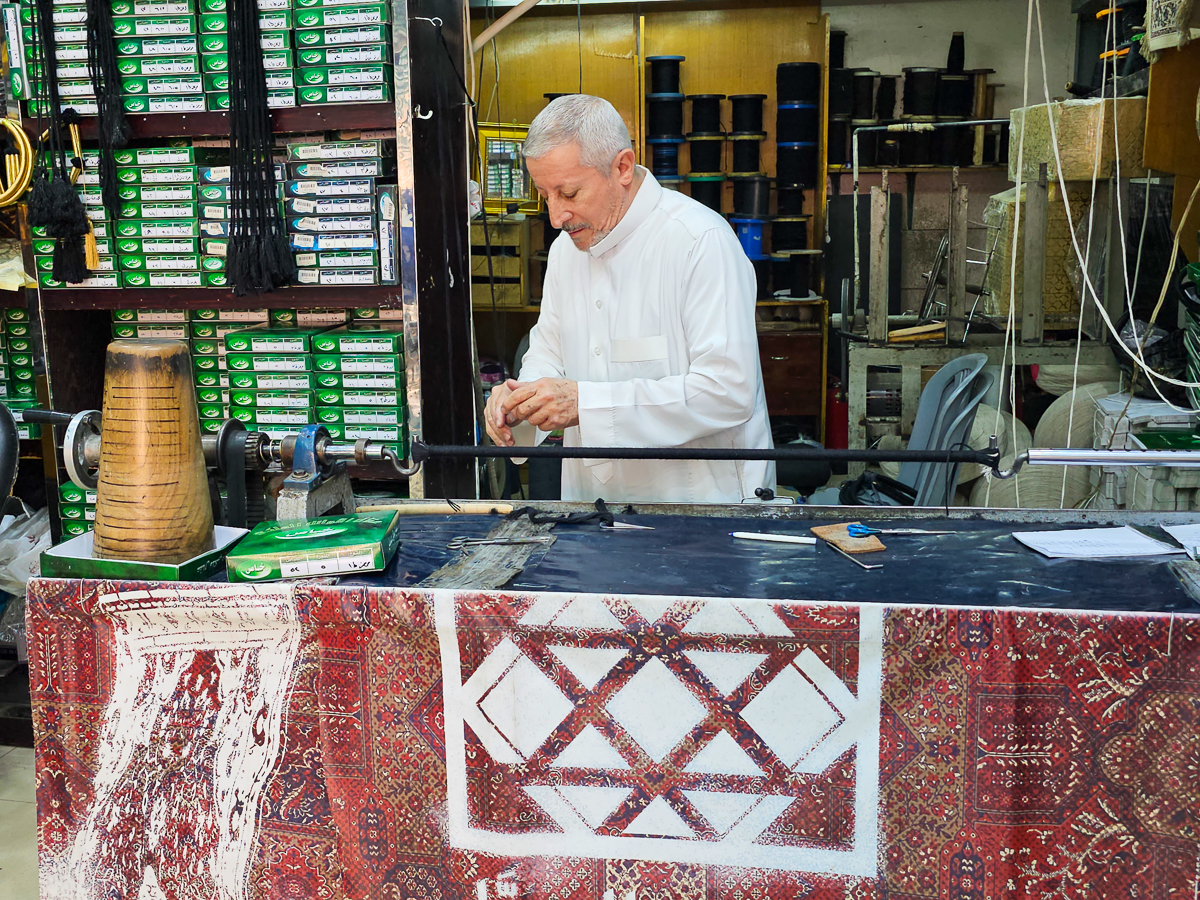
MAKING THE IGAL
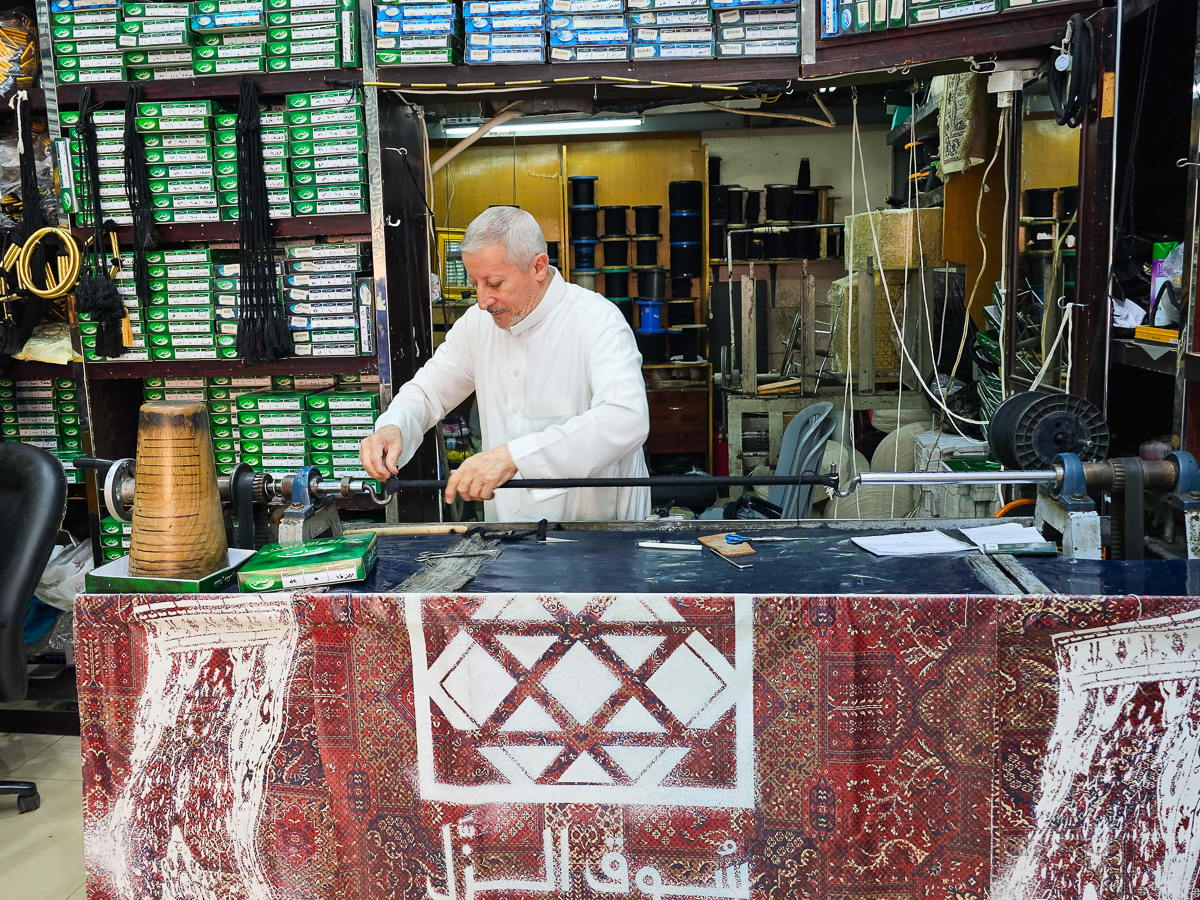
MAKING THE IGAL
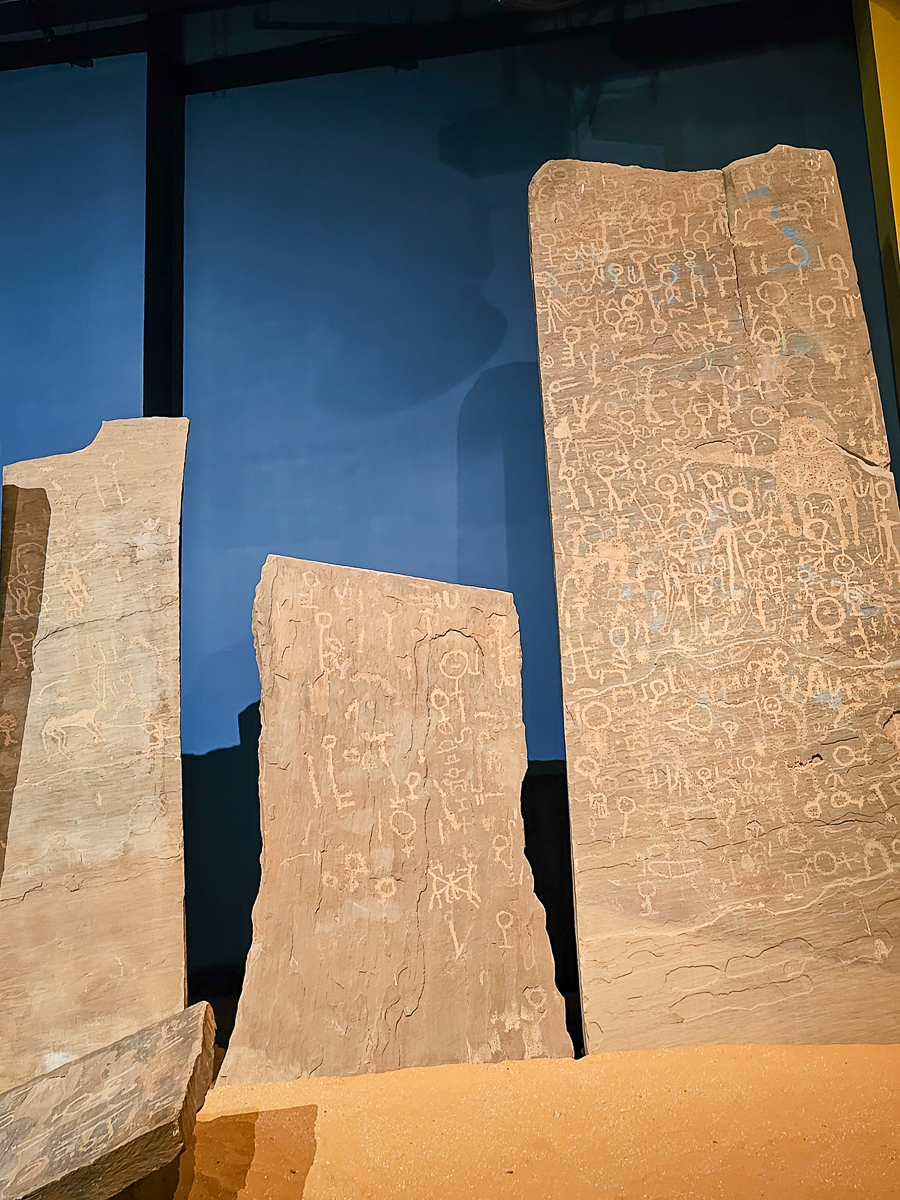
NATIONAL MUSEUM
After shopping, we visited the National Museum, where we weren’t allowed to take photos with my camera—only with my phone. Inside the museum was a prayer room, which shouldn’t have been surprising. They’re common in most public places, like airports. I find it interesting to fly in this region of the world, because the entertainment center features a countdown in minutes to the next prayer time for your location.
The Standing Stone at left is among the earliest known monuments in Arabia and were erected in the fourth millennium. BC. The various ancient symbols and inscriptions on the panels represent the changing civilizations in the region.” (from plaque for the stones)
National Museum National Museum
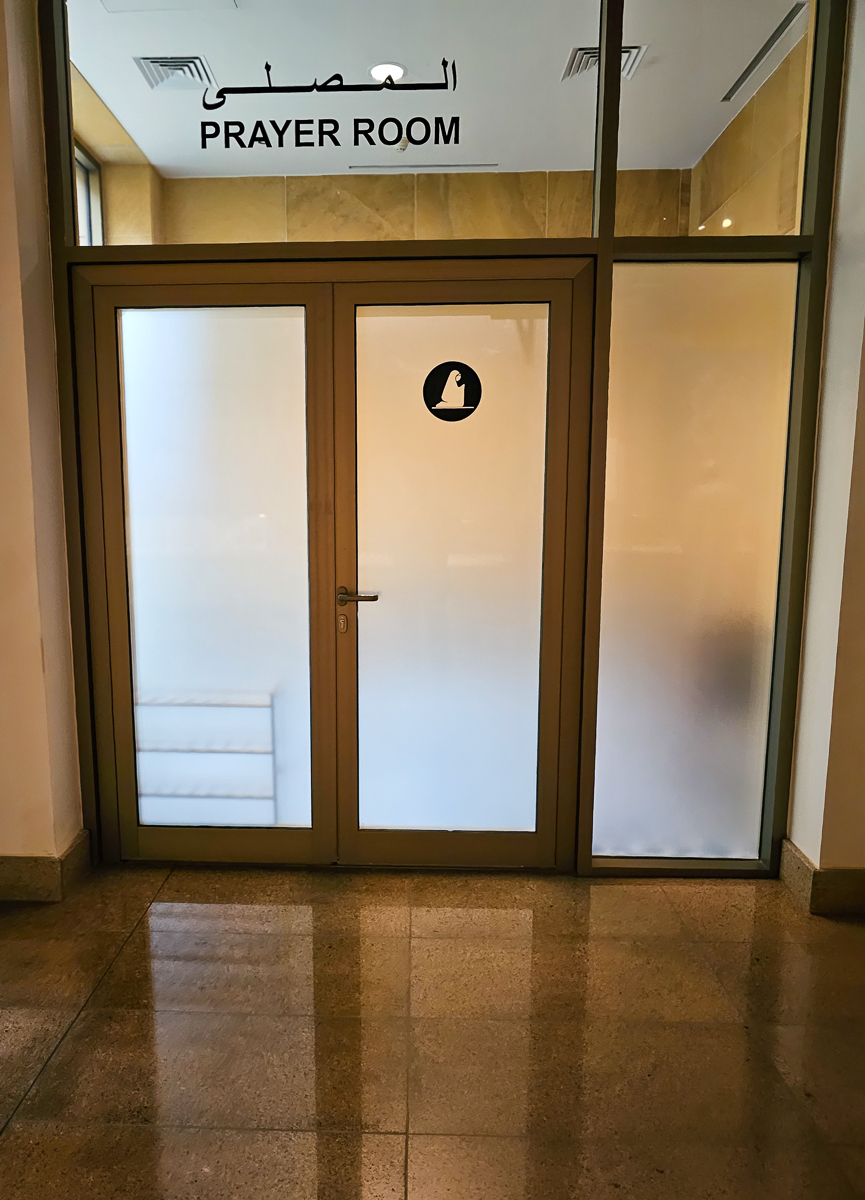
NATIONAL MUSEUM
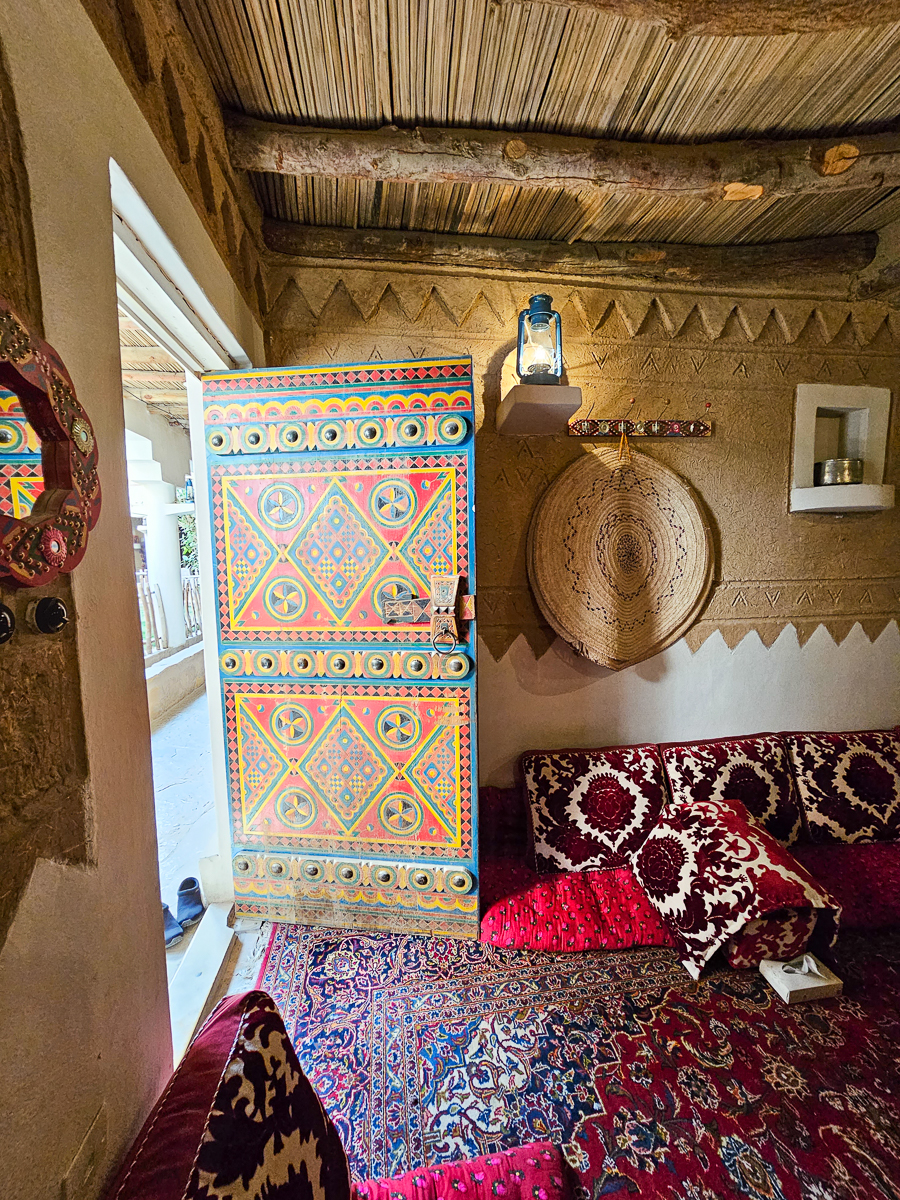
NAJD VILLAGE RESTAURANT
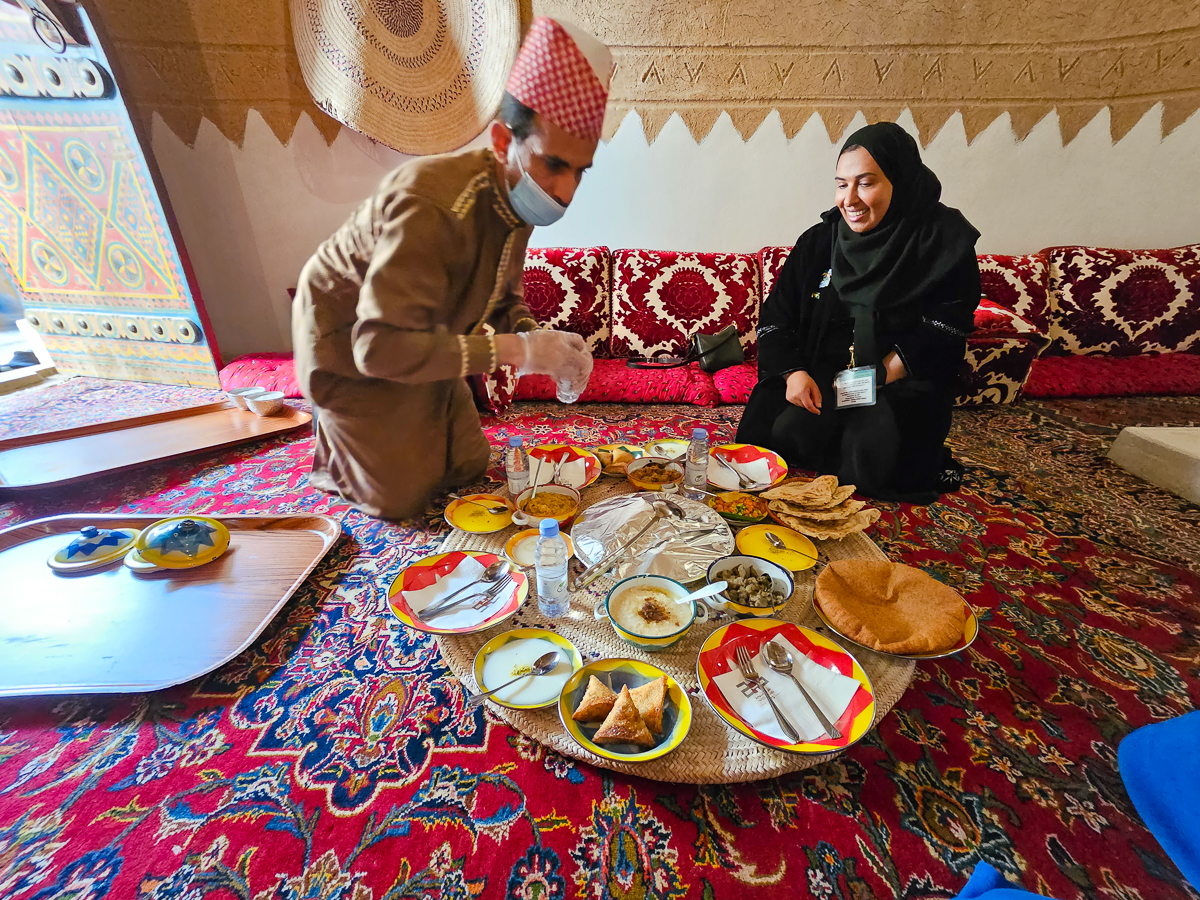
NAJD VILLAGE RESTAURANT
NAJD VILLAGE RESTAURANT
NAJD VILLAGE RESTAURANT
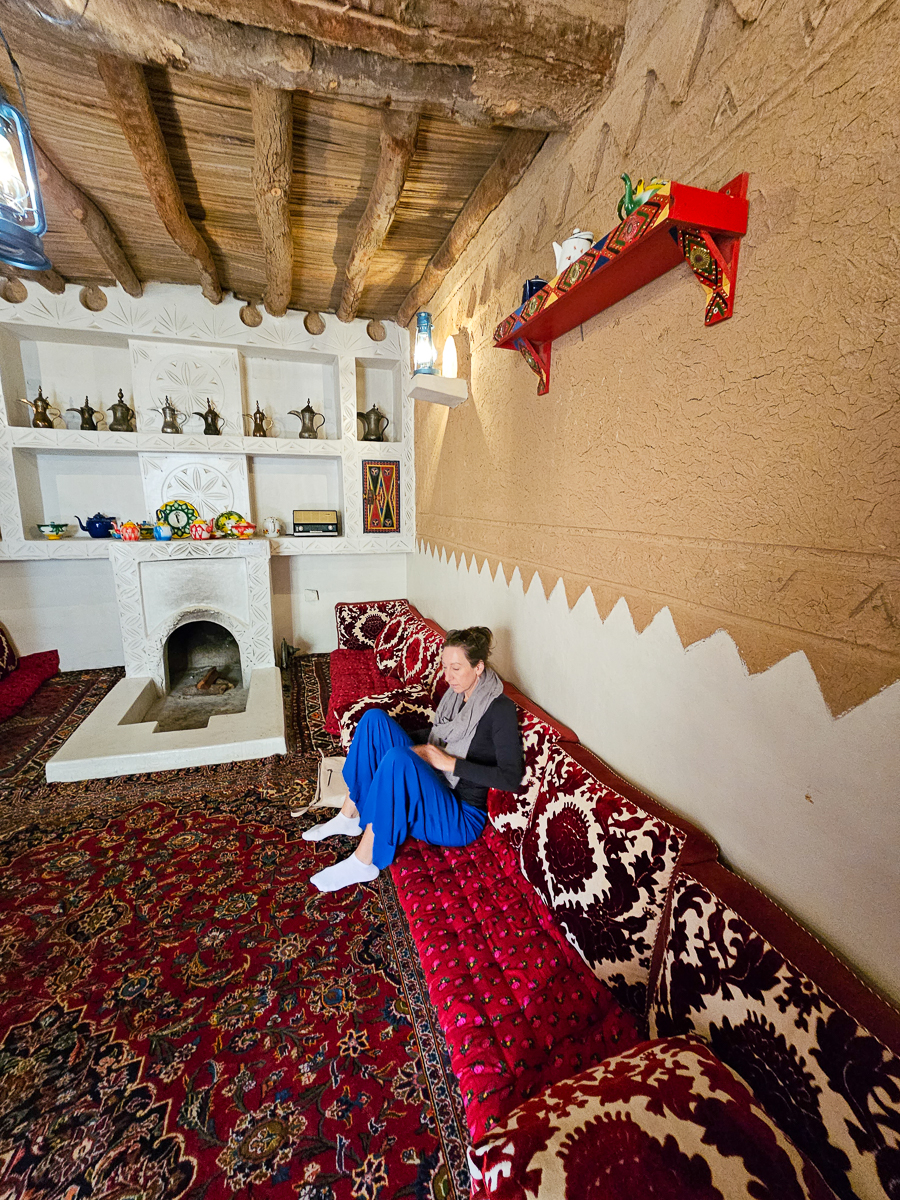
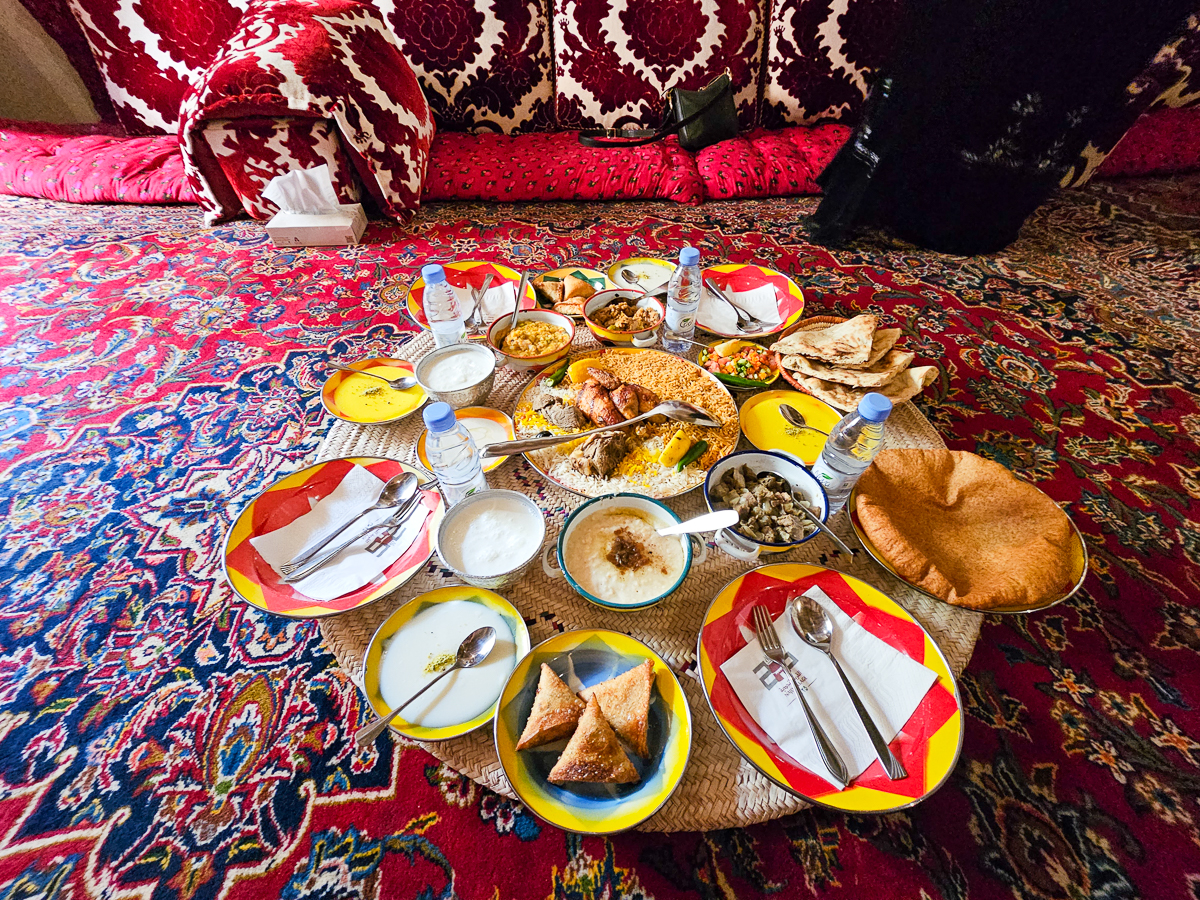
After our museum visit, it was time for a traditional lunch, which involved eating on the floor. The restaurant was in Najd Village Najd Village
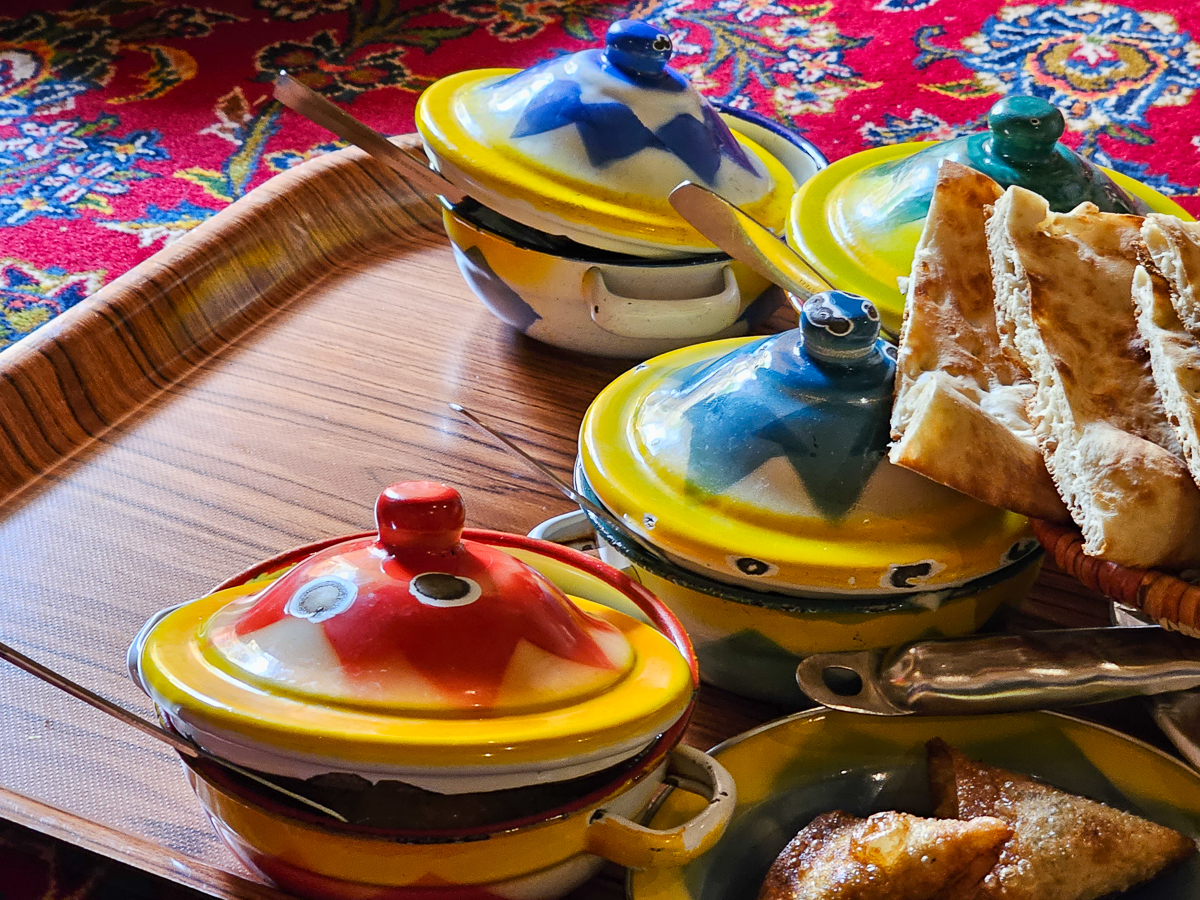
Najd Village is designed to resemble a heritage-style house, with architecture that reflects traditional Najdi homes. If you check the link above, you’ll notice the restaurant’s remarkable attention to detail. It felt more like a cultural experience than just having a meal of traditional Saudi dishes. The restaurant is divided into several dining rooms called majlis, each designed to showcase the heritage and history of the Najd region. Our meal was served on a traditional al-hassir, a woven palm-leaf mat placed on the floor, and we all sat around it just as people traditionally would. The dishes were entirely Saudi in style — and they were delicious! Everything was served family-style, as we say in the U.S., with multiple dishes in the center for everyone to share. I remember loving the food, the new flavors, especially the new textures.
Notes:
Majlis style translate as “a place to site” or “a gathering place’. You can see the room in the photo…
Najd Region – is the central region of the Arabian Peninsula, and Riyadh is located in this region. It is also the birthplace of the House of Saud, the ruling family.
NAJD VILLAGE RESTAURANT
NAJD VILLAGE RESTAURANT
The entrance we used to access the Sky Bridge in the Kingdom Center took us through a Four Seasons Hotel and an upscale shopping center, neither of which we got to explore!
The photos show the view from the Sky Bridge, which stretches between the two upper “arms” of the same building, as shown in the first picture. It’s an architectural feat: a 213-foot span suspended at the very top of the tower.
One of the most surprising parts of the visit came on the way up. We stopped on the 77th floor to peek into the mosque built inside the tower—said to be the most elevated mosque in the world. From there, an elevator takes you even higher to the 99th floor, where the Sky Bridge offers panoramic views over Riyadh.
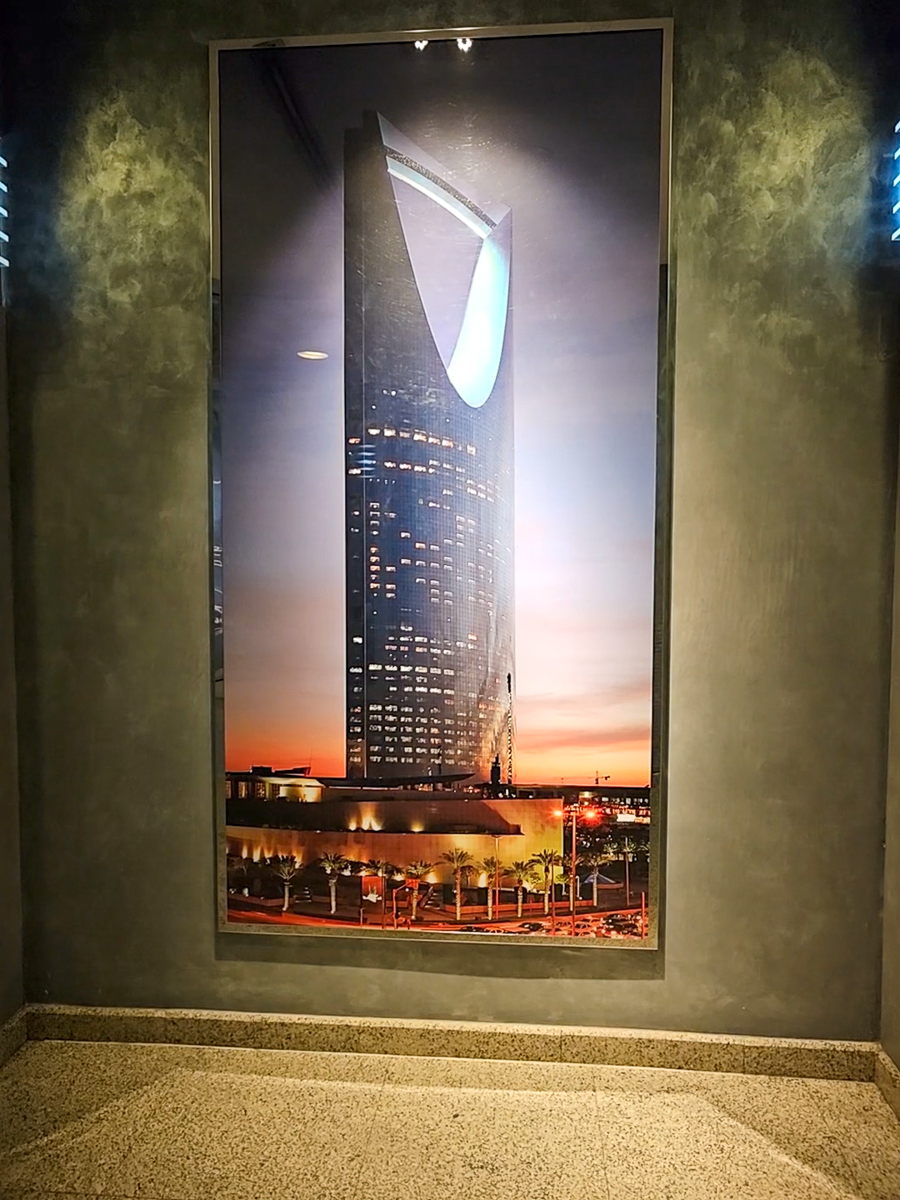
Sky Bridge
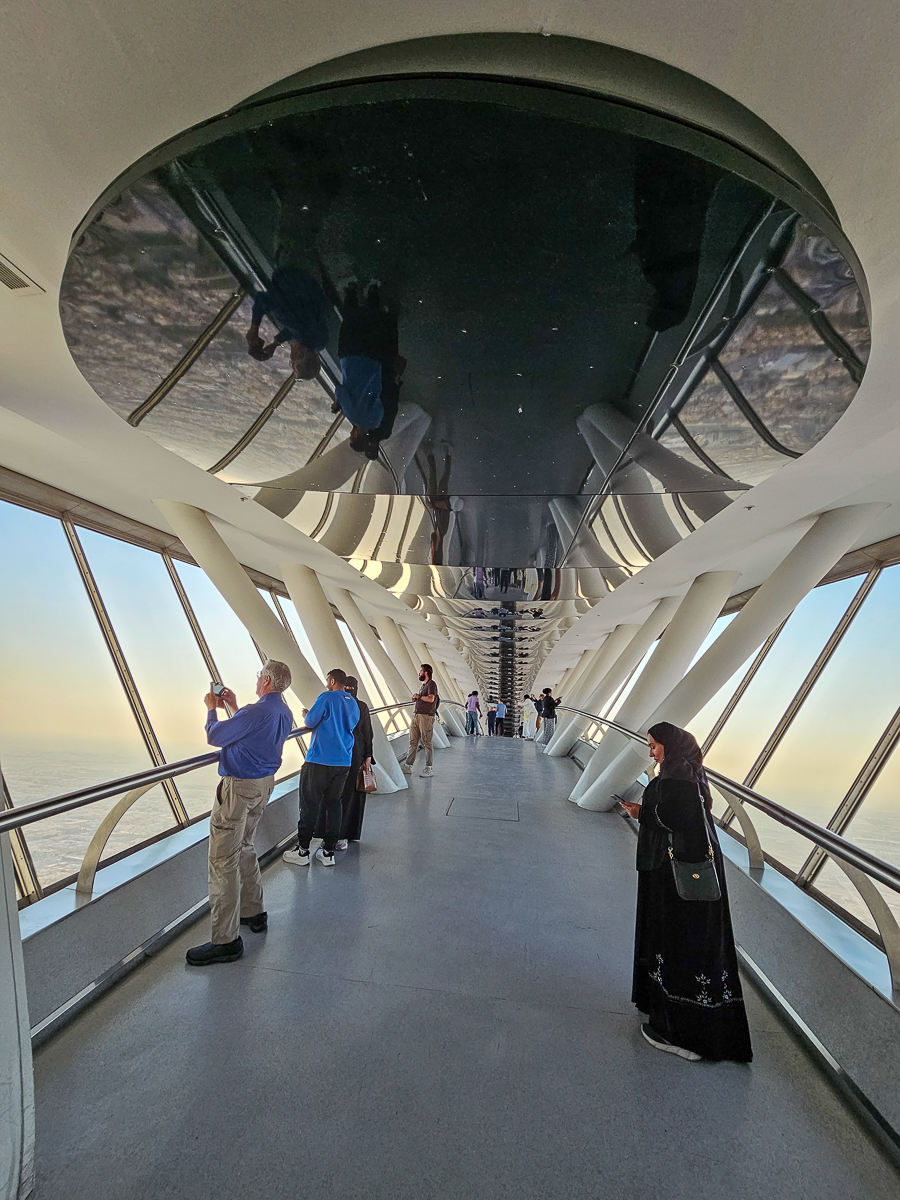
Sky Bridge
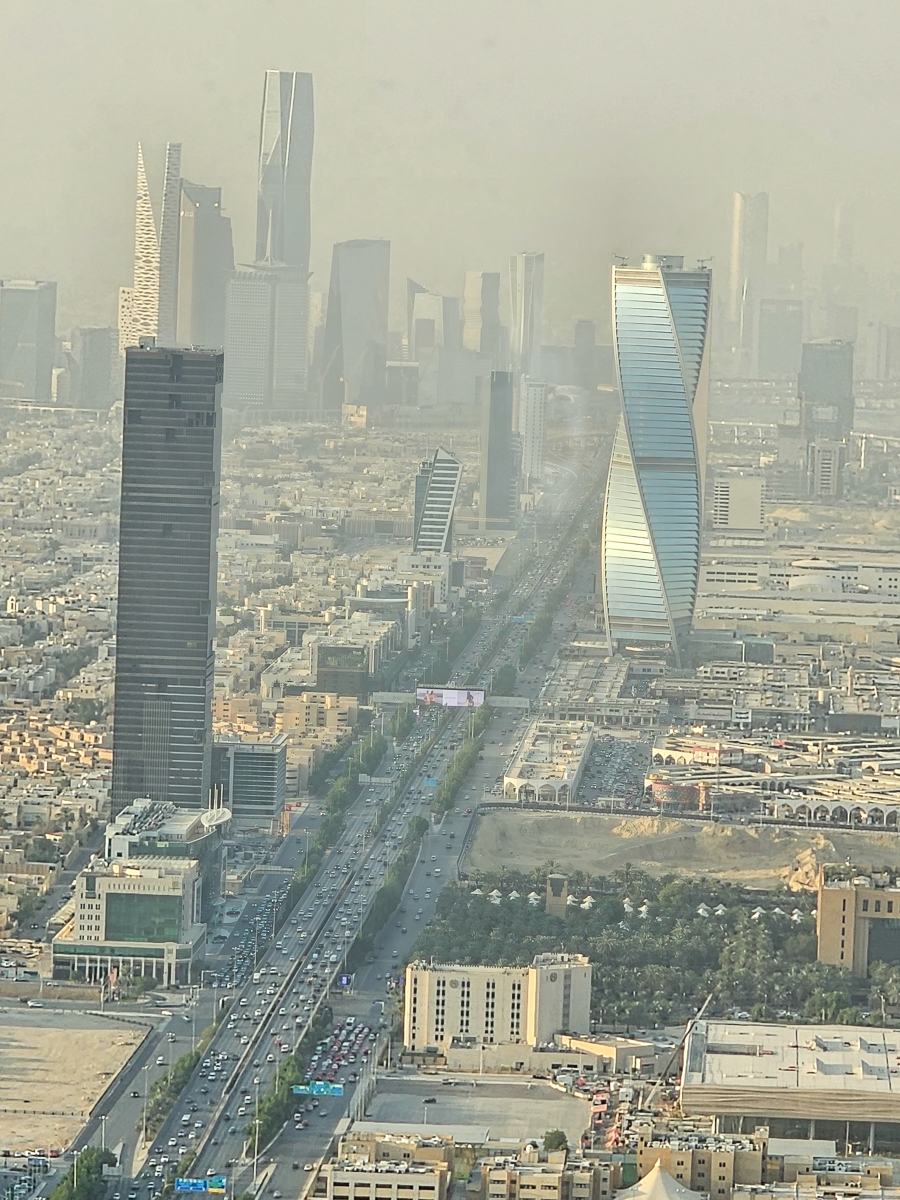
Sky Bridge
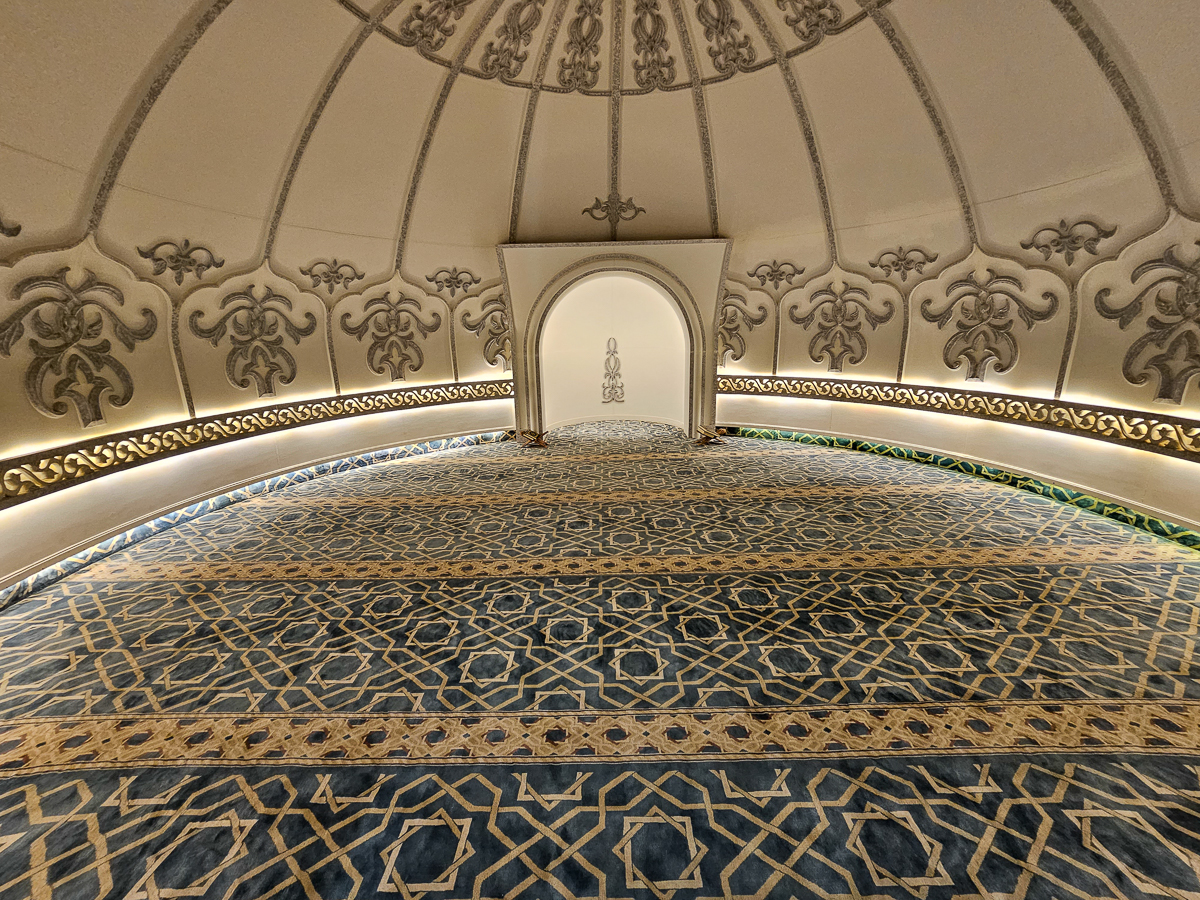
Sky Bridge
For anyone curious about the food in Saudi, here are three photos of our breakfast buffet. There was also a station that would cook you eggs, waffles, etc., if you wanted.
We drove to Diriyah, the birthplace of the First Saudi State, founded by the Al-Saud dynasty in 1744. It fell in 1818 during the Wahhabi war. The buildings looked amazing and would have been wonderful to photograph, but again, phones, but not cameras, were allowed. As it was after sunset and the pathways through the buildings looked uneven, I decided to sit out the tour. Another Saudi meal brought our trip to Riyadh to a close. Tomorrow, we are off to AlUla.
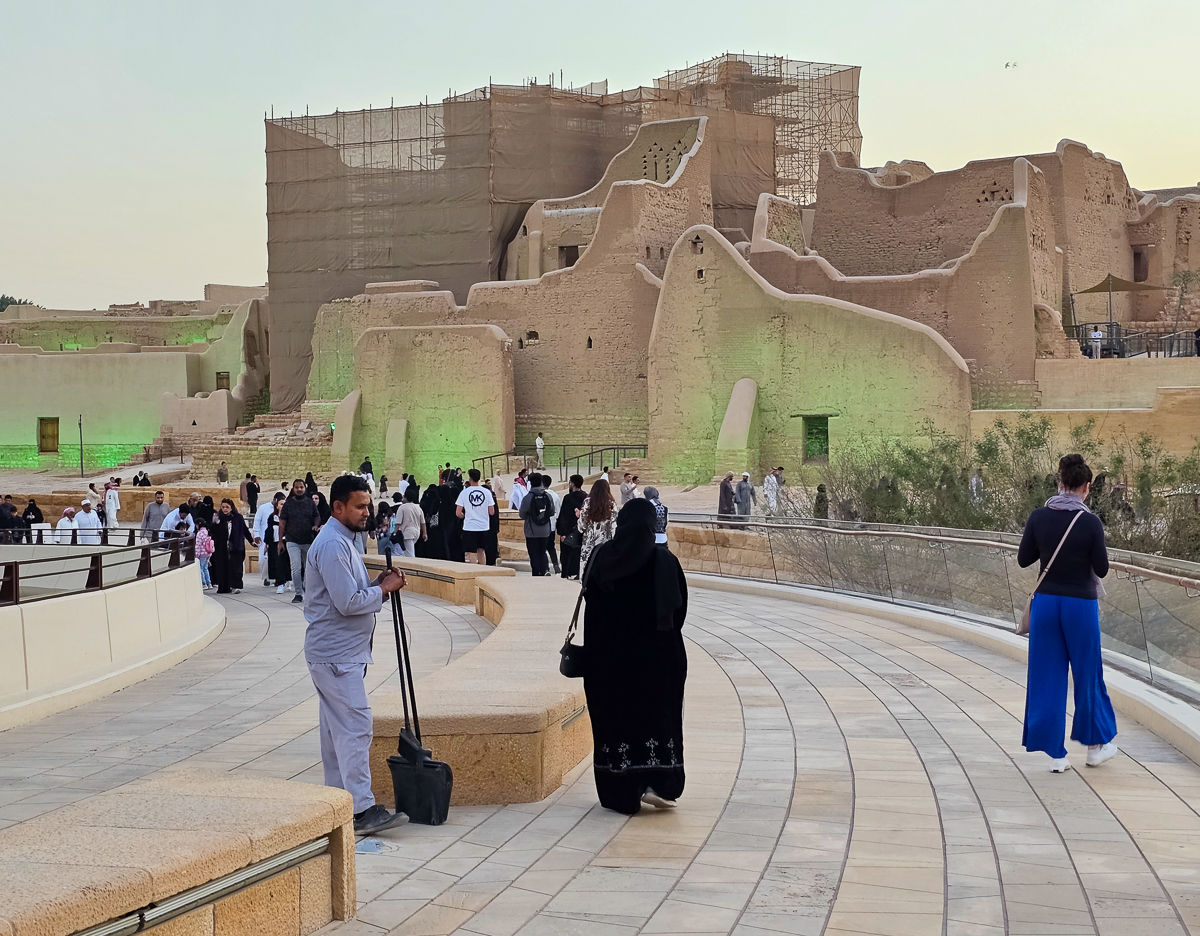
Diriyah
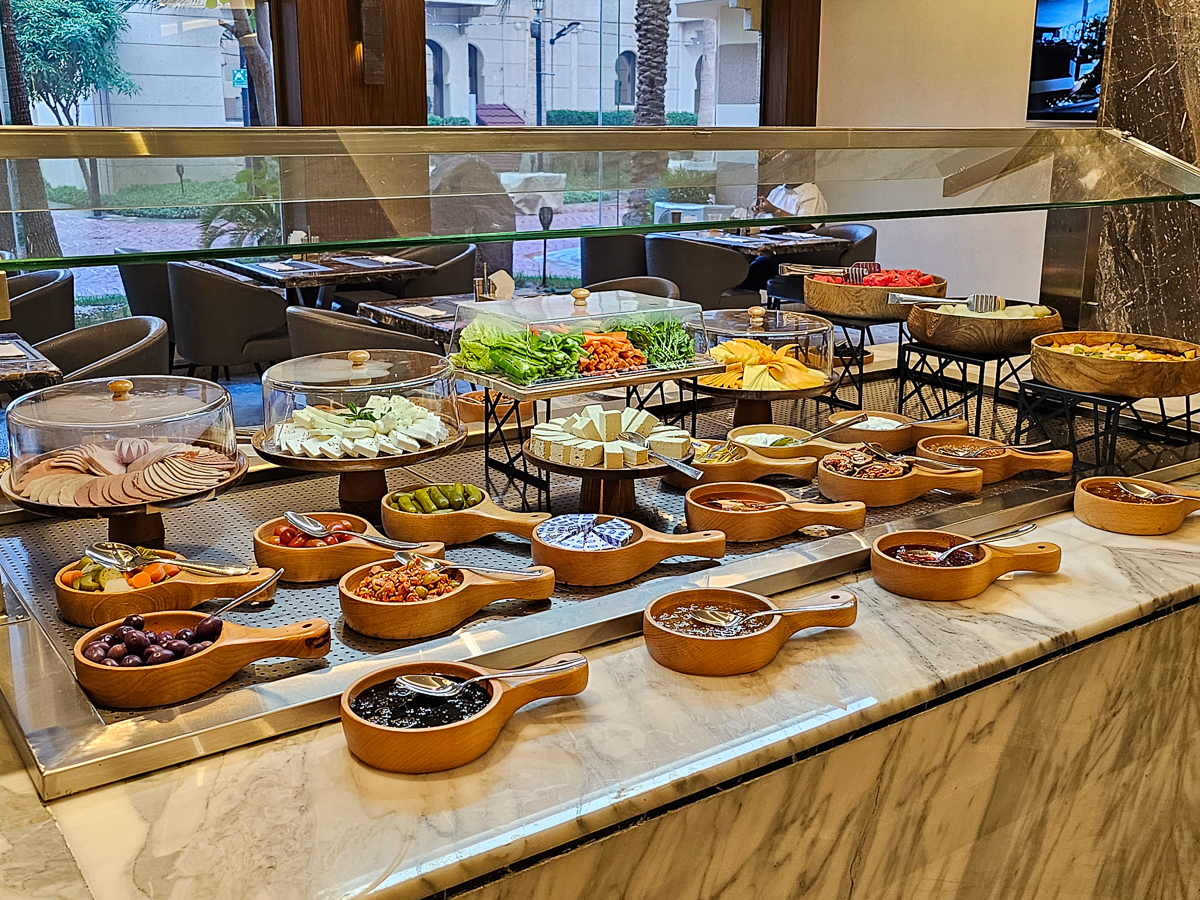
BREAKFAST
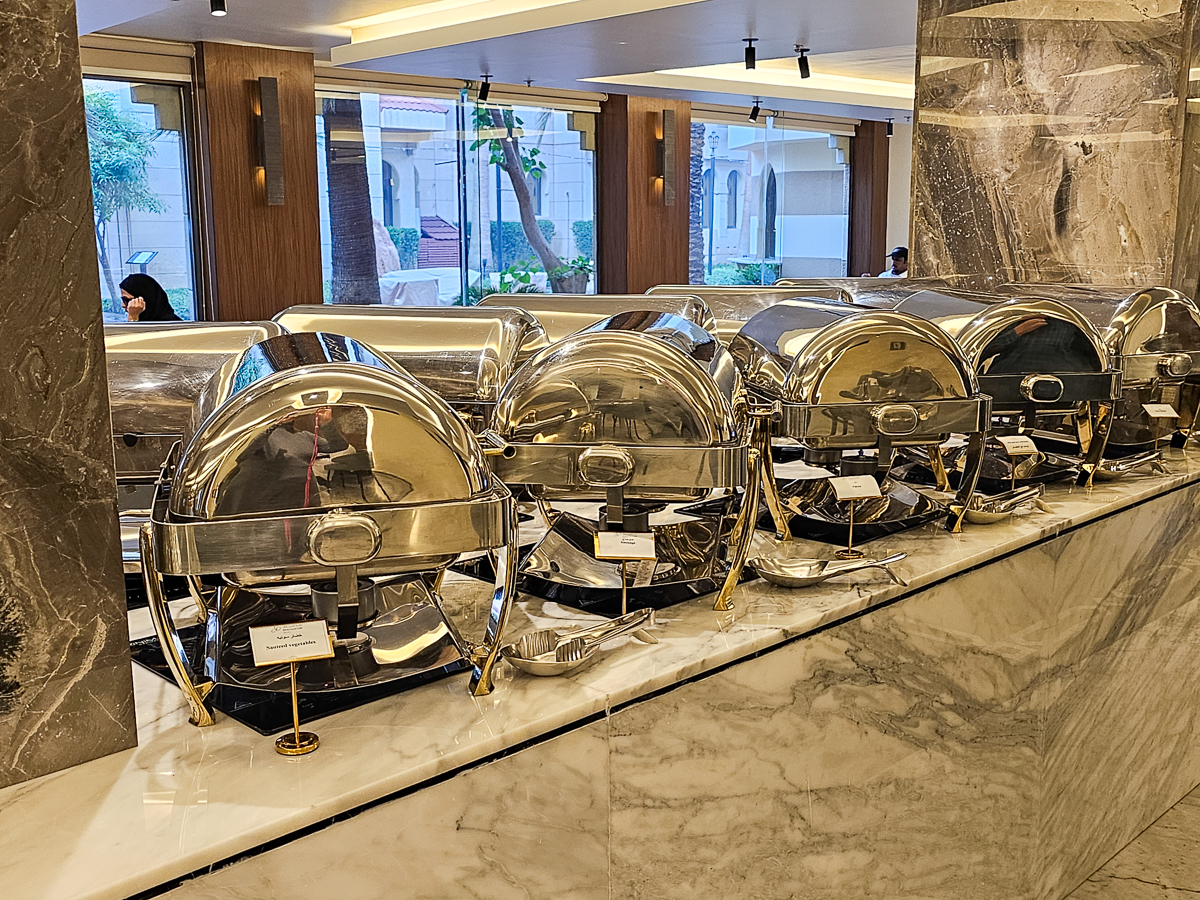
BREAKFAST
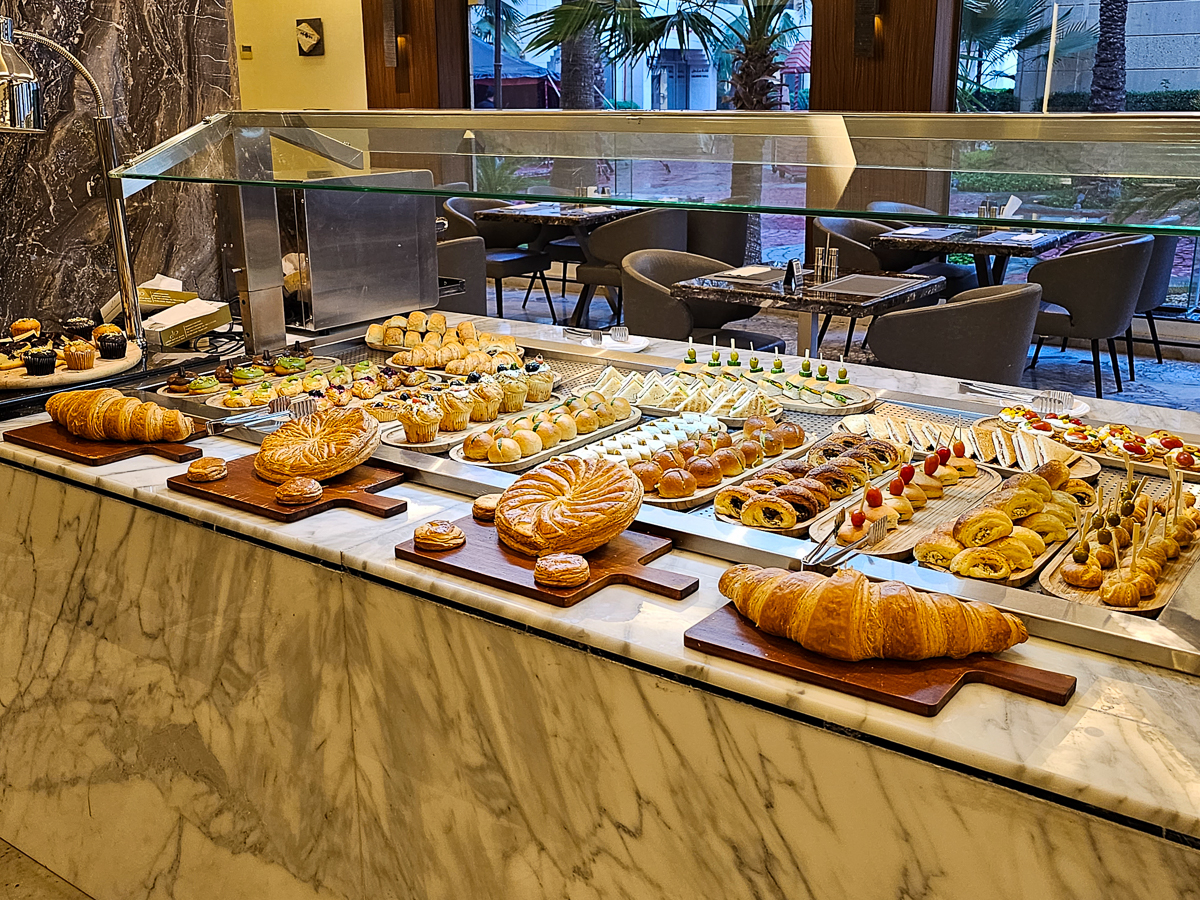
BREAKFAST
Lisa at Luxury Travel arranged both Saudi Arabia and India; see the link above for her contact information.