Treblinka

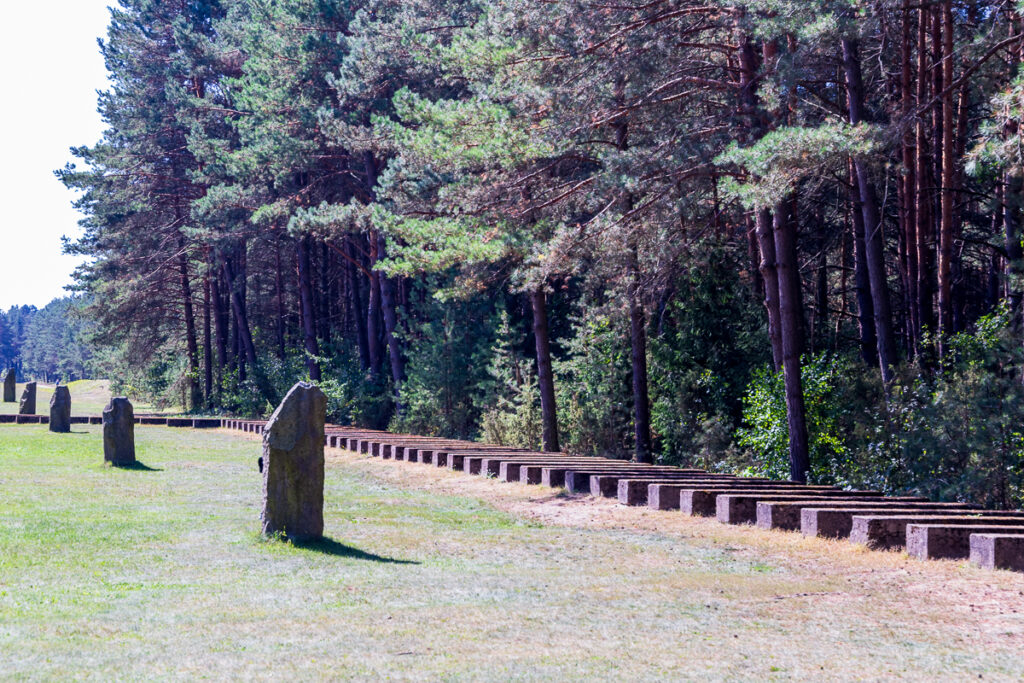
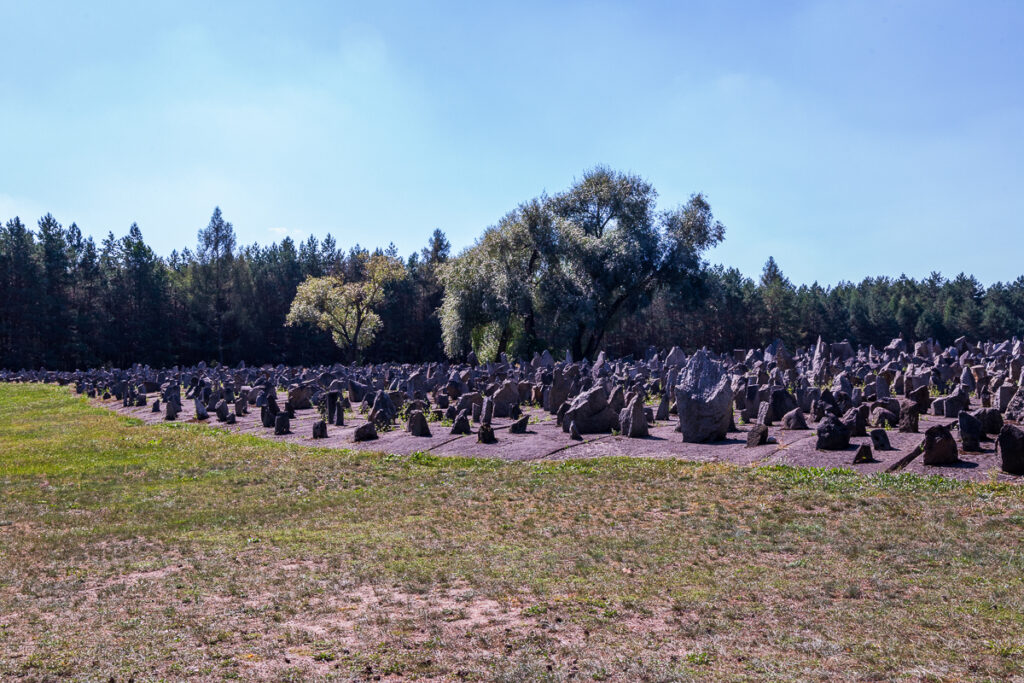



The bus ride from Warsaw to Treblinka was just over an hour long. To me, that was amazing, that a death camp could be so close to such a large metropolis. Treblinka was opened as an extermination camp in July 1942 and was closed in October 1943. During that 15-month history, it is estimated that between 700,000 and 900,000 people were murdered in this camp by the Nazis.
Unlike concentration camps, where prisoners were forced into slave labor, at Treblinka the camp existed for one reason: to exterminate people. There were 6 gas chambers.
There is no visible evidence of this camp…just the stories of the few survivors and one archaeological dig. The ground is considered sacred, as the ashes of those who died here rest in the soil. Out of respect for those who perished, only one dig has been allowed.
Surrounding the border of the camp is a white ribbon, the Ribbon of Remembrance, with the names of people who perished there. Only 0.5 percent of the victims are on this ribbon.
RIGHT: These concrete blocks mark the path of the former railroad.
LEFT: About 17,000 stones of varying shapes and sizes form a symbolic cemetery. The names of towns and villages from which the victims came are carved on the stones.
Sad…sad day!
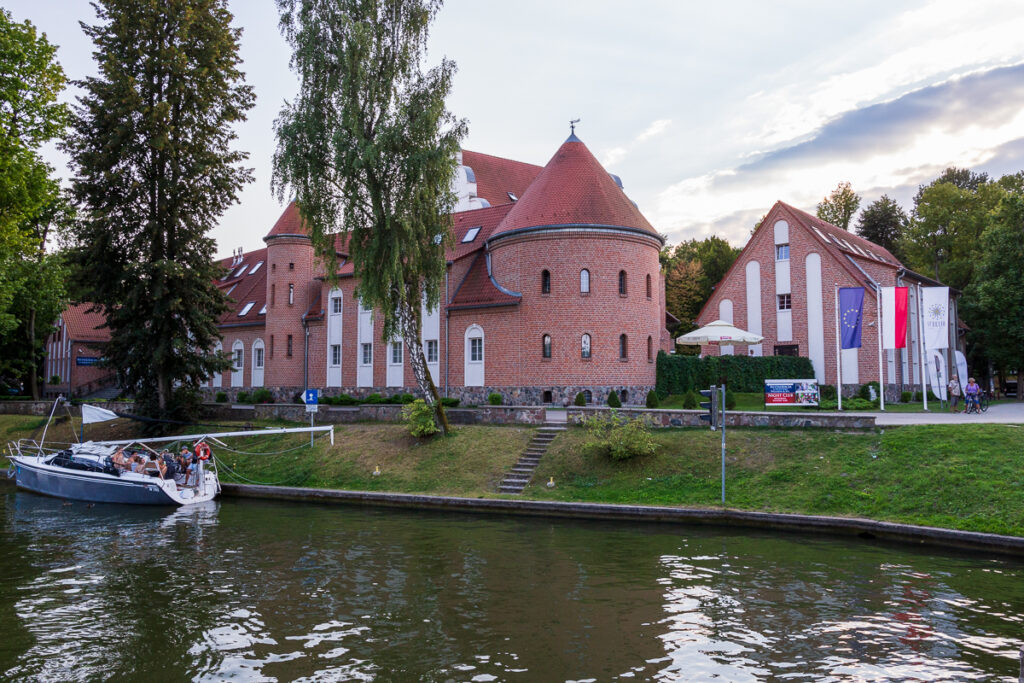
Late afternoon arrival in Gizycko, Masurian Lake District
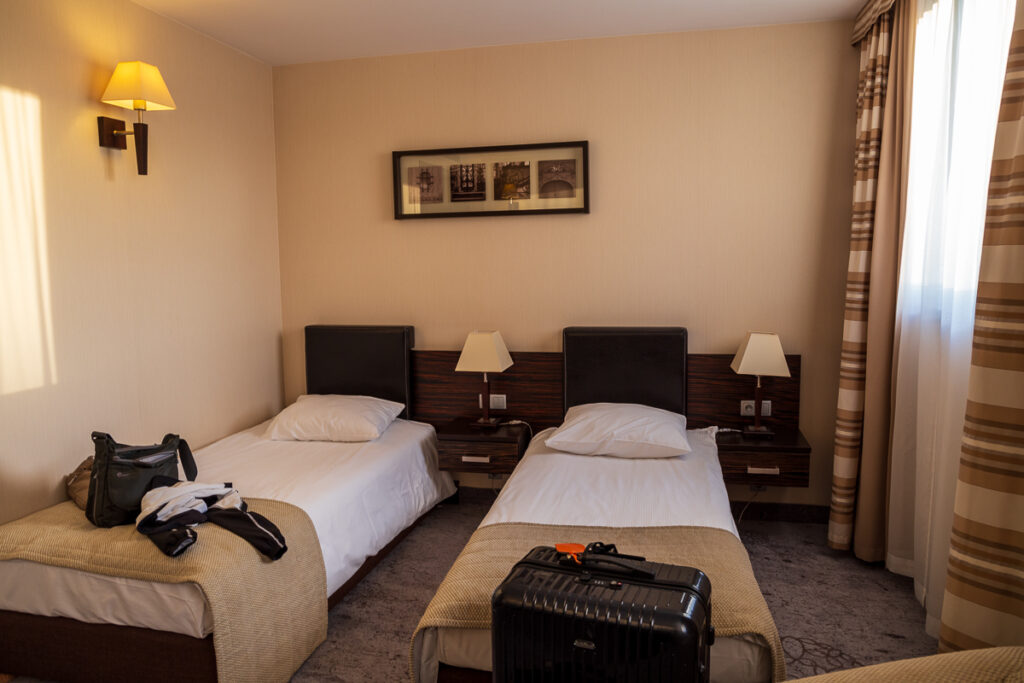
Although others on our tour loved their rooms, Deb and I did not share their enthusiasm. We clearly had the smallest room at this hotel on the entire tour.
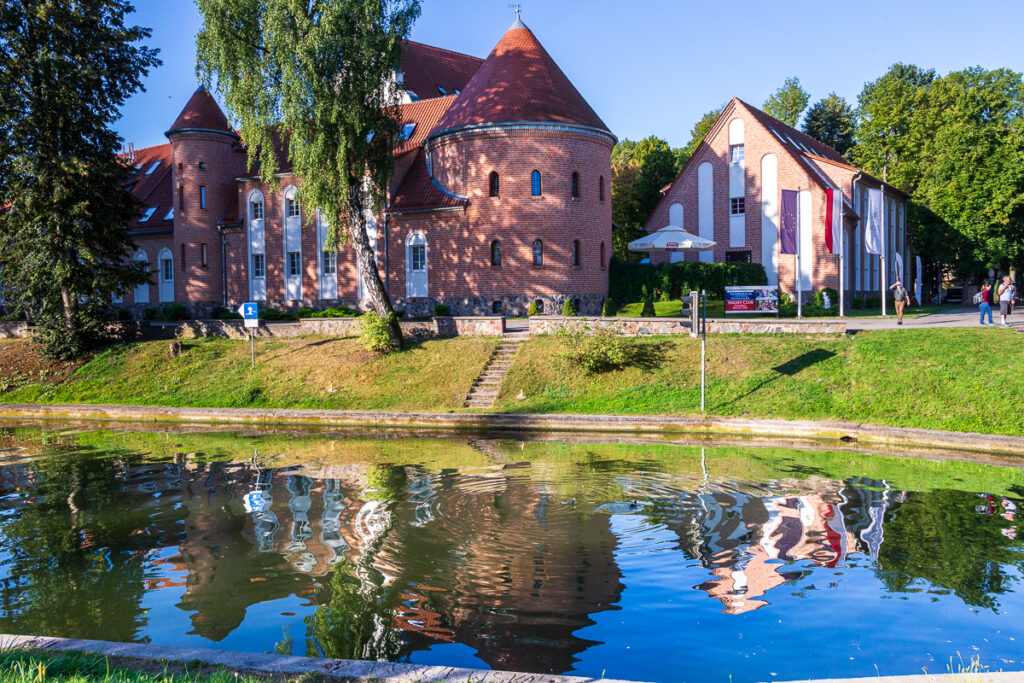
The hotel had been built in the fourteenth century. Originally, the building served as a defensive fortress and later was turned into a hunting residence for Polish princes.
This area of Poland was in Germany for many years, and during the interwar period, the castle served as a German museum. After the war, the building deteriorated from lack of interest. In 2010, the current owners renovated the building and turned the historic castle into a spa hotel.
There was a noticeable difference in the architectural style in this area compared to Krakow or Warsaw.
This is a church down the street from the hotel.
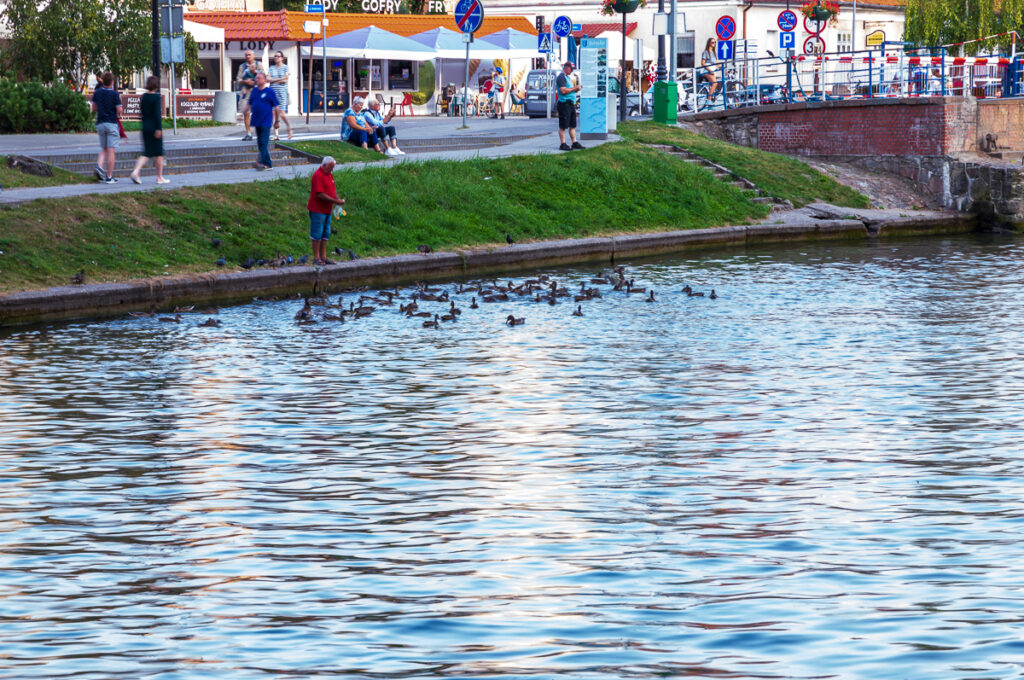
Deb and I walked out before dinner to see the town and take some photos.
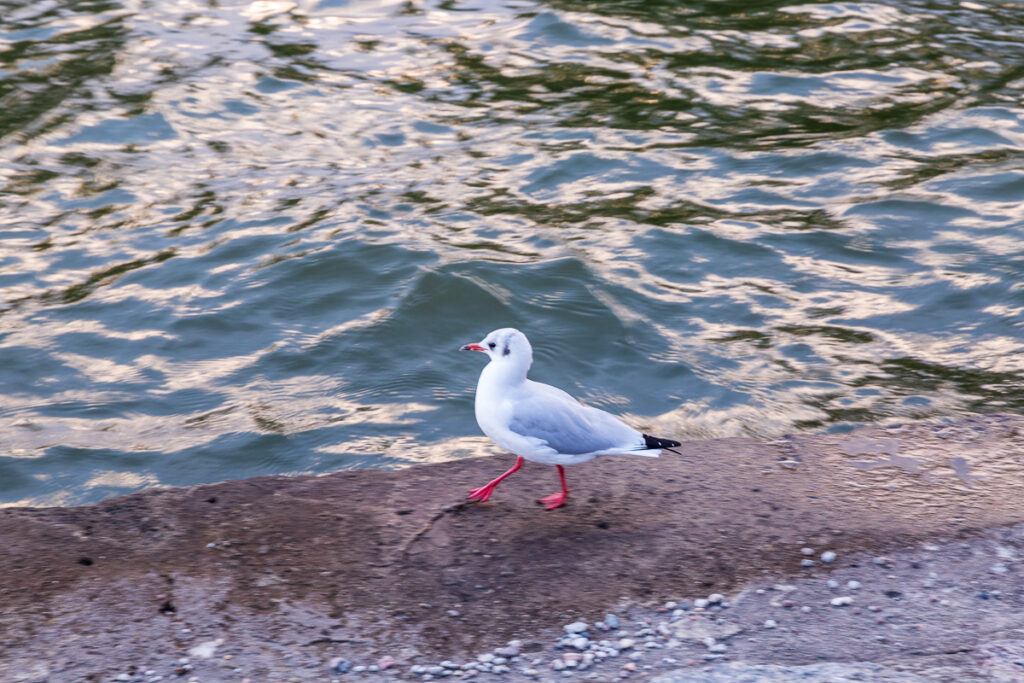
I sometimes wonder how many photos of seagulls I have taken and how many I need. But get me near a seagull, and I snap away.
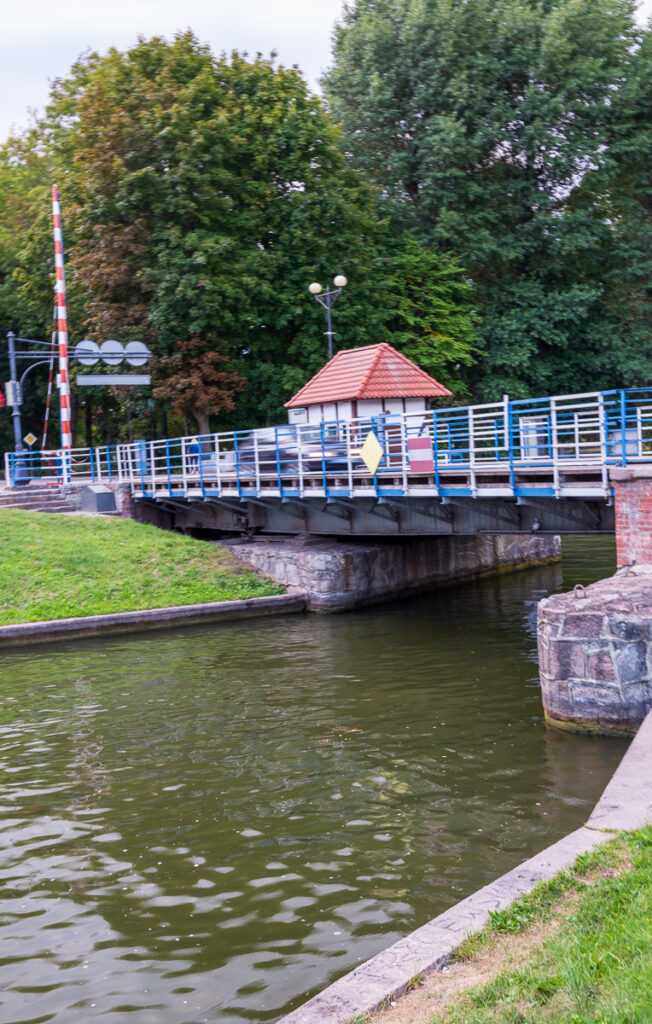
Revolving bridge outside our hotel entrance. The big question was always when the bridge would open or close. To give access to the Wilkaski Canal, the bridge would be open for long periods of time.
The revolving bridge was built in the 1850s as a response to steam navigation and the building of canals. In the 1960s and 1970s, the bridge was updated with an electrical drive to move the revolving bridge. Unfortunately, the engineers failed to take into consideration the amount of force with which the bridge would open, and as a result, the modernization caused serious damage to the abutments. A military-style bridge was installed over the damaged bridge, but the local residents did not accept the change. So, in 1993, the revolving bridge, with manual operation, was reopened. The process of opening and closing the bridge takes one man about 5 minutes, and it is the only known bridge of its kind in Europe.