
TAJ MAHAL
Who wouldn’t be excited to see the Taj Mahal? As we drove to the Taj, the driver emphasized I needed to be careful about what I brought in. I checked my camera backpack and removed everything that could raise questions. The lines to enter the site at dawn were overwhelming for someone who hates crowds. I eventually got out of line and said, “I’m not going. I cannot handle these crowds.” Our guide was great; he moved me to a different line, went through security with me, and took my camera bag himself.
Well, I always carry a tape measure (you never know), and the security guard wouldn’t let it through. It was a $1 item, so I waved it off. Later, my guide handed it back to me, so apparently I was supposed to give a tip. I clearly didn’t understand.
I was very thankful the guard found an easier way in, because seeing the Taj was incredible, and the surrounding buildings were almost as impressive, and much less crowded.
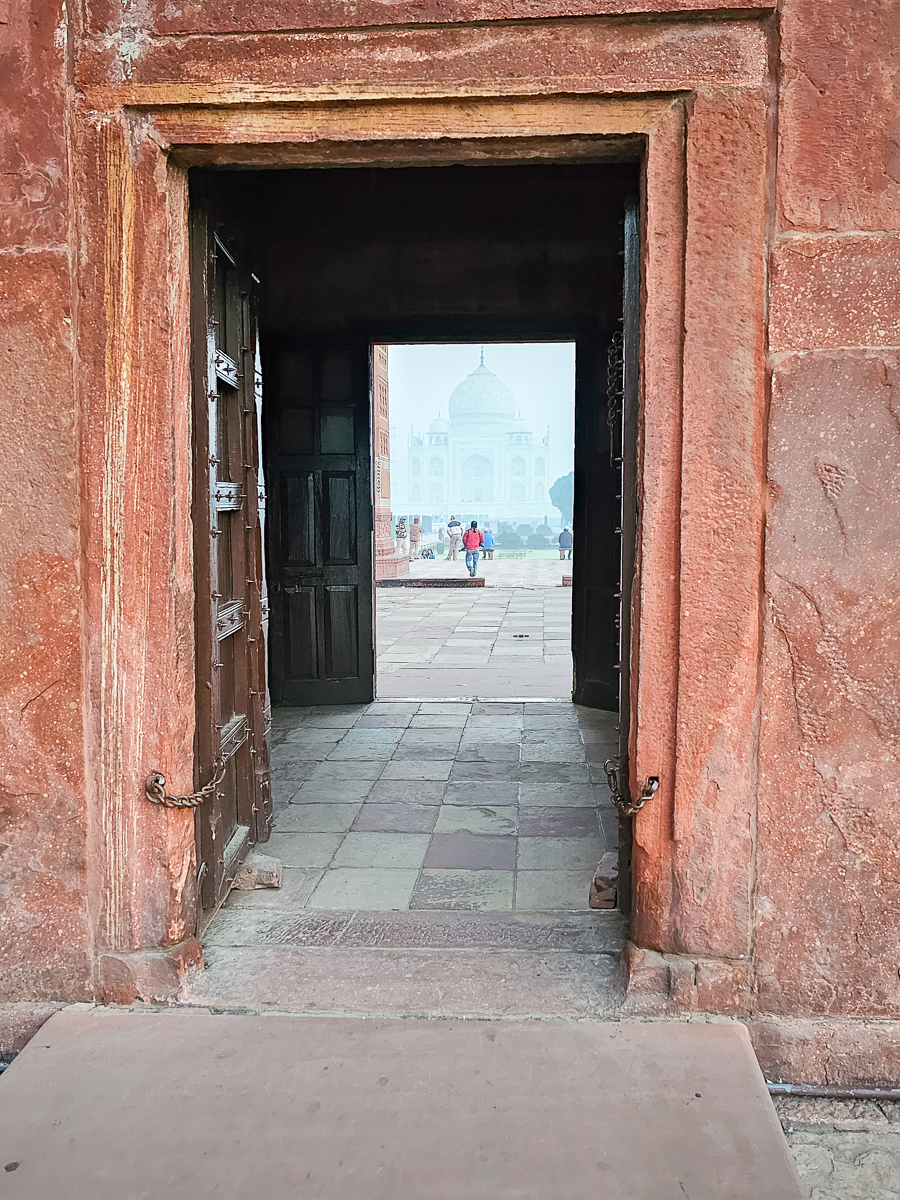
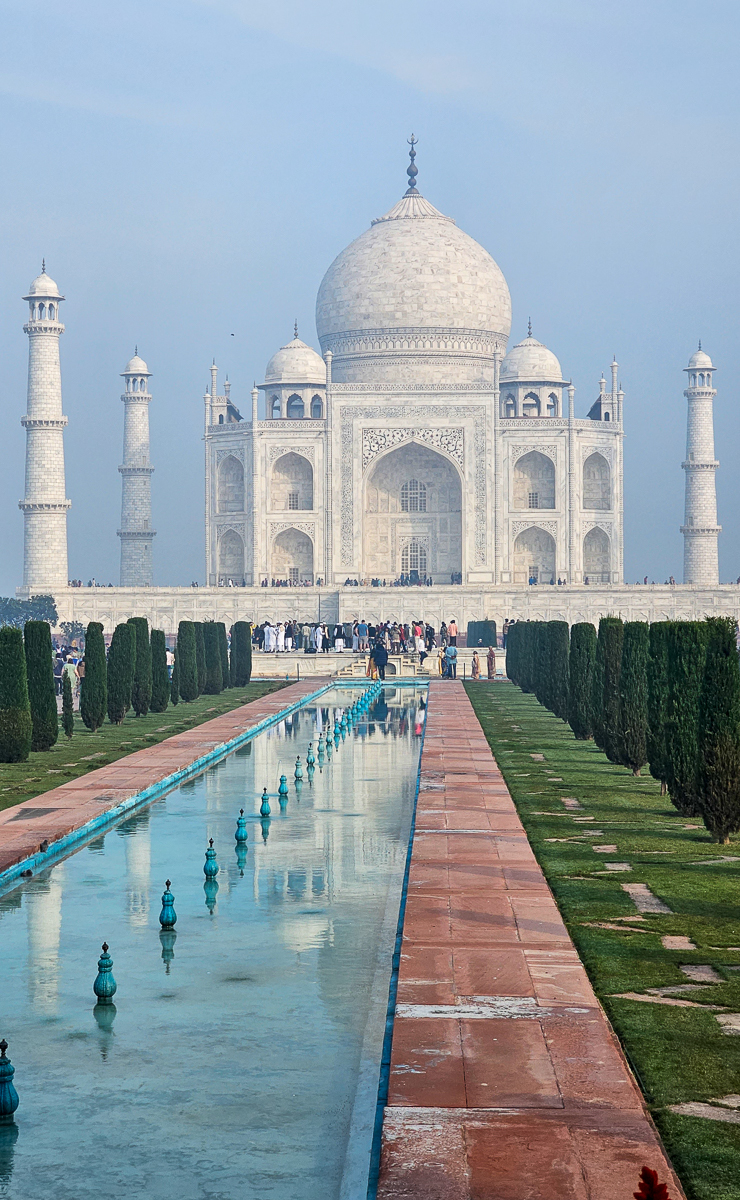
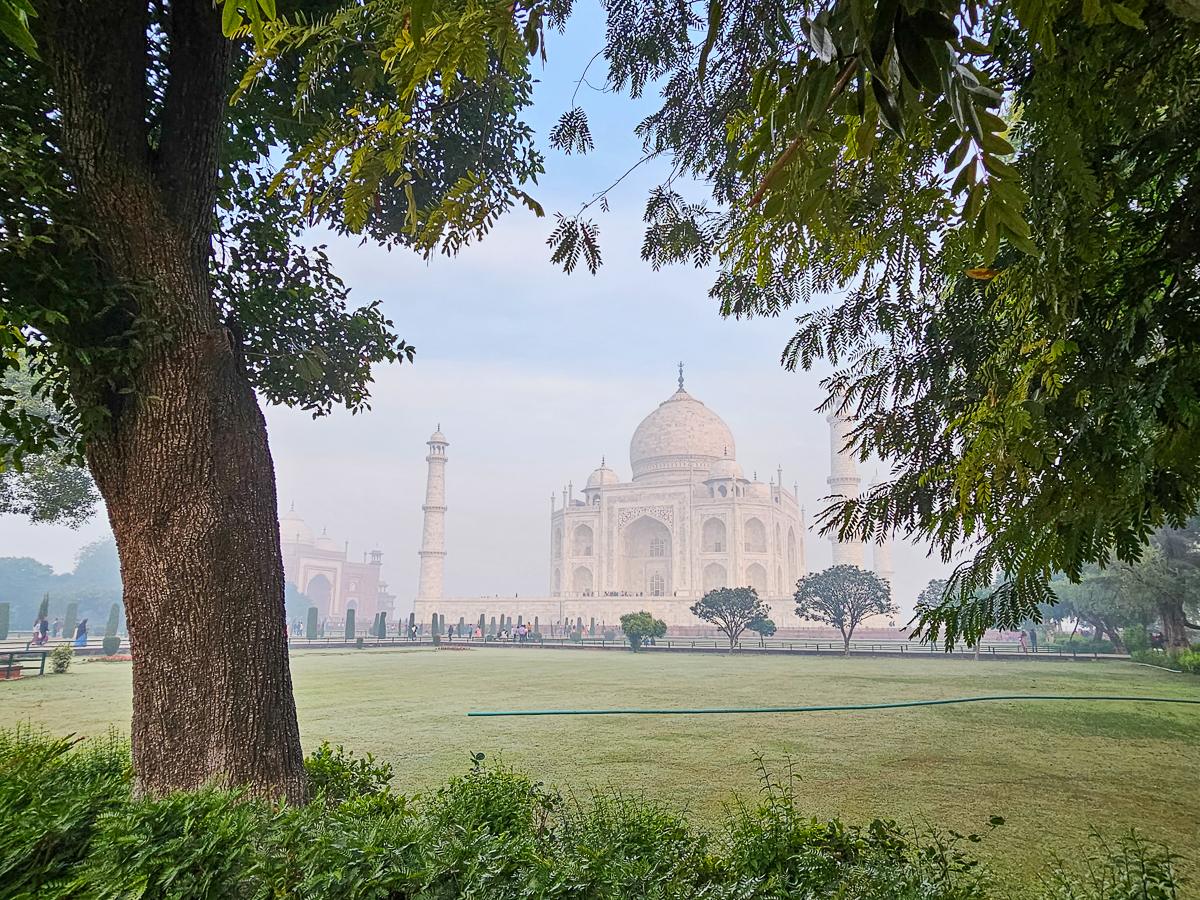
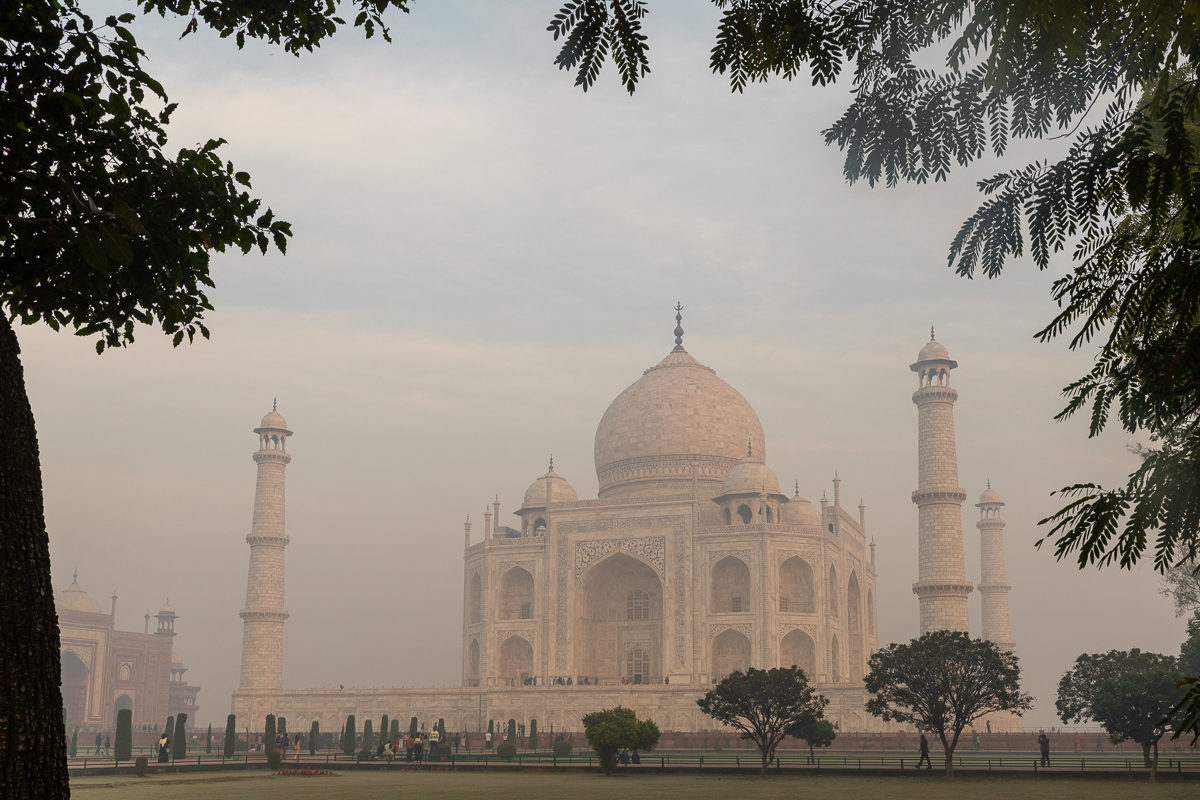
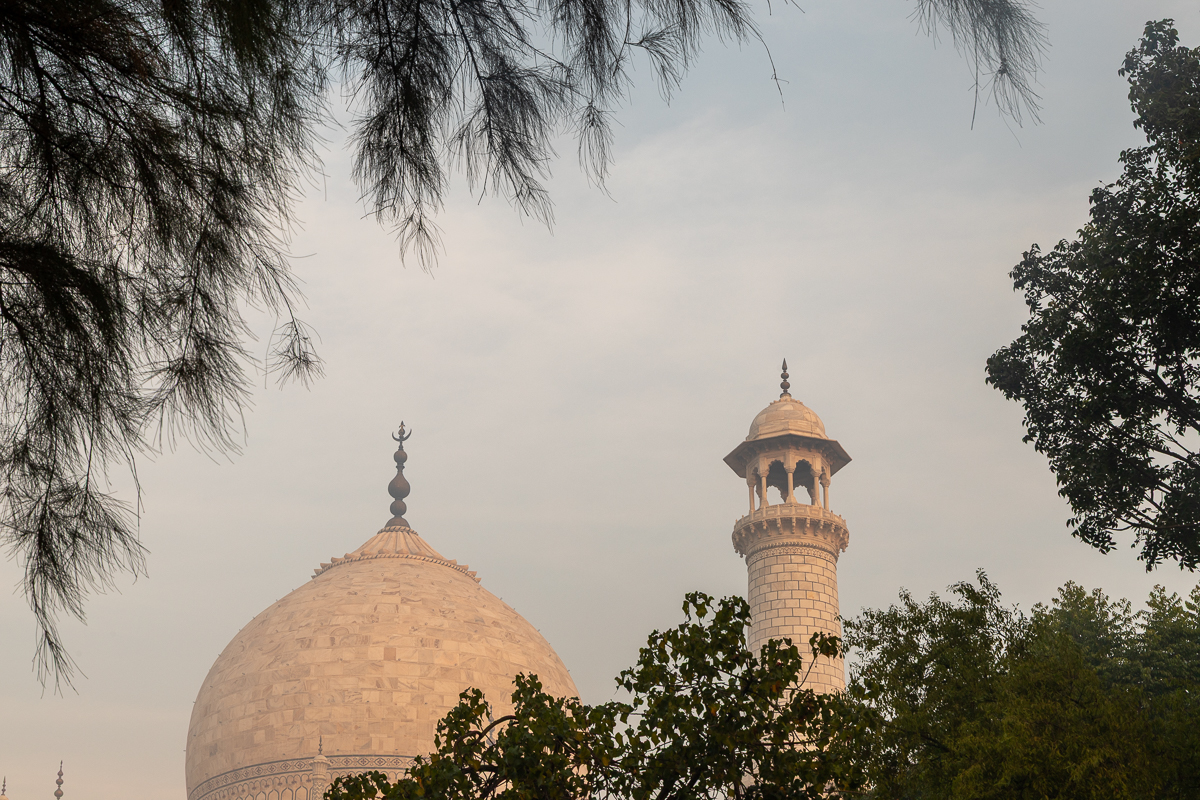
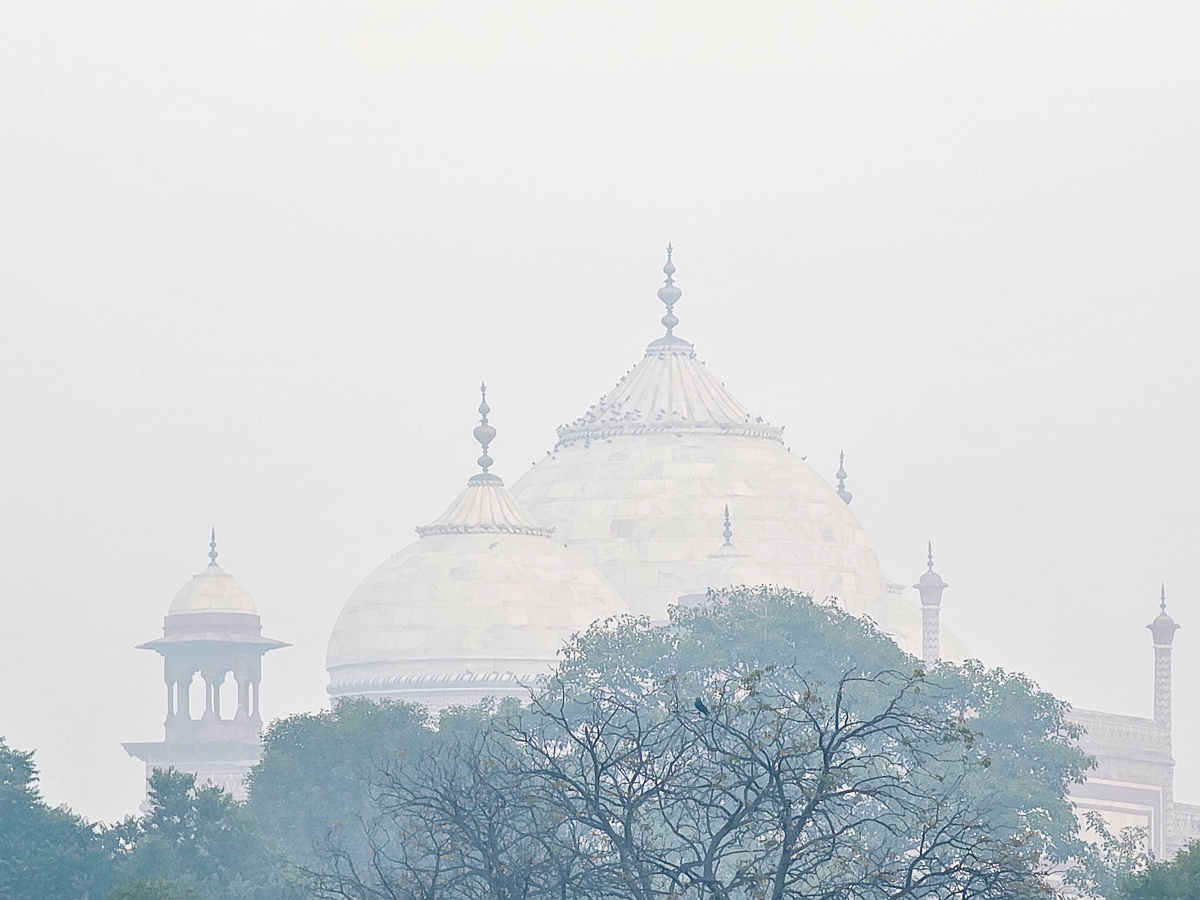
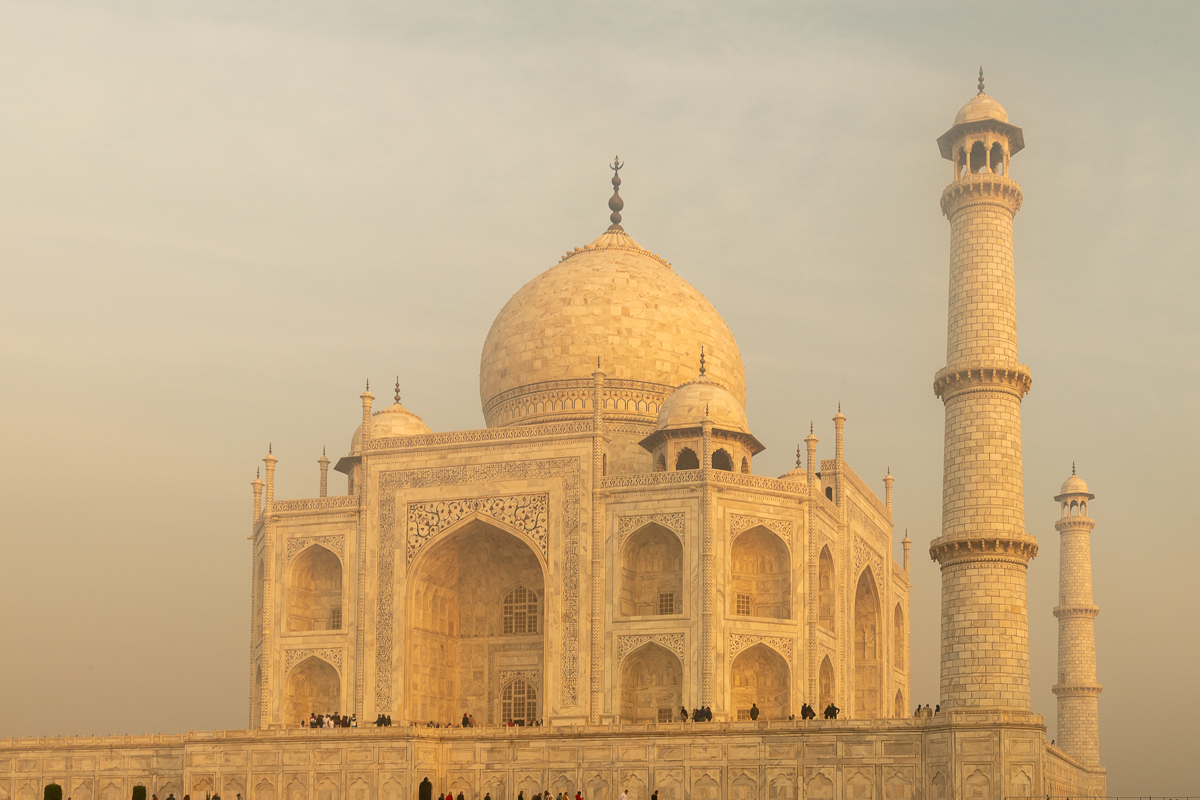
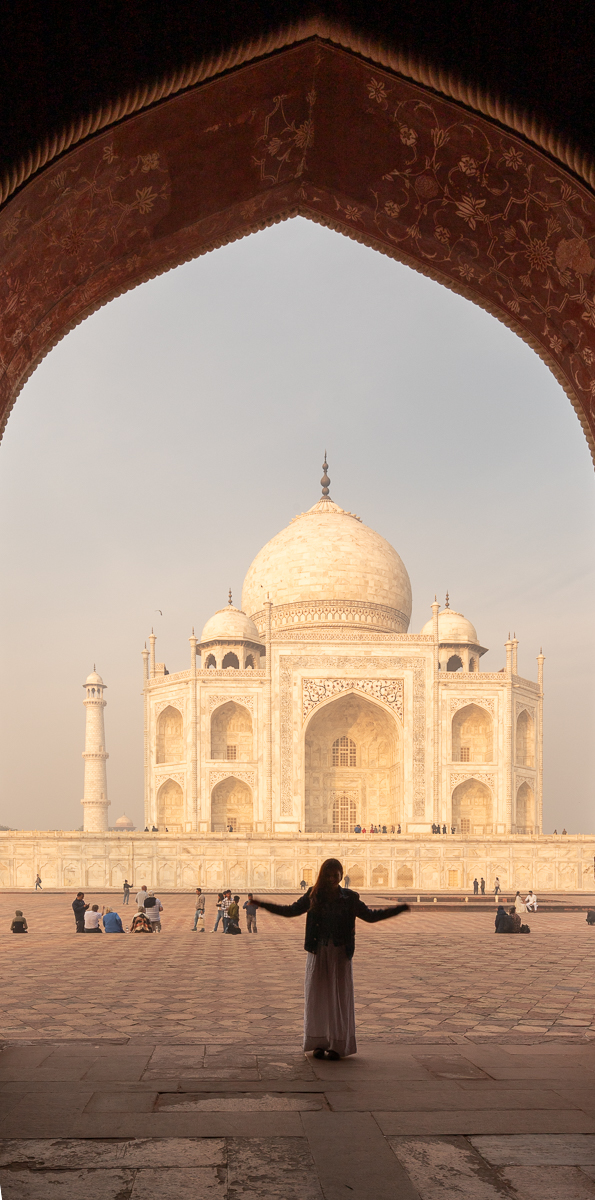
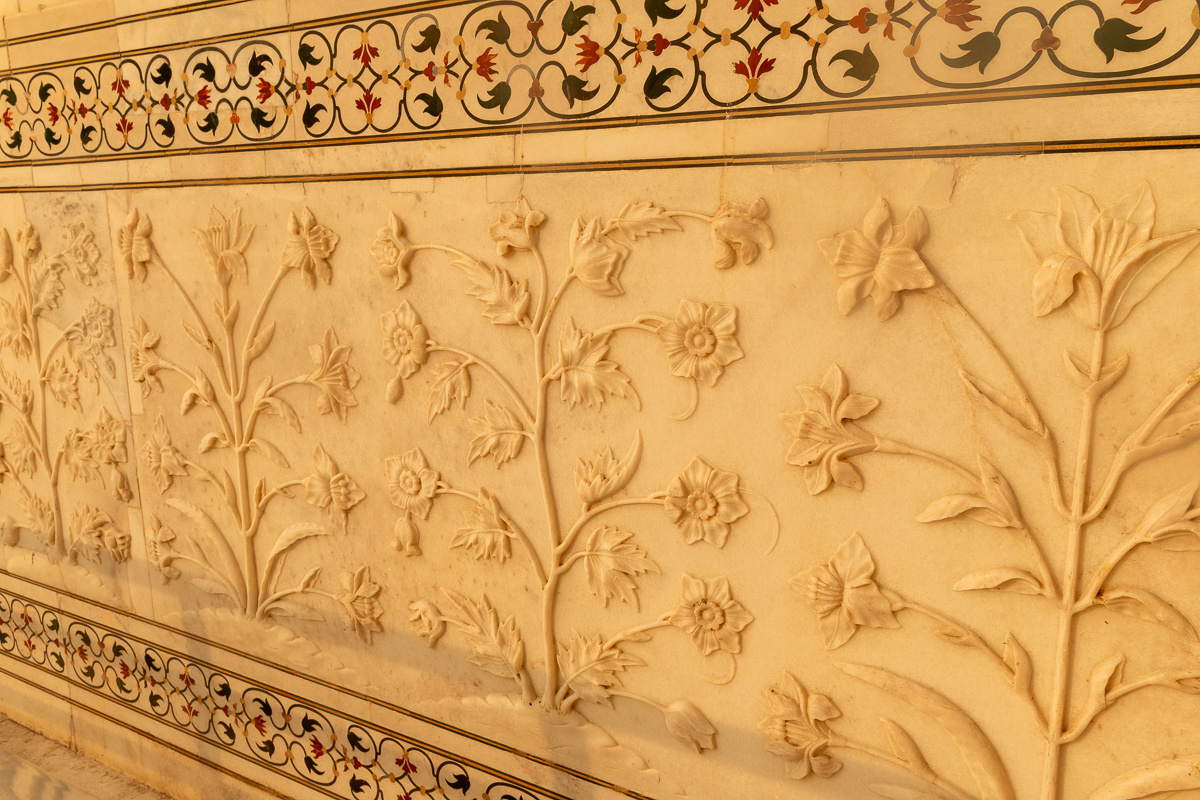
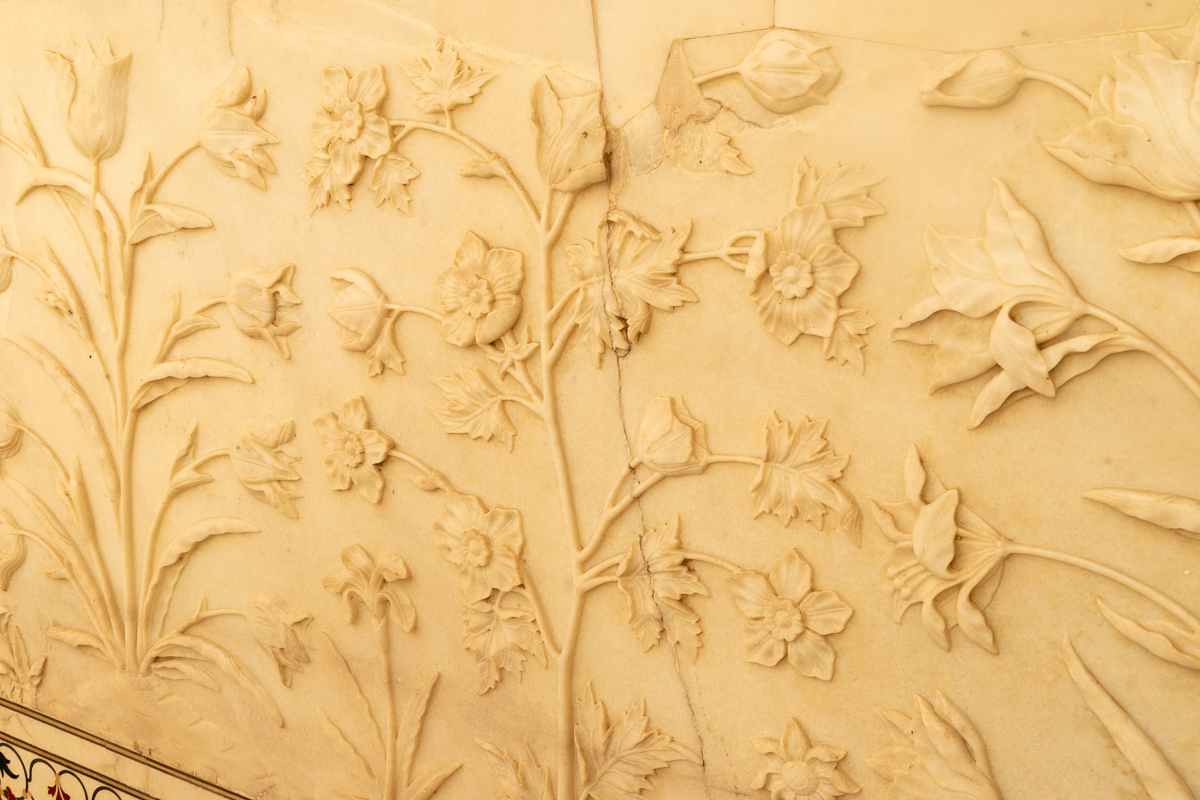
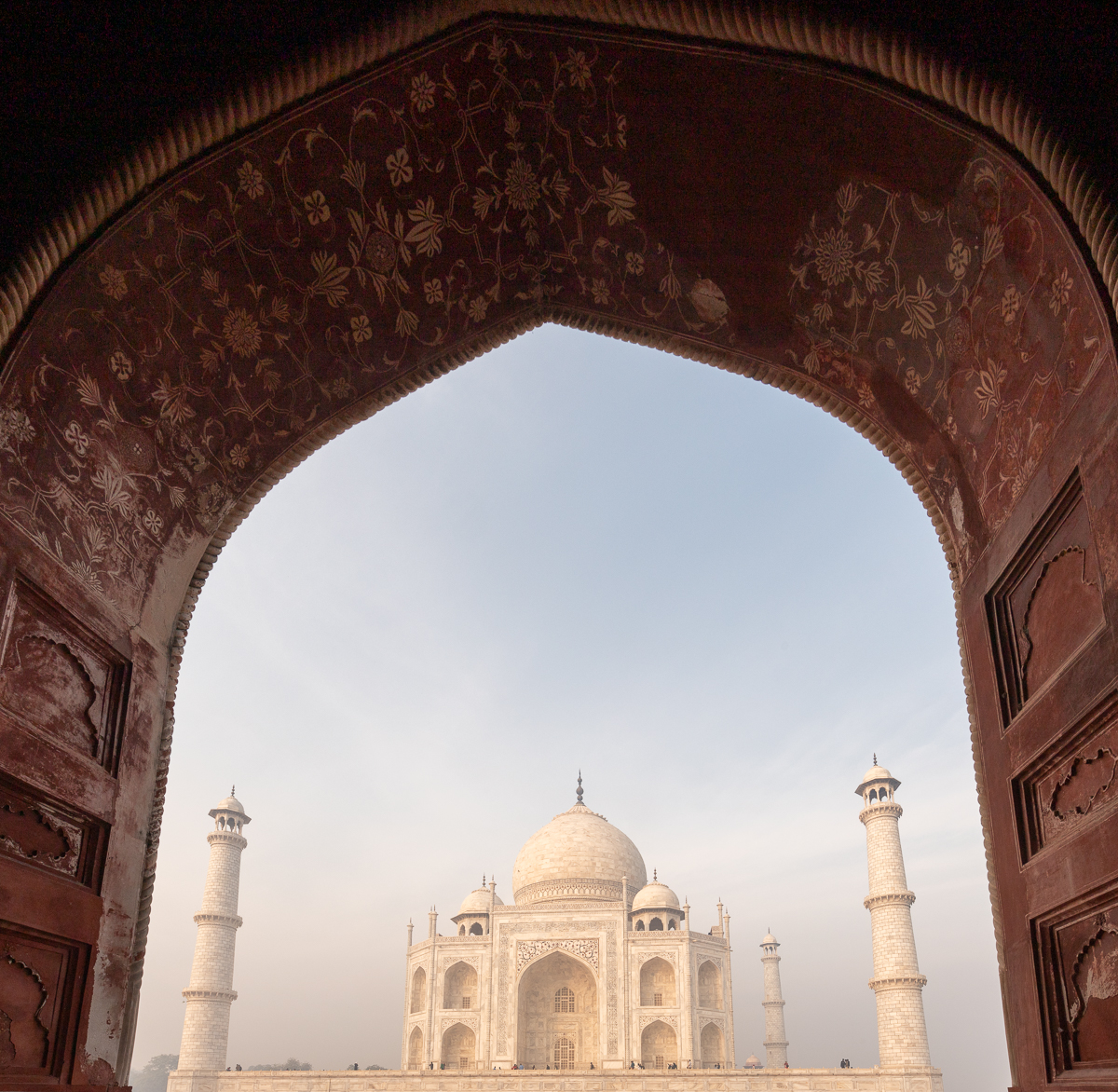
It is impossible not to get caught up in the beauty of this building. But many stories are tied to this building, each with its own beauty.
A mausoleum built from love and the grief that followed the death of Shah Jahan for his wife Mumtaz Mahal, who died in childbirth of their 14th child. The building is a mausoleum built from love and grief following the death of Shah Jahan’s wife, Mumtaz Mahal, who died in childbirth of their 14th child. Construction began in 1632, and the main mausoleum was completed in 1643, with the entire complex finished in 1653.
What impressed me was the dedication to the details; 20,000 artisans performed their unique art to create this marvelous tomb. The list of artisans includes architects, calligraphers, stone carvers, inlay artisans, metalworkers, garden designers, and engineers. The engineers designed water systems to draw water from the Yamuna River behind the Taj to keep the gardens green year-round.
The materials came from all over Asia and beyond: white marble from Makrana, jasper from Junjab, jade and crystal from China, lapis lazuli from Afghanistan, turquoise from Tibet, and carnelian from Arabia. To move the marble, a brick ramp nearly a mile long had to be built to transport the stones to the upper levels. In the seventeenth century, the marble was moved by animals, not machinery. Amazingly, when the English colonized Agra in the early 1800s, the Taj was in decline, and the gardens had fallen into neglect. Lord Curzon restored the building to its original grandeur. After the restoration in the late nineteenth century, the British used the complex, except for the mausoleum, for receptions and formal gatherings.
Lord Curzon served as Viceroy of India from 1899 to 1905, the highest office in the country at the time. He is credited with restoring not only the Taj Mahal but also the Agra Fort, Humayun’s Tomb, and the Qutb Complex that we visited in Delhi. Some of his restorations reflected Victorian interpretations of the Mughal style.
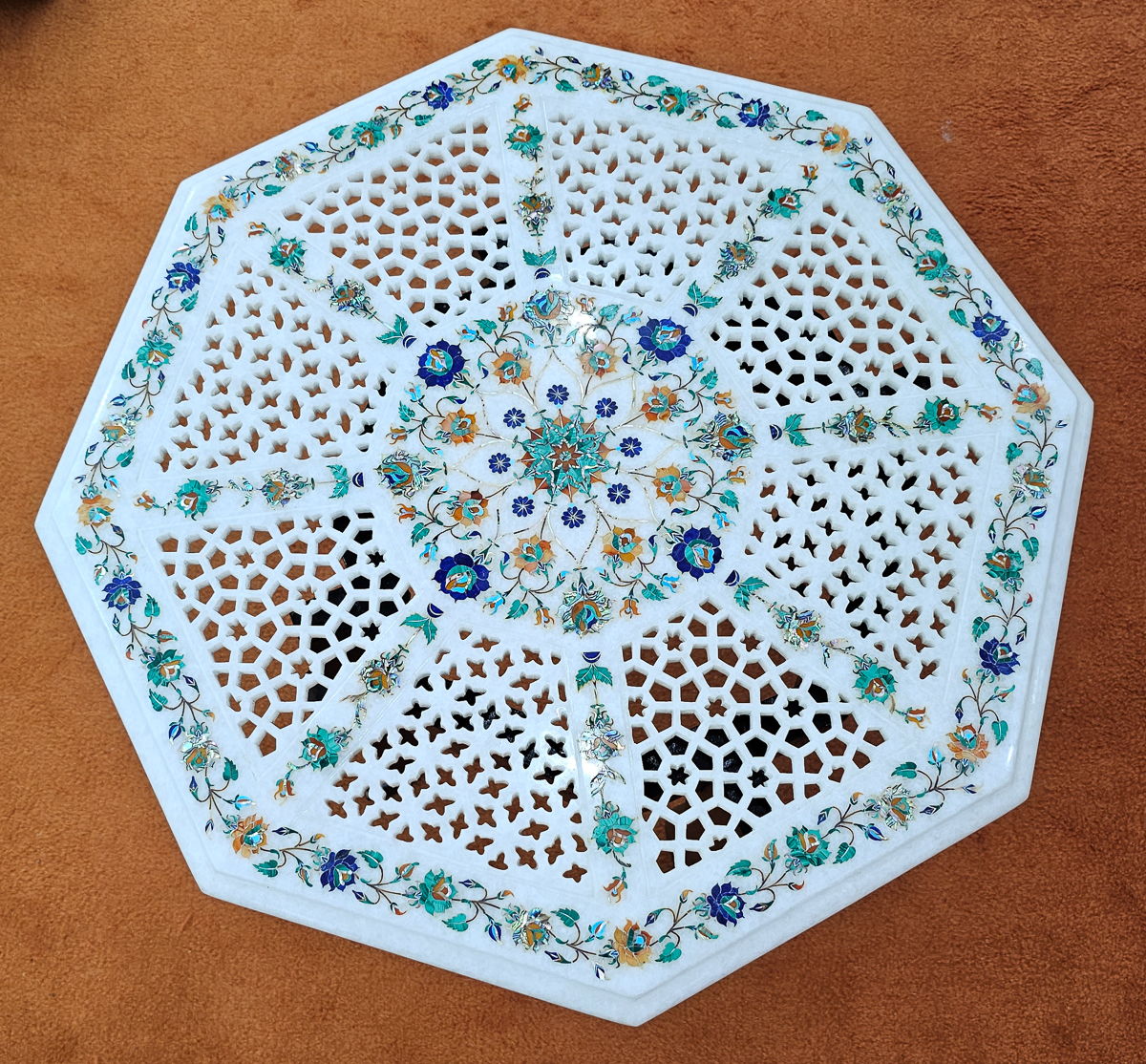
At right is an example of pietra dura and jali; this is a table top and not a screen, so I am presuming the technique is similar, if not the same. Sometimes I wonder why I didn’t ship this table top back. But I had fallen in love with a much more intricate, i.e., expensive box. Next time, I’ll buy one.
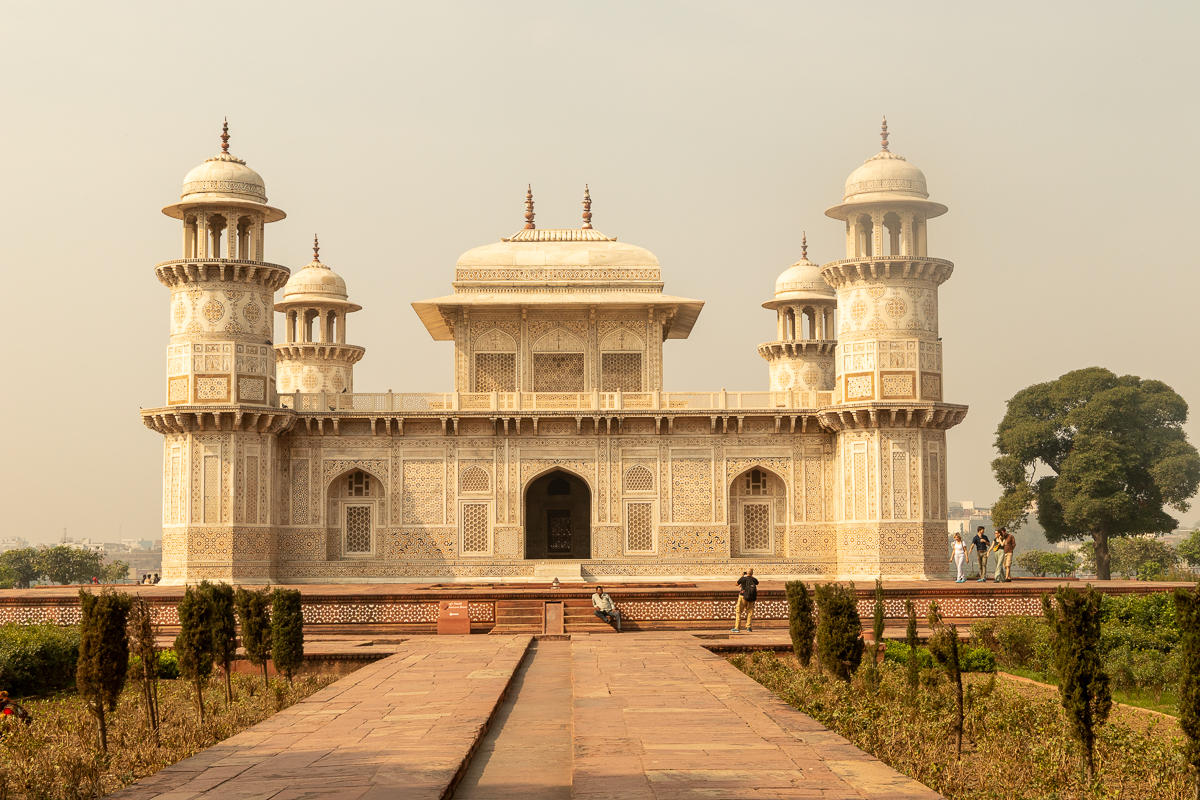
After our morning at the Taj Mahal, we visited the Itimad-ud-Daulah’s Tomb better known as the “Baby Taj,” a Mughal-era mausoleum built between 1622 and 1628, which predates the Taj Mahal. It was built for Mirza Ghiyas Beg, a Persian noble who rose to become the chief minister under Emperor Jahangir. He is perhaps best remembered as the grandfather of Mumtaz Mahal, for whom the Taj Mahal was built.
This is the first building built entirely of white marble; red sandstone was widely used at this time. This building introduced pietra dura inlay, colored stones set into marble, which was used extensively at the Taj Mahal, also delicate jali screens and a geometric Charbagh garden layout. All these elements were used in the construction of the Taj Mahal almost a decade later.
The jali screens are made of marble and carved into a delicate lattice pattern. The charbagh garden is a layout divided into four sections by water channels or walkways, representing the four rivers of Paradise from the Quran.
Lisa at Luxury Travel arranged both Saudi Arabia and India; see the link above to connect with her information.Saudi Arabia and India were both arranged by Lisa at Luxury Travel, see link above to connect to her information.