
Alula
So, when AlUla was first recommended to me, I initially hesitated, saying, “I live in red rock country.” The travel agent took an extra day but insisted we needed to see it. I am so glad she did. I finally had the freedom to use my camera (if only I remembered to charge my batteries—more about that later), and the area was breathtaking. I can’t wait to go back! We flew from Riyadh to AlUla in about two hours. We arrived early in the afternoon, but unfortunately, with luggage delays ran late, so we had to condense our afternoon schedule.
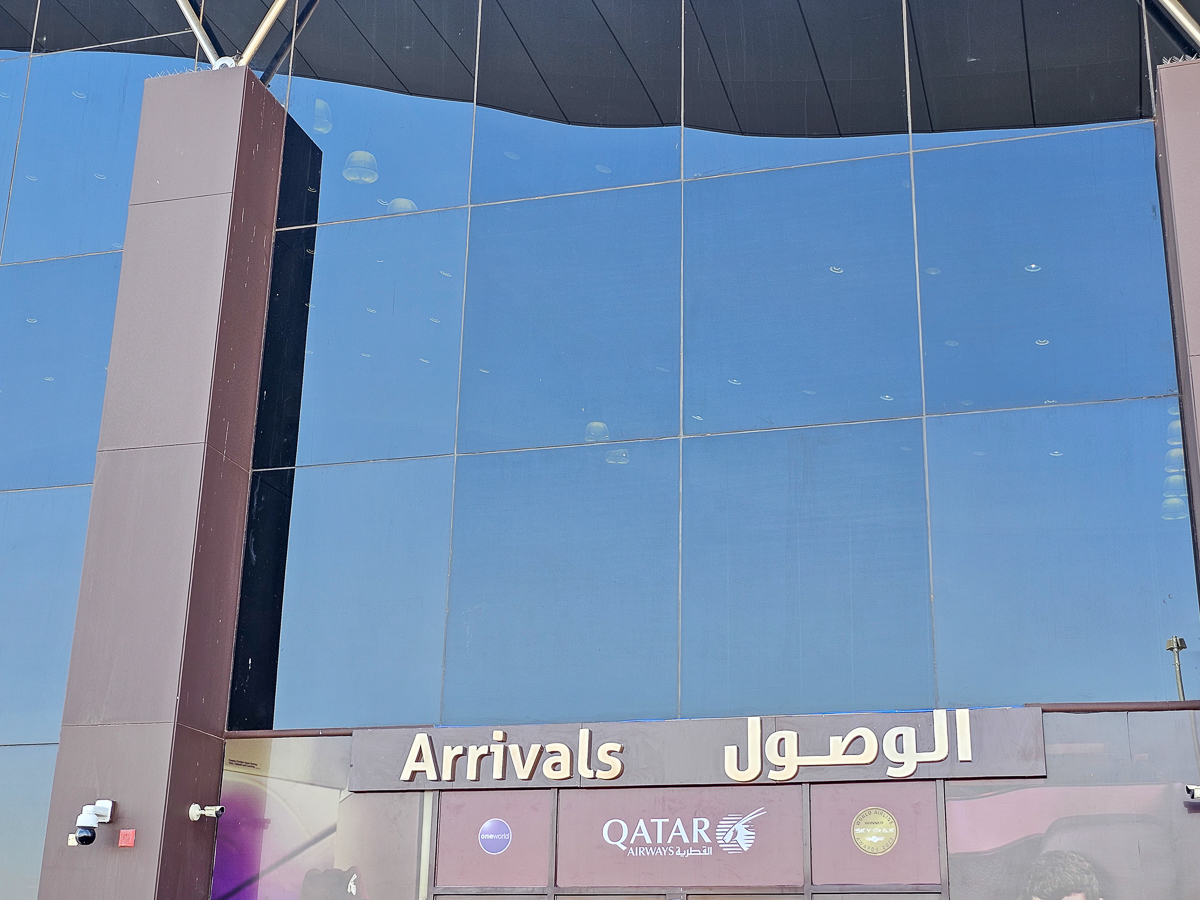
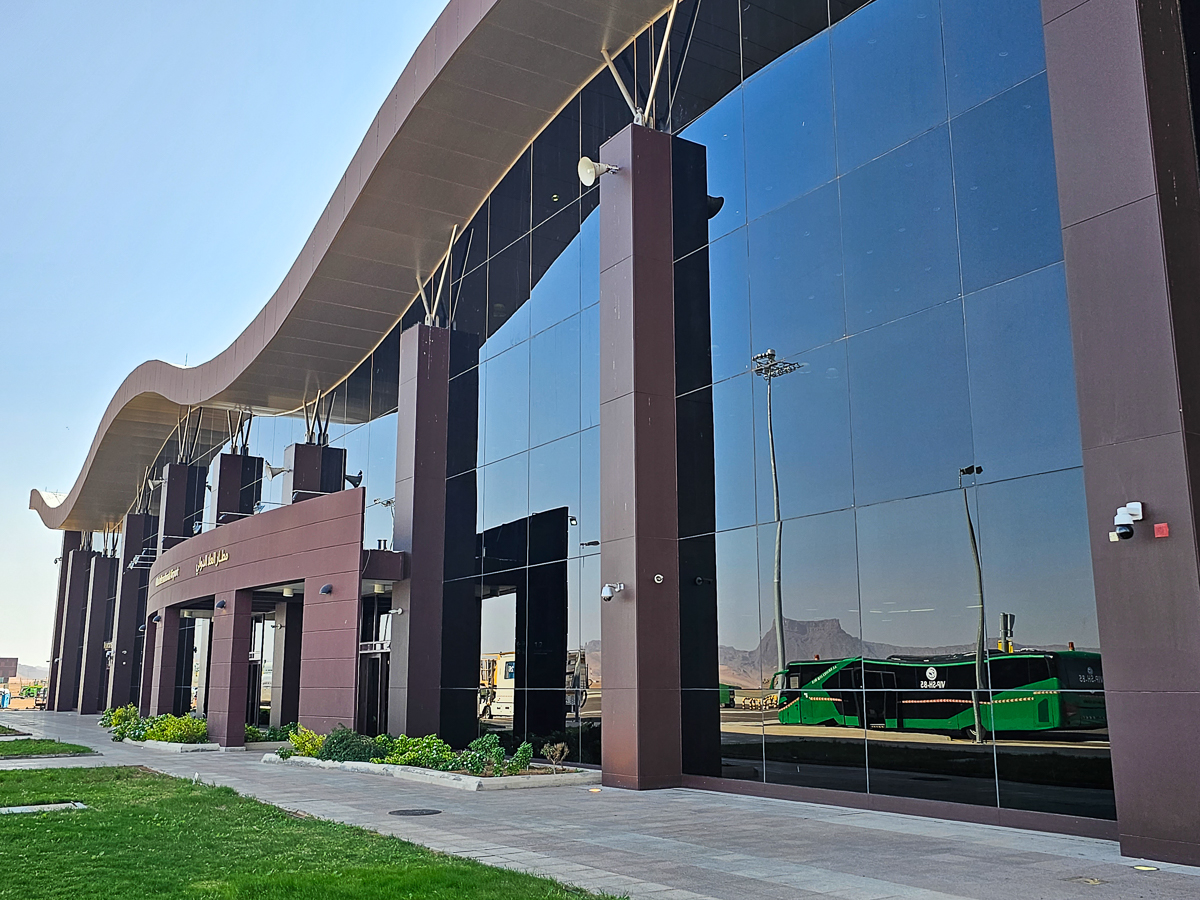
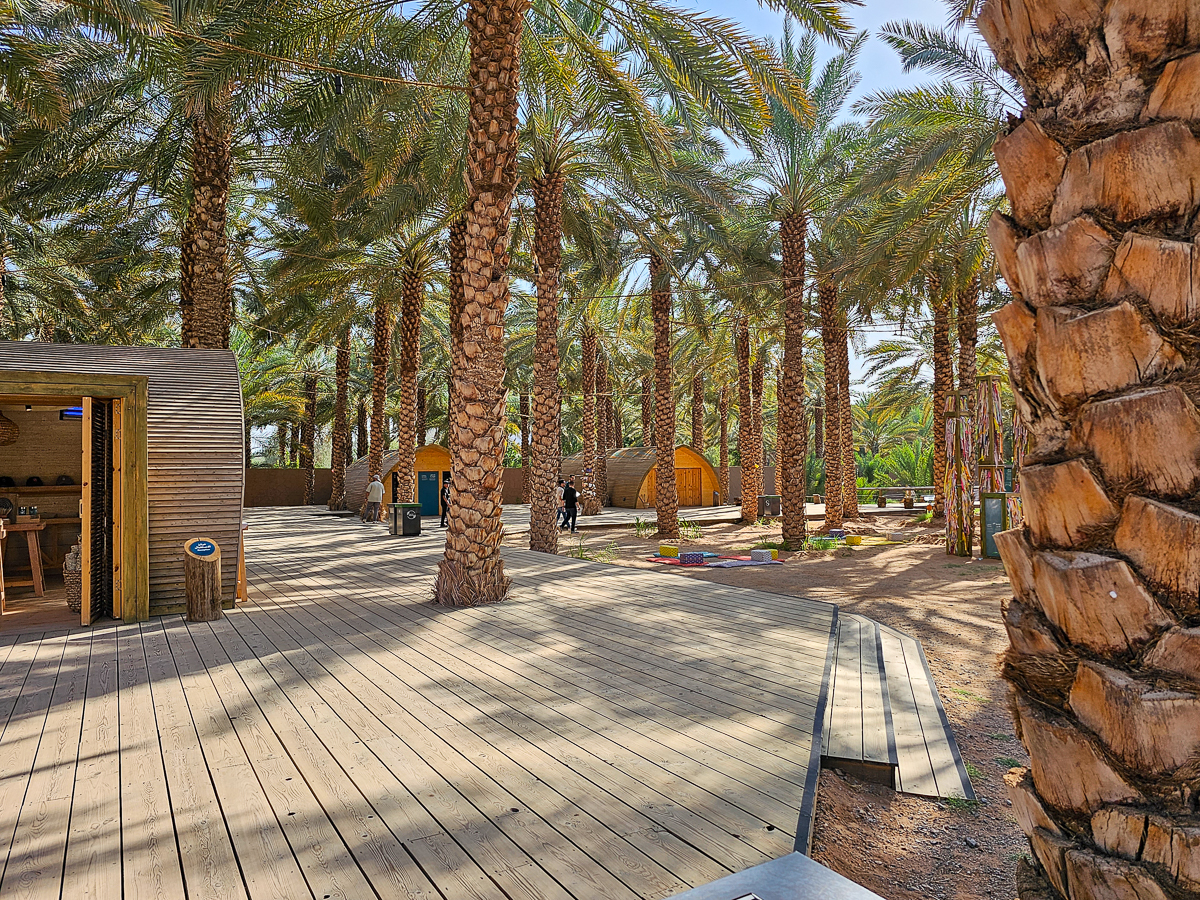
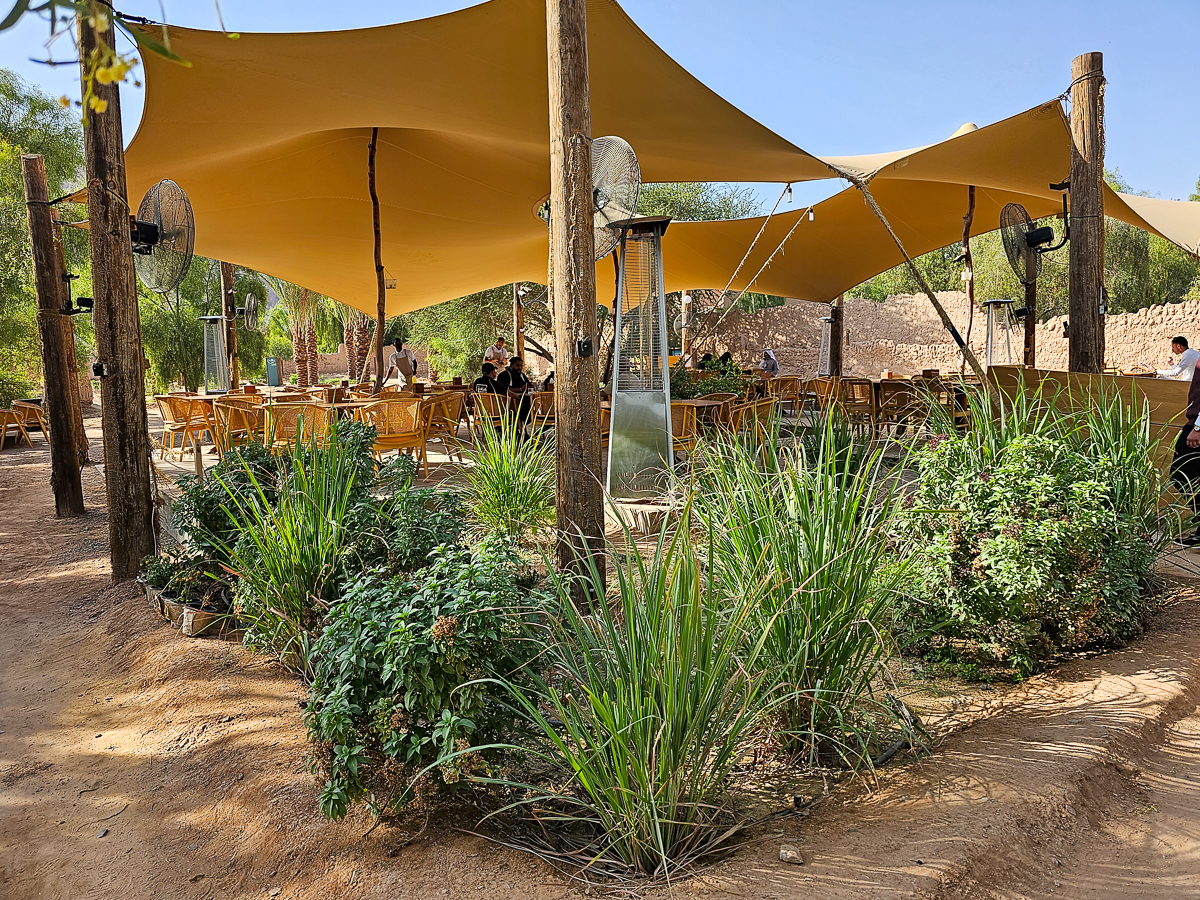
Our first stop was at Daimumah Western Hub for lunch. Daimumah is derived from an Arabic word meaning sustainability. The area combines traditional farming with modern techniques to grow a variety of crops.
We first had a presentation on how water was extracted from the earth to irrigate the surrounding date palm orchards and farms. All very interesting!
Lunch at Daimumah was one of the best meals we had while in Saudi Arabia.
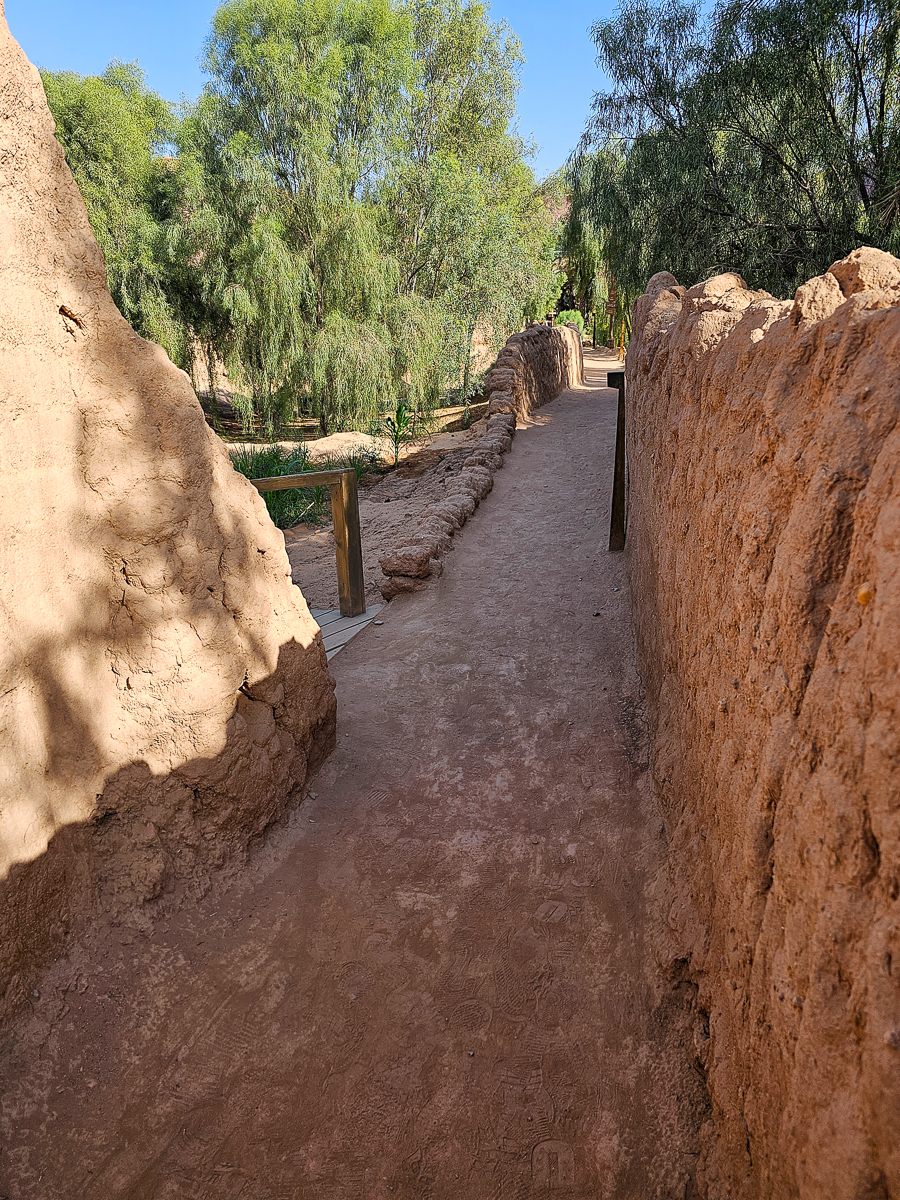
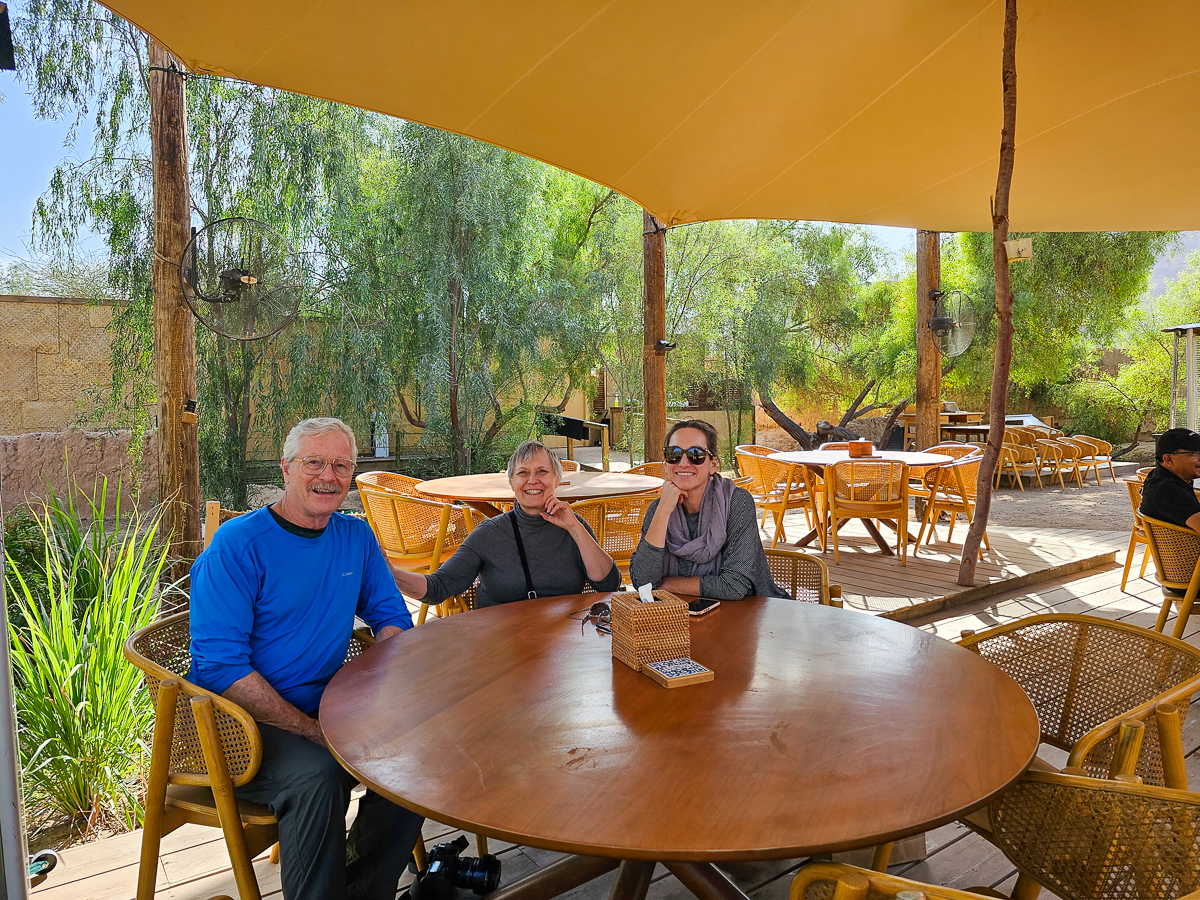
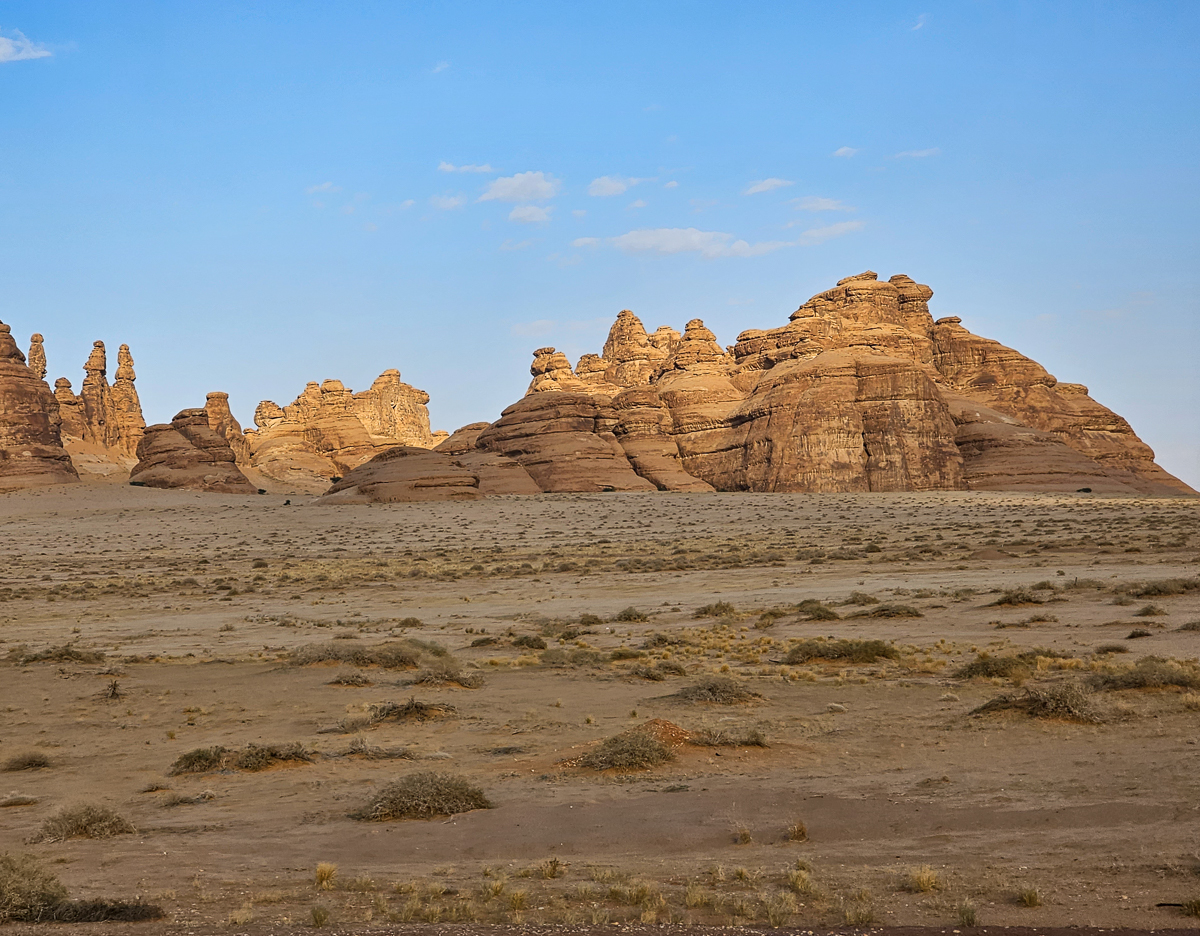
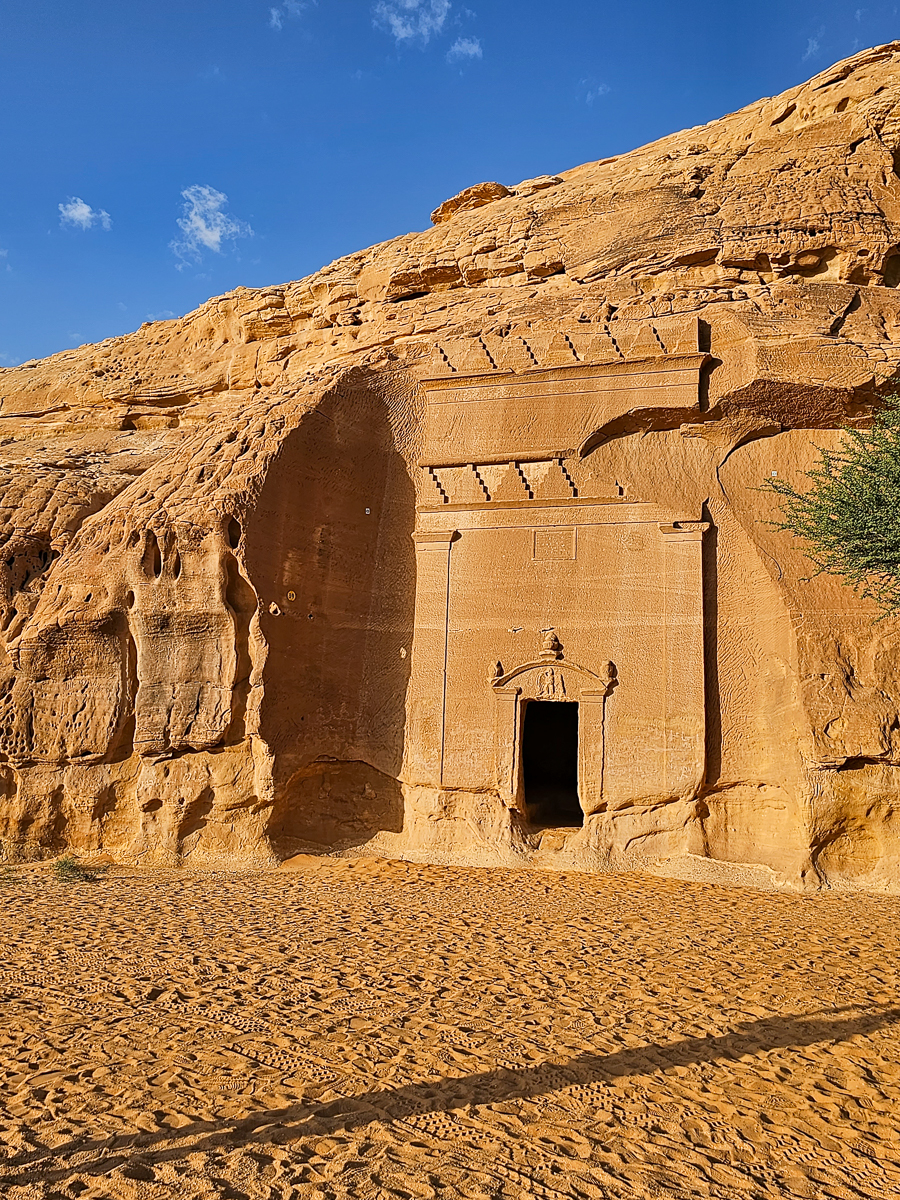
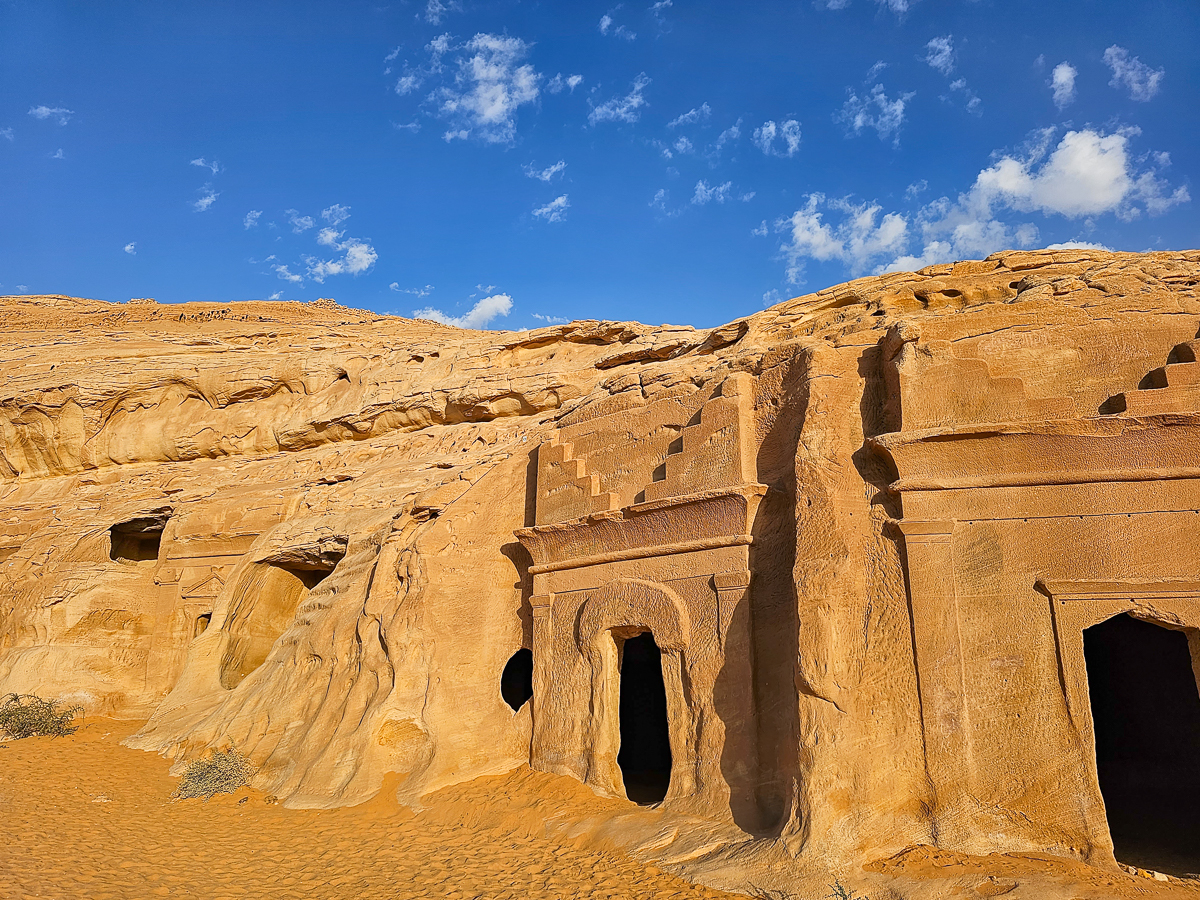
The first stop on our afternoon tour was Hegra, also known as Mada’in Salih or Al-Hijr. We took a golf cart out into the desert to visit these ancient sites.
Sadly, I had left my camera bag with the spare batteries in the SUV that dropped us off, and my phone was also running out of battery power.
Hegra’s ruins date from the Nabataean Kingdom, particularly the first century A.D. Hegra was the kingdom’s southernmost major city, second in importance to Petra, its capital, which we had visited several years earlier.
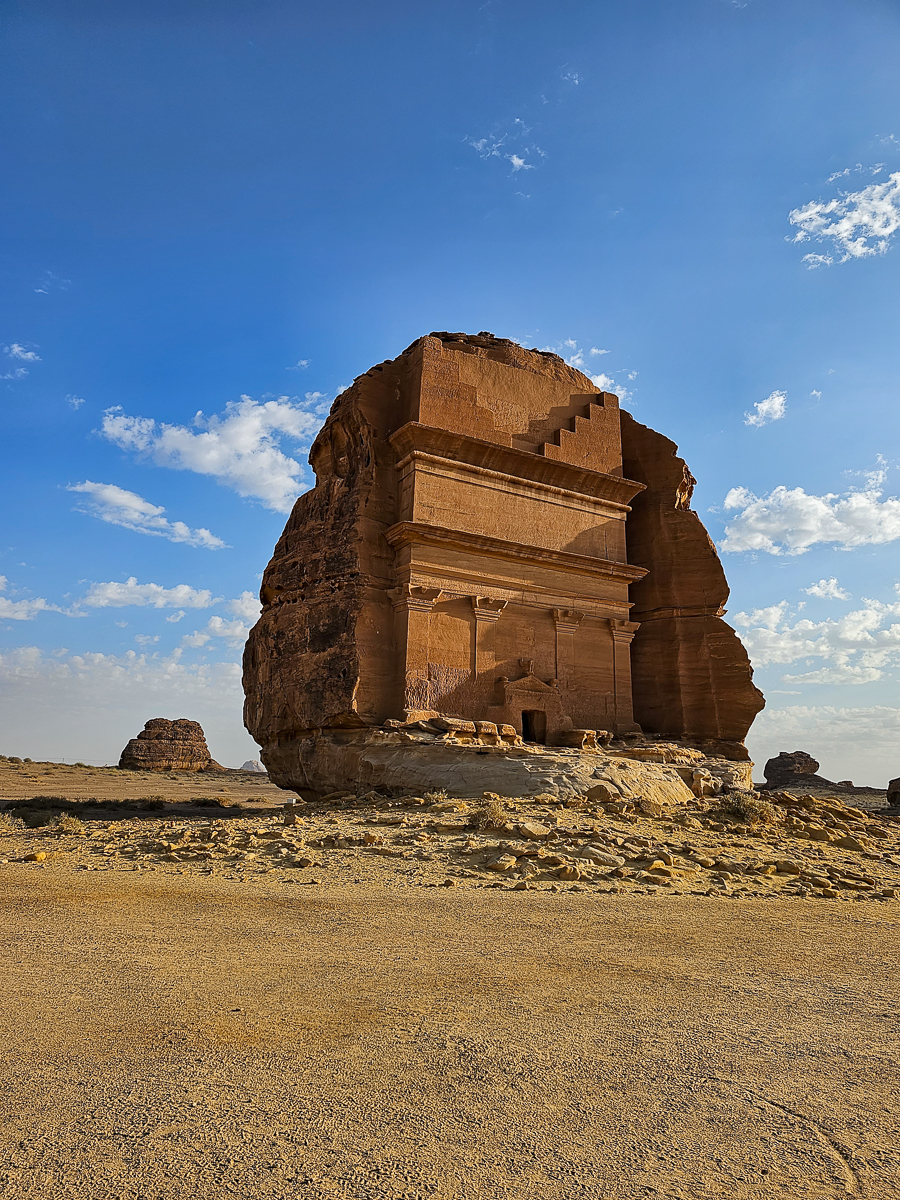
The site contains more than a hundred well-preserved tombs carved into the sandstone. In 2008, Hegra became Saudi Arabia’s first UNESCO World Heritage Site.
Image below: Qasr al-Farid – The Lonely Castle
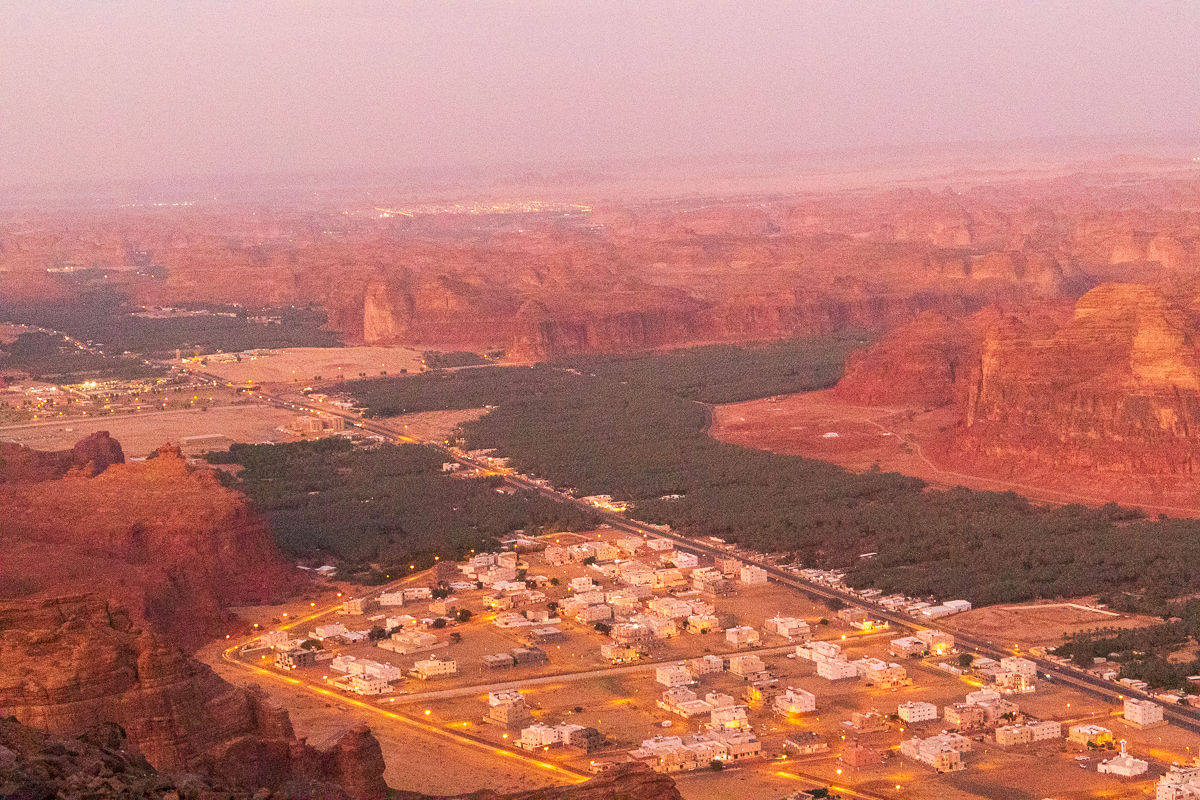
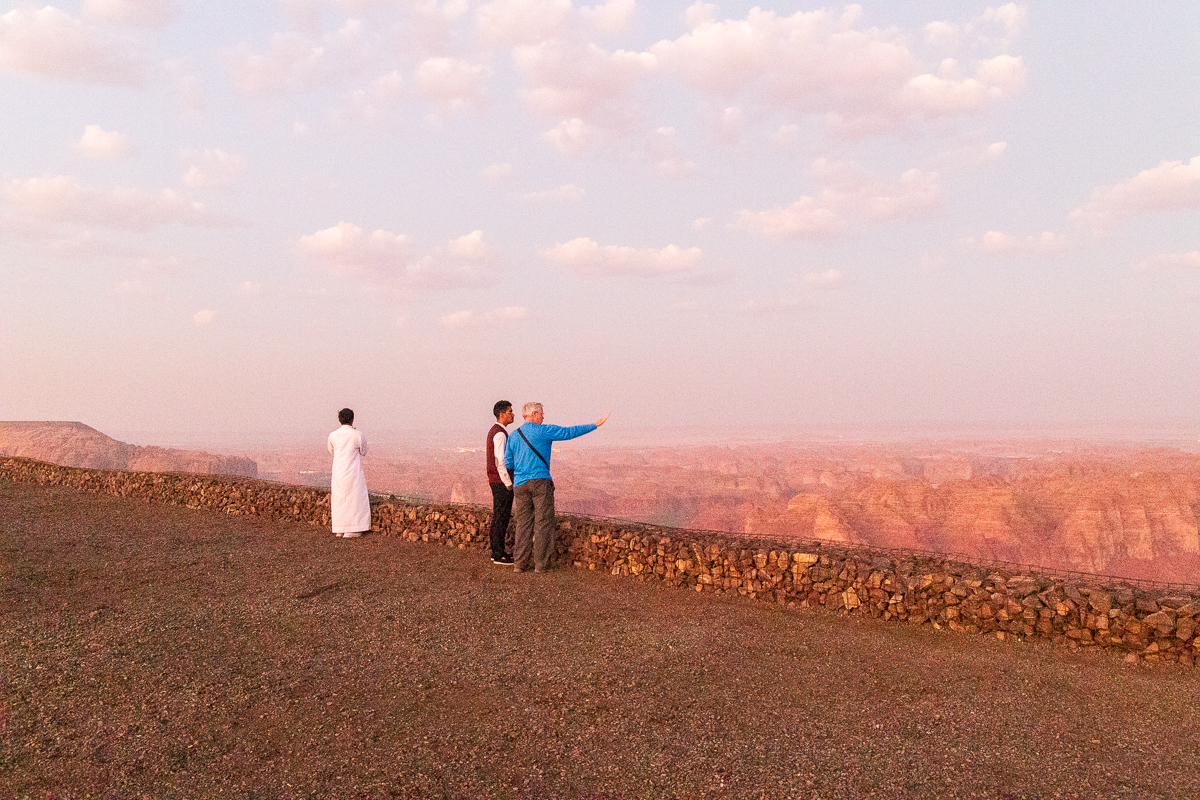
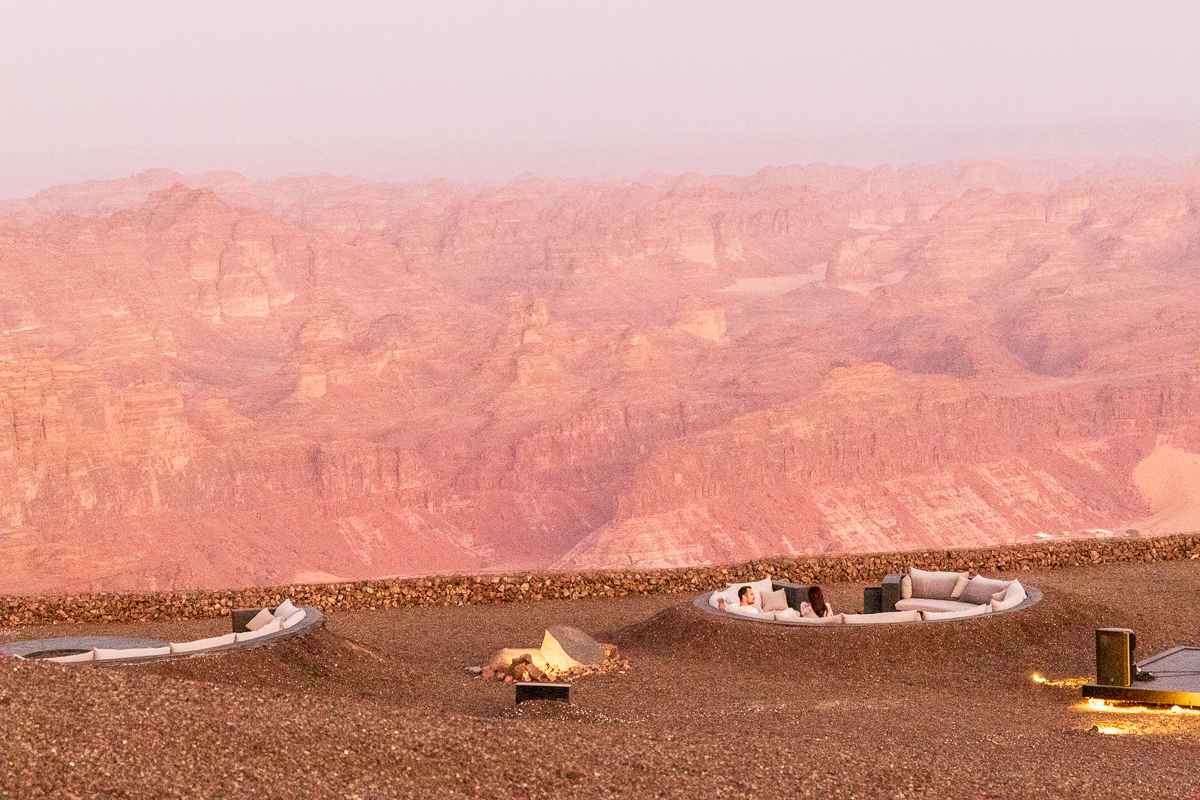
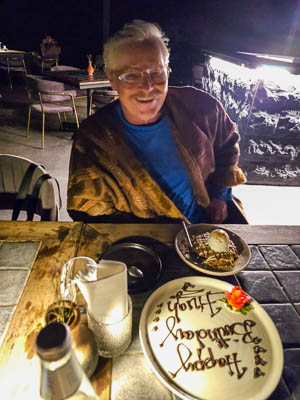
After visiting Hegra, we headed to Harrat Viewpoint for dinner and to celebrate Hugh’s 75th birthday! Next time, we should sit in the cushioned areas carved into the mountainside.
Lisa at Luxury Travel arranged both Saudi Arabia and India; see the link above for her contact information.