
DRIVE TO JAIPUR
Every once in a while, you find a place where the light, detail, and time merge, and you can lose yourself behind your camera’s lens and just become part of the environment. The light might not be perfect, but it works. Fatehpur Sikri. There were no crowds, no rush, nothing pressing me… just time to listen to stories, soak in the surroundings, pay attention, and let my lens lead.
I heard stories where the harem lived… did I really hear right, a harem? That’s when you know you’re not in the twenty-first century but have been transported to another time and place.
A little history before I show you some of what I saw. The Fatehpur Sikri is a 16th-century Mughal capital built by Emperor Akbar, but it was only occupied for about 15 years. Like many historic buildings, there is a story. Akbar’s story was that he had no sons, and he visited a Sufi saint at Sikri who blessed him and foretold the birth of an heir. When Akbar’s son was born, he built an entirely new capital at the site of the saint’s home.
It was abandoned for several reasons, including water shortages, the site becoming impractical as the empire expanded, and Akbar’s military campaigns moving north toward Afghanistan. Abandoning the site helped prevent it from being overtaken, destroyed, or modified by later dynasties, and Fatehpur Sikri remains one of the best-preserved Mughal city sites.
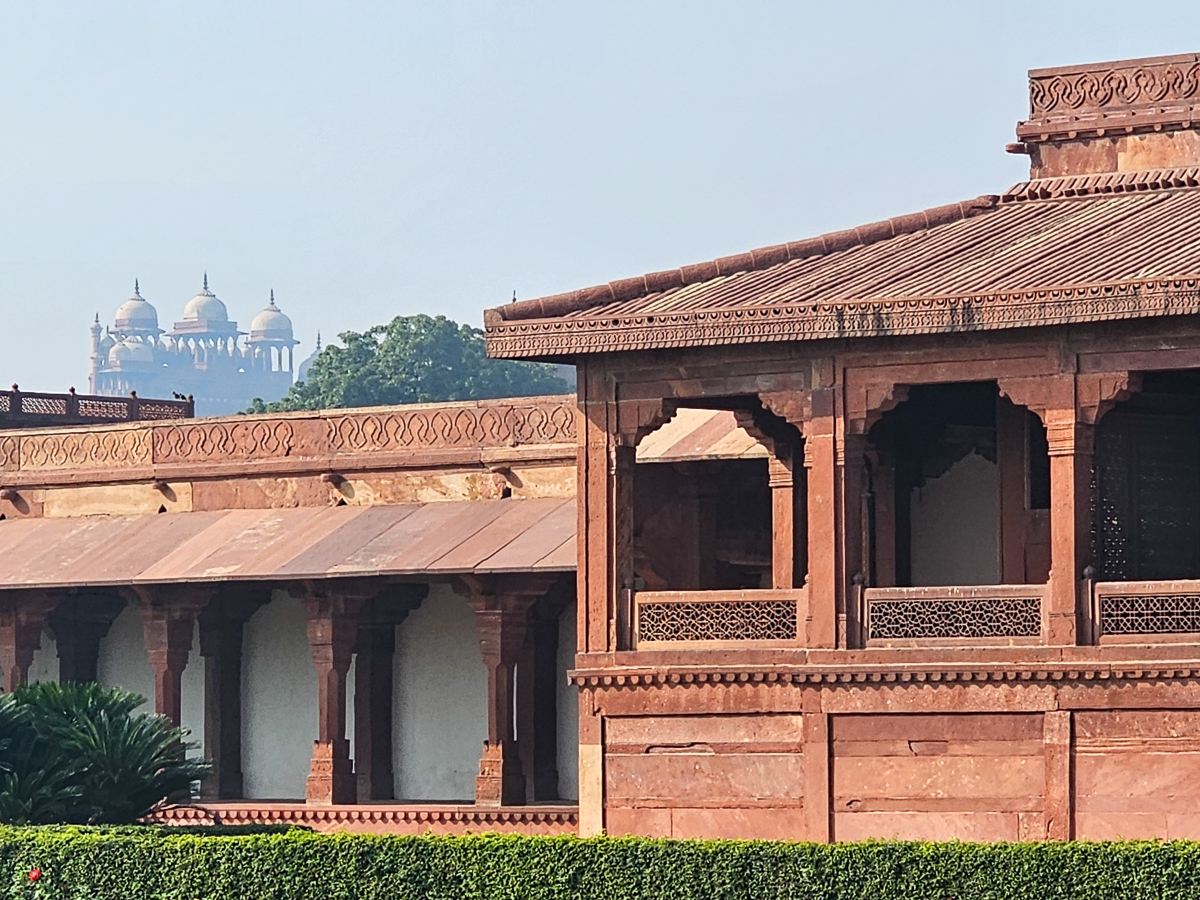
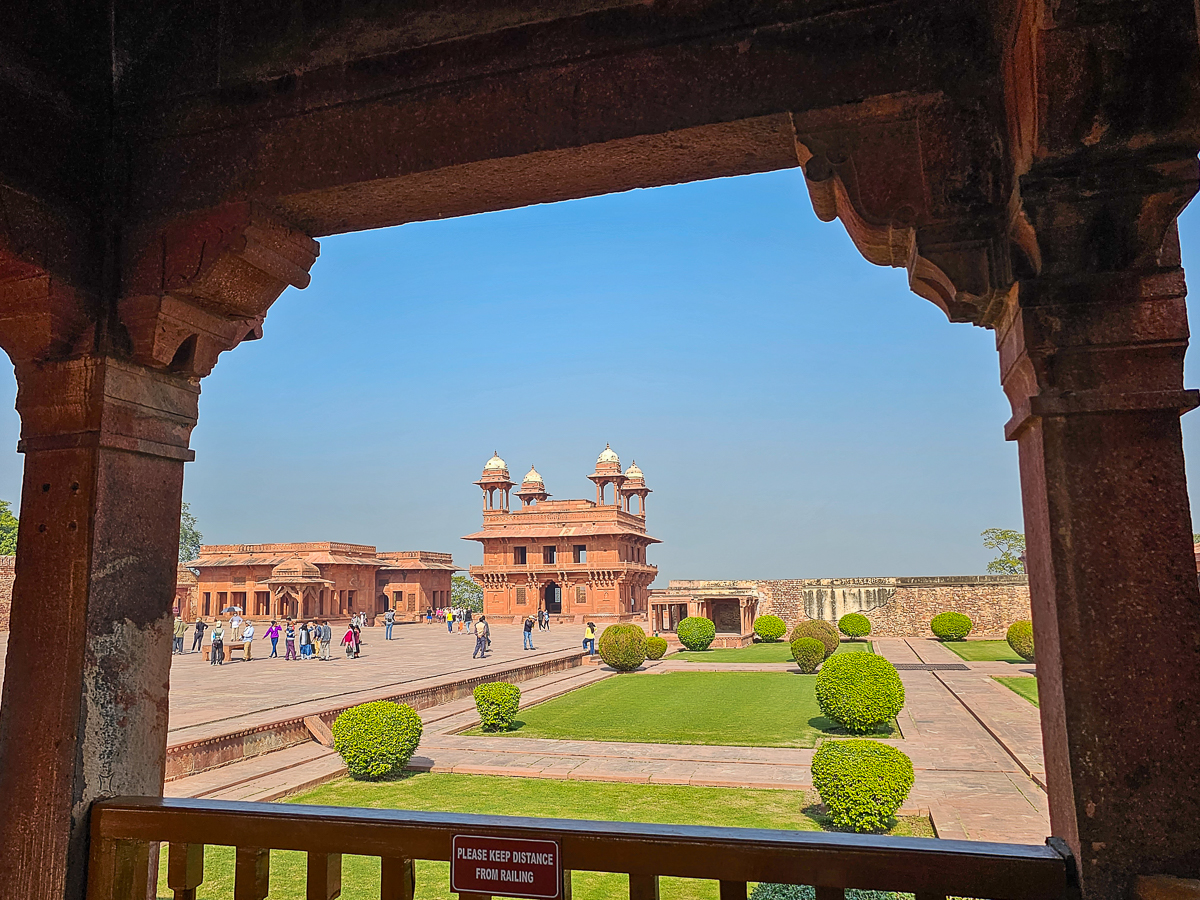
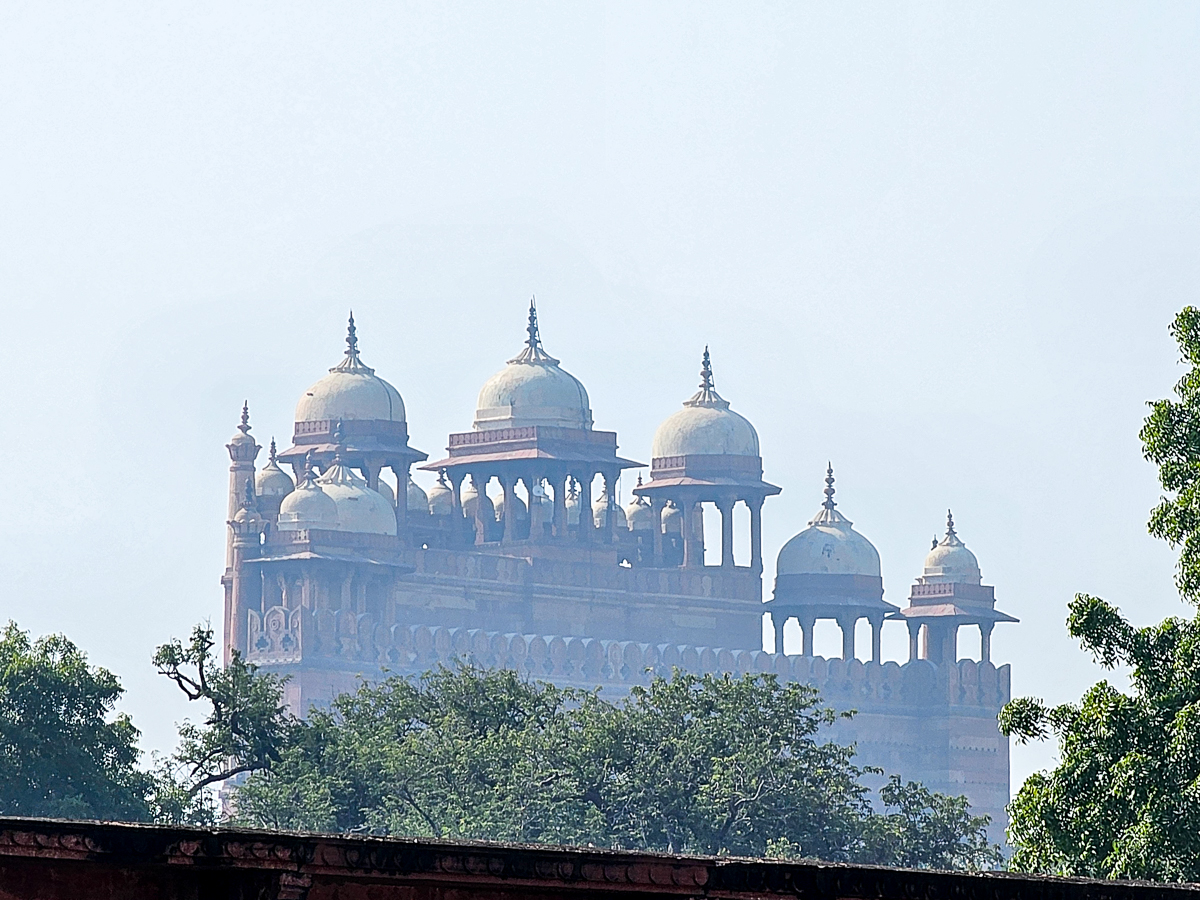
The three photos above capture two distinct zones within the Fatehpur Sikri complex, a UNESCO World Heritage Site.
The left and center images belong to the palace precinct, with the central photo showing the Diwan-i-Khas, the Hall of Private Audience. Inside this building sits Akbar’s extraordinary central throne pillar, seen in the sequence of images below. This was the space where the Mughal emperor held intimate discussions, debated philosophy, and received distinguished visitors.
Surrounding this courtyard are other key structures, including the Anup Talao (the ornamental pond) and the Turkish Sultana’s House.
The right-hand photo shifts to the mosque complex, dominated by the Buland Darwaza—the monumental “Gate of Magnificence,” added in the early 17th century and still one of the tallest gateways in India.
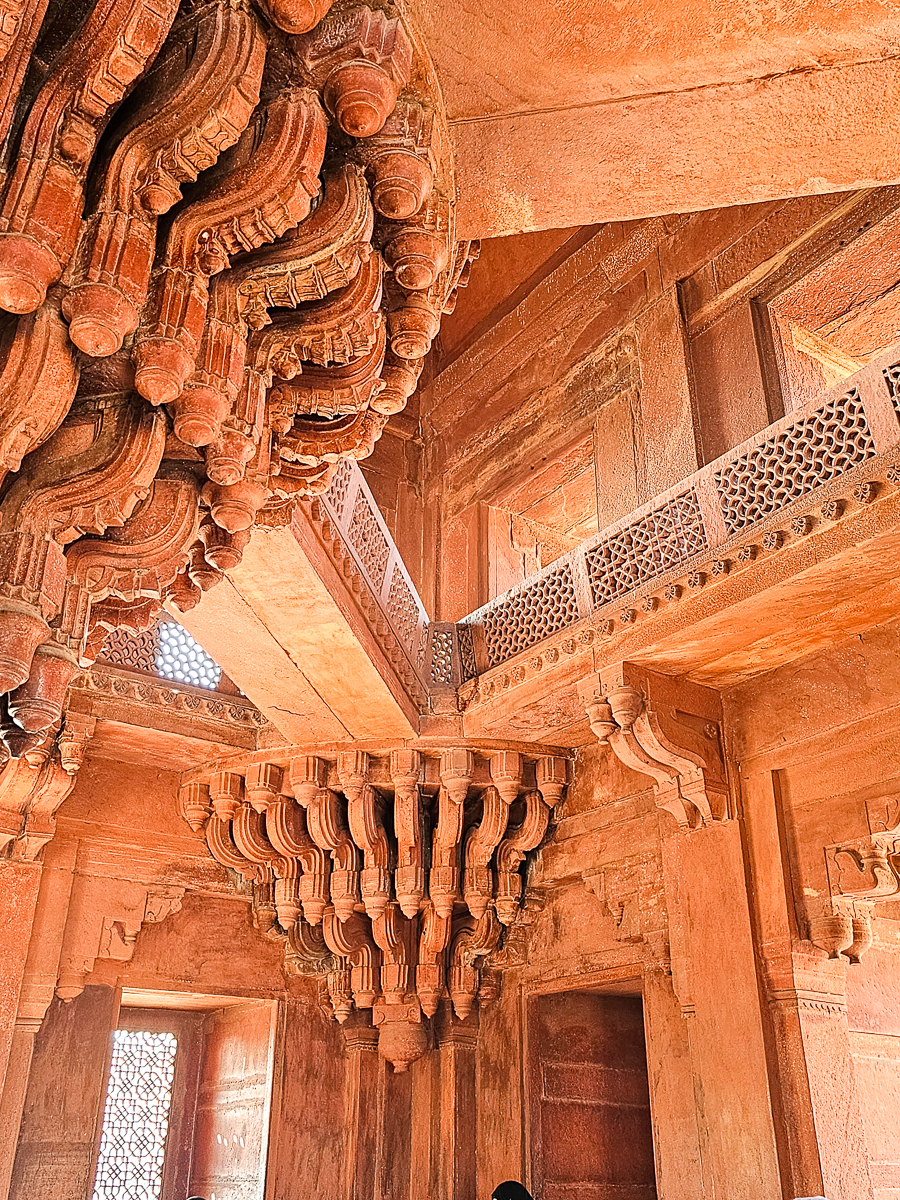
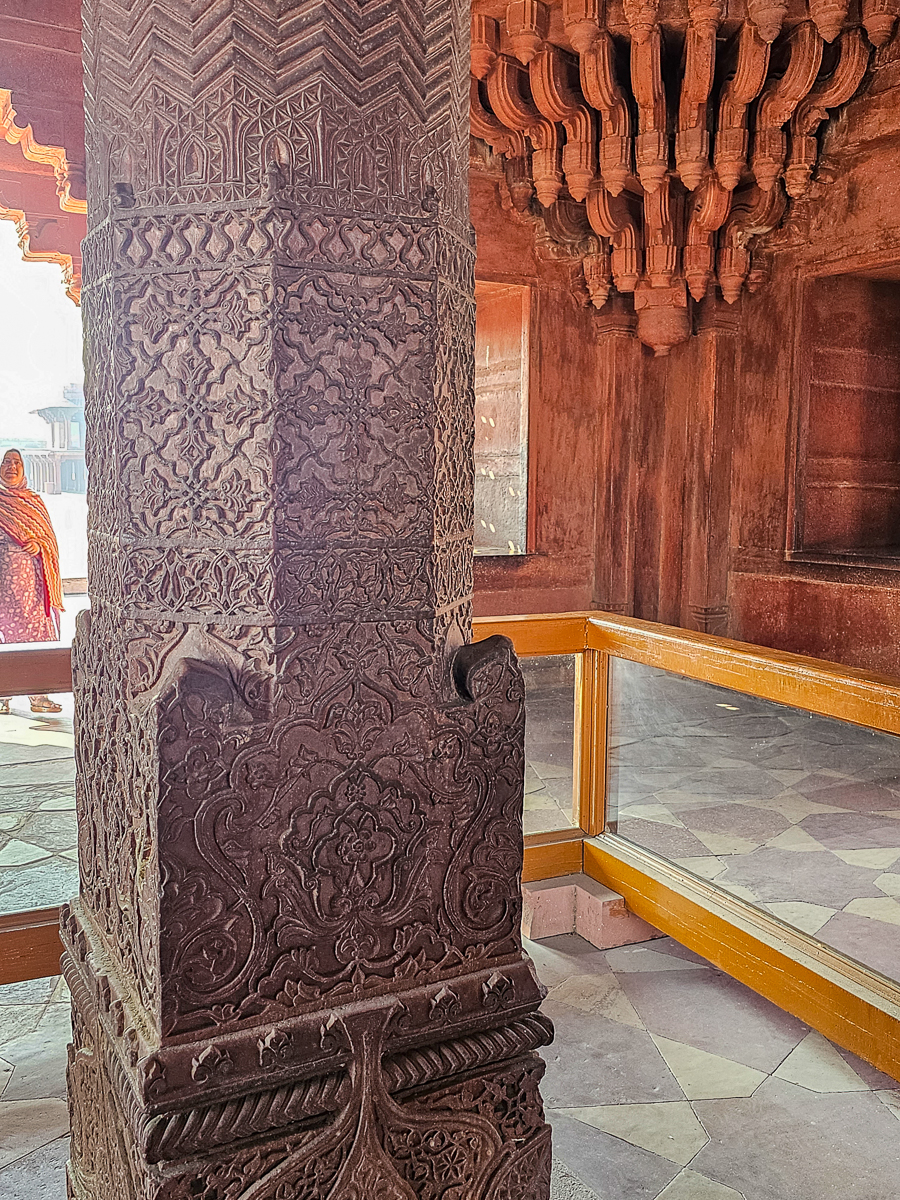
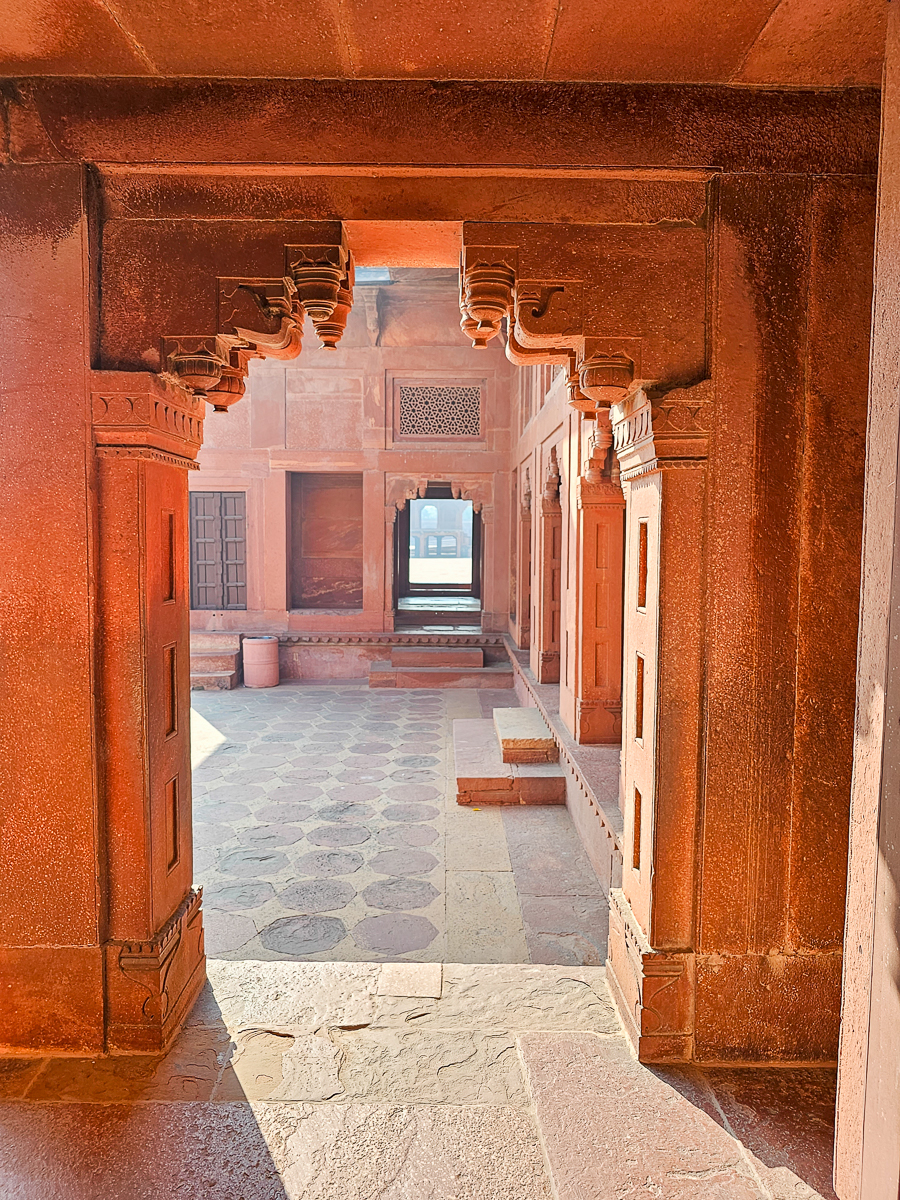
Above are some of the photos I took of the magnificent details.
The center photo features the main sandstone carved throne pillar, located inside the Diwan-i-Khas. This pillar once supported the emperor’s circular platform, built around 1575. What makes it unique is the mix of Persian arabesques, Hindu lotus motifs, and local Gujarati decorative styles. The lower parts of the pillar are carved in floral relief, while the upper part shows geometric chevrons and interlace patterns.
The symbolic importance lies in Akbar’s idea of Sulh-i-Kul (peace for all) and his efforts to unite the region’s religious and cultural groups by uniting the various styles into the base of his throne.
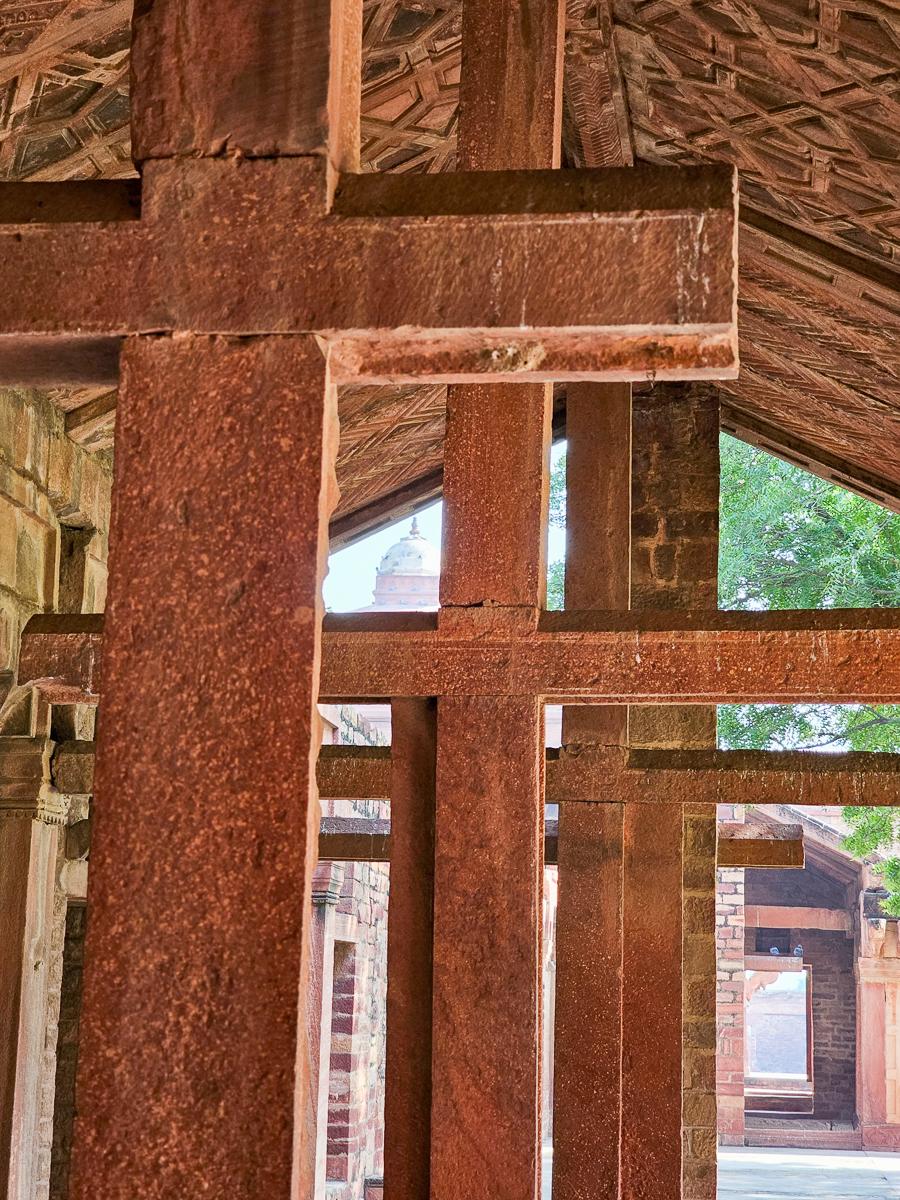
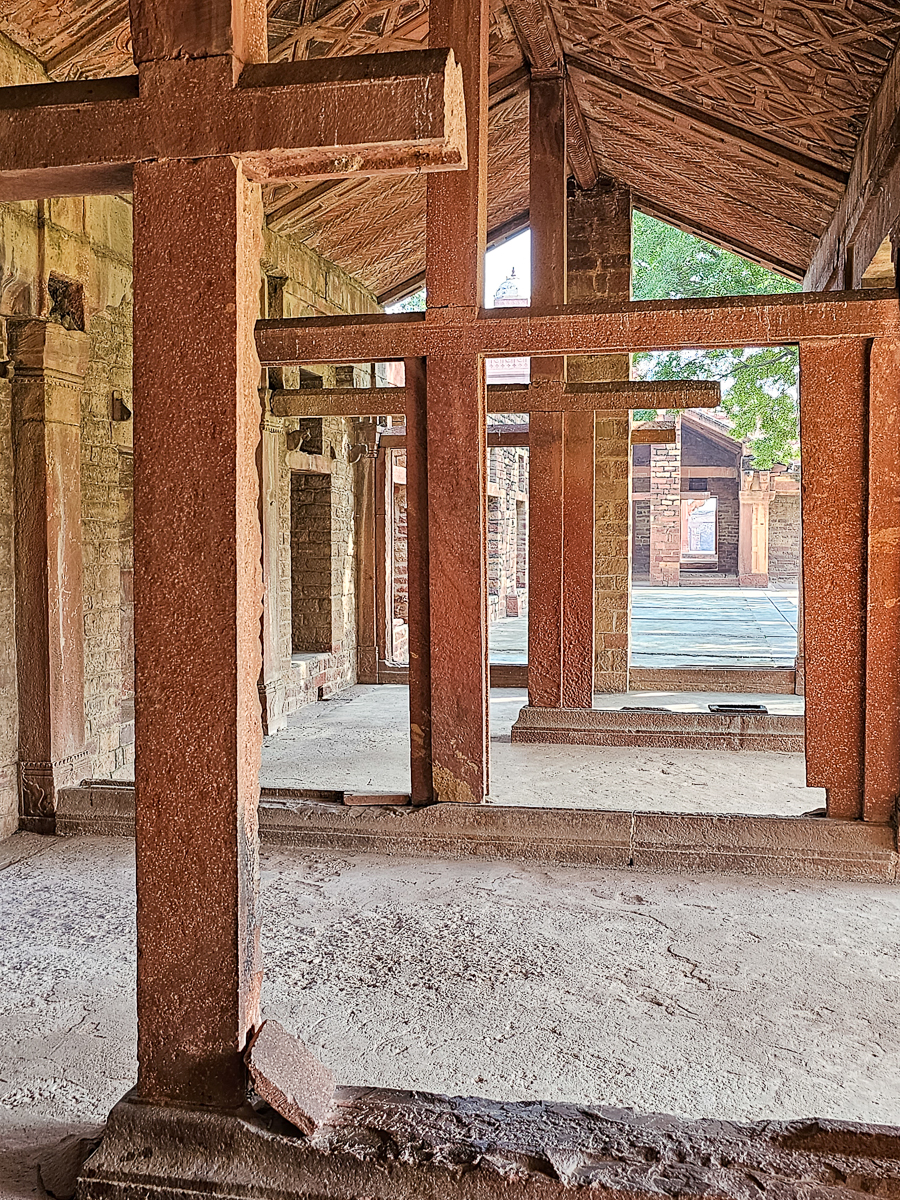
Below, I was captured by these structures, taking dozens of photos. What my eye saw was geometry, but what I captured was a long grid of red sandstone columns in a quieter residential and service wing of Fatehpur Sikri. These colonnades connected private rooms, providing shaded walkways for attendants. Their simplicity departs from the elaborate carvings seen elsewhere, such as on the central throne pillar.
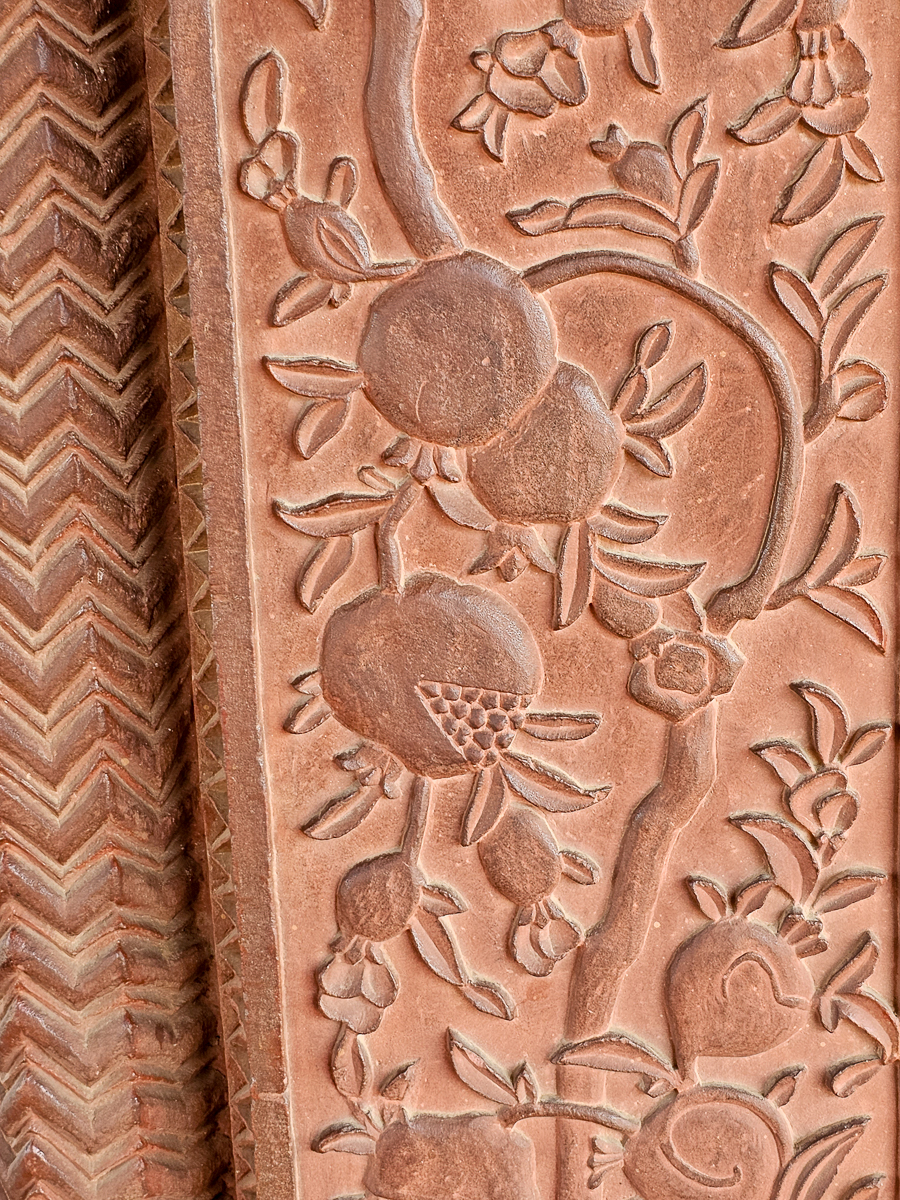
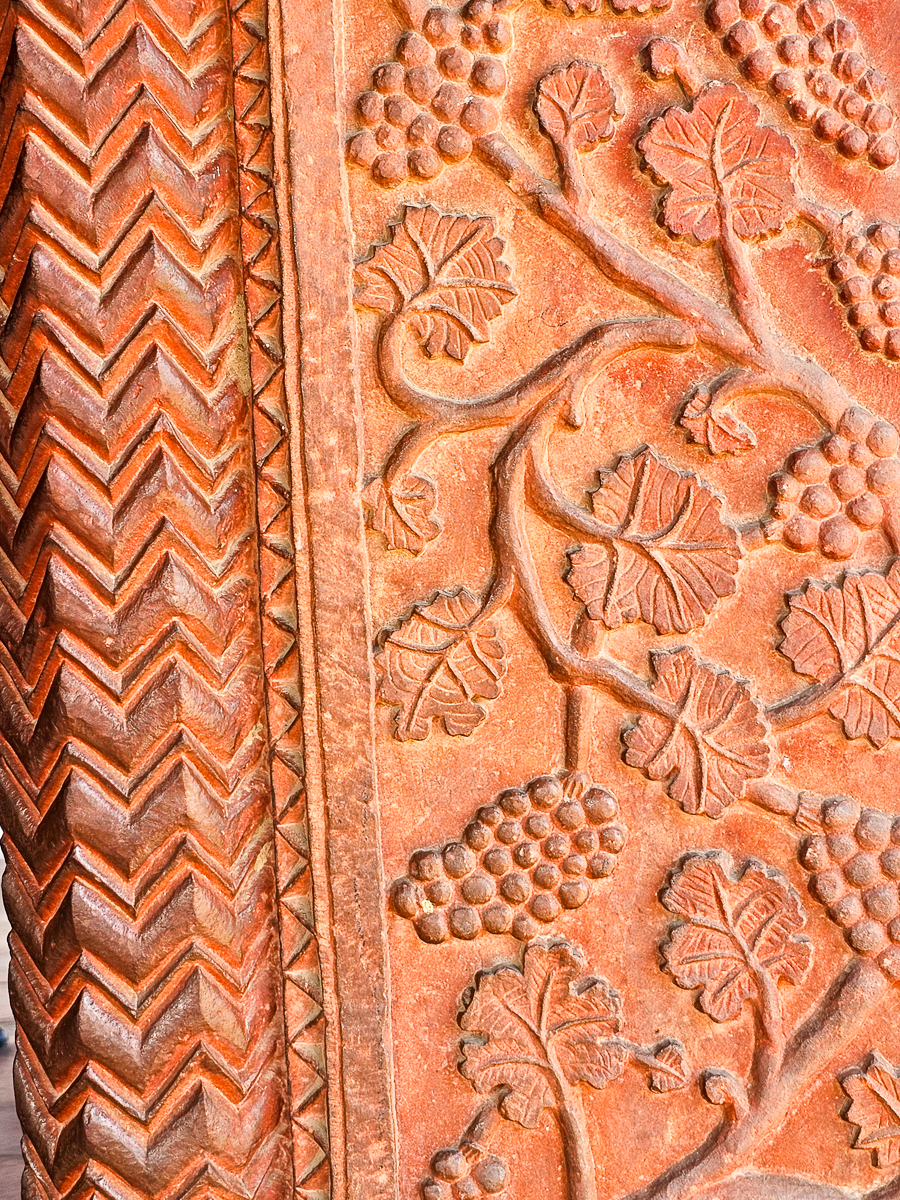
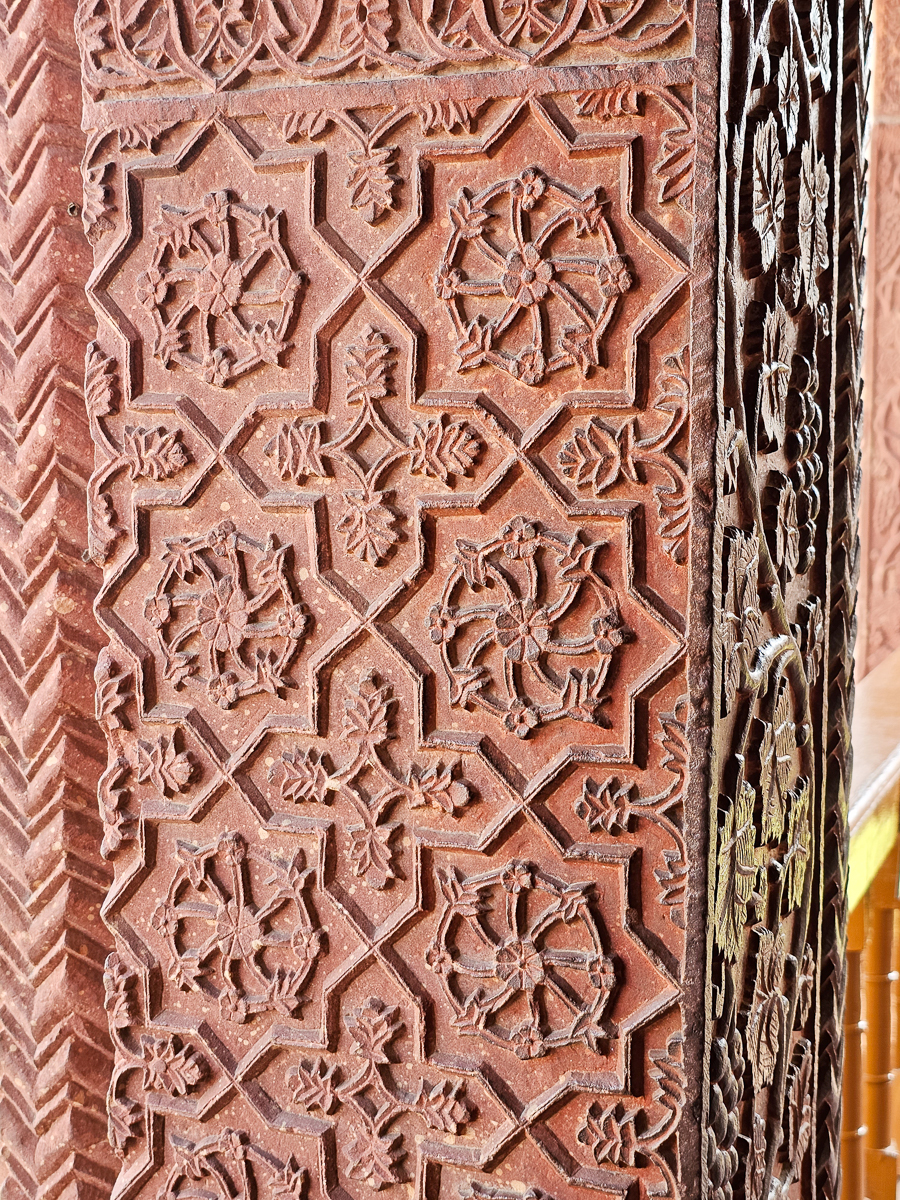
Above, three photos of the sandstone carvings inside the Fatehpur Sikri.
The name of the technique is low relief, as it gently projects from the stone surface, and the style is called Mughal floral bas-relief, which leans naturalistic but remains stylized.
What interests me is the choice of what was carved and the symbolism of the Mughal era.
Pomegranates – fertility and abundance, prosperity, unity-in-multiplicity (many seeds in one fruit)
Grape Vines – a Persian motif, associated with paradise gardens
The far right panel is geometric floral panels (octagons and rosettes) and is classic he far right panel features geometric floral designs (octagons and rosettes) and reflects classic early Mughal architecture influenced by the Delhi Sultanate and older Islamic traditions. The eight-pointed star is common in Islamic geometry, and the small rosettes are distinctly Mughal. This again shows a blending of the area’s cultures and religions.early Mughal architecture influenced by the Delhi Sutanate and older Islamic traditions. The eight-pointed star is common in Islamic geometry, and the small rosettes are very Mughal. Again a blending of the areas cultures and religions.
In Jaipur, I took a much-needed day to reflect on all that I had seen.
Lisa at Luxury Travel arranged both Saudi Arabia and India; see the link above to connect with her information.Saudi Arabia and India were both arranged by Lisa at Luxury Travel, see link above to connect to her information.