PREVIOUS

DELHI

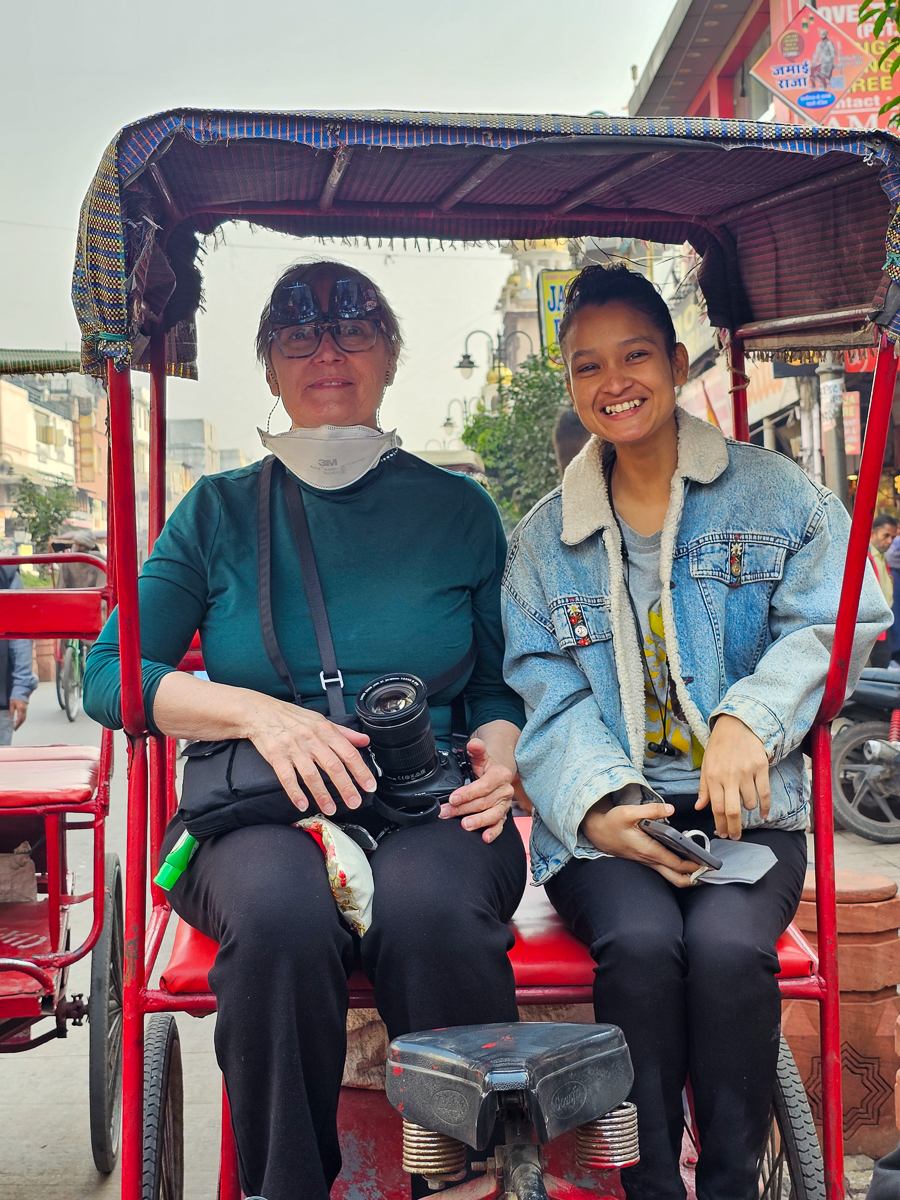
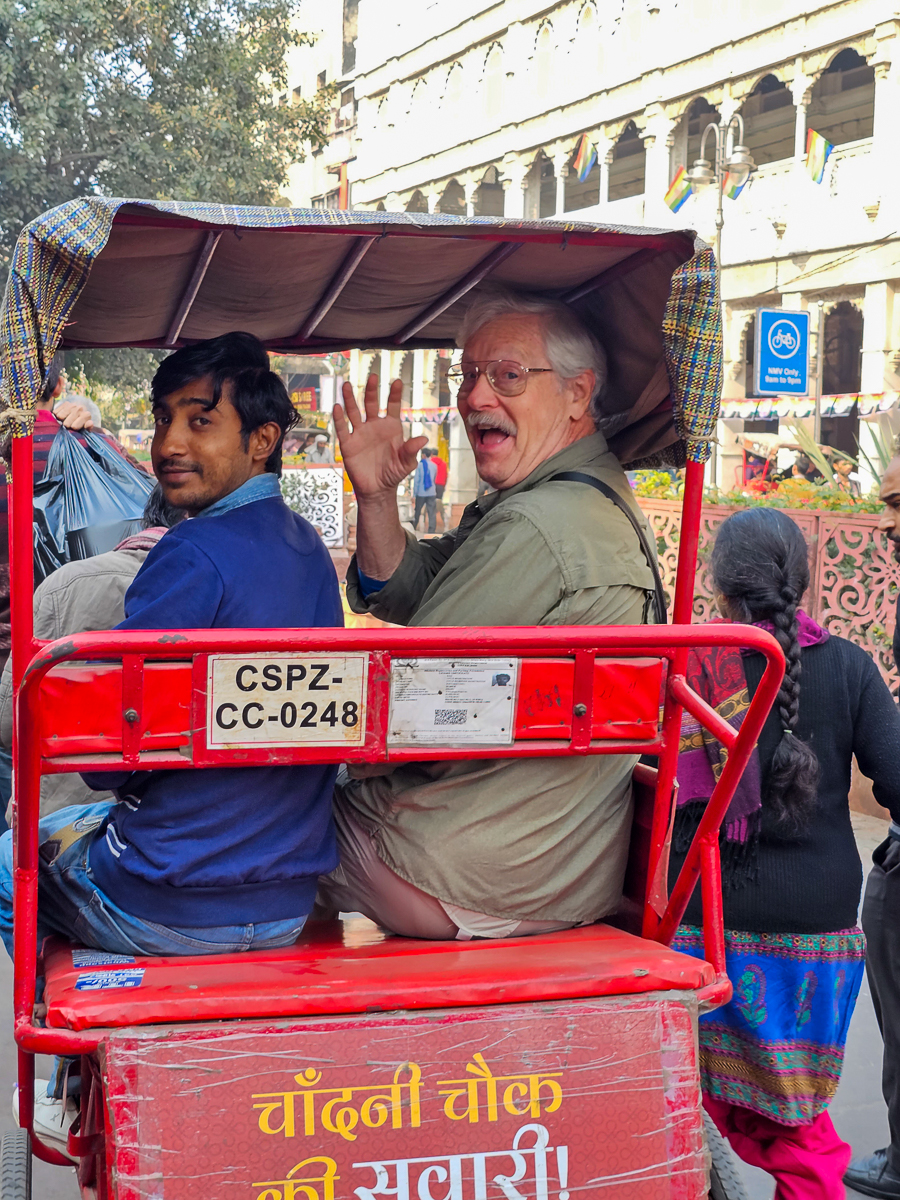
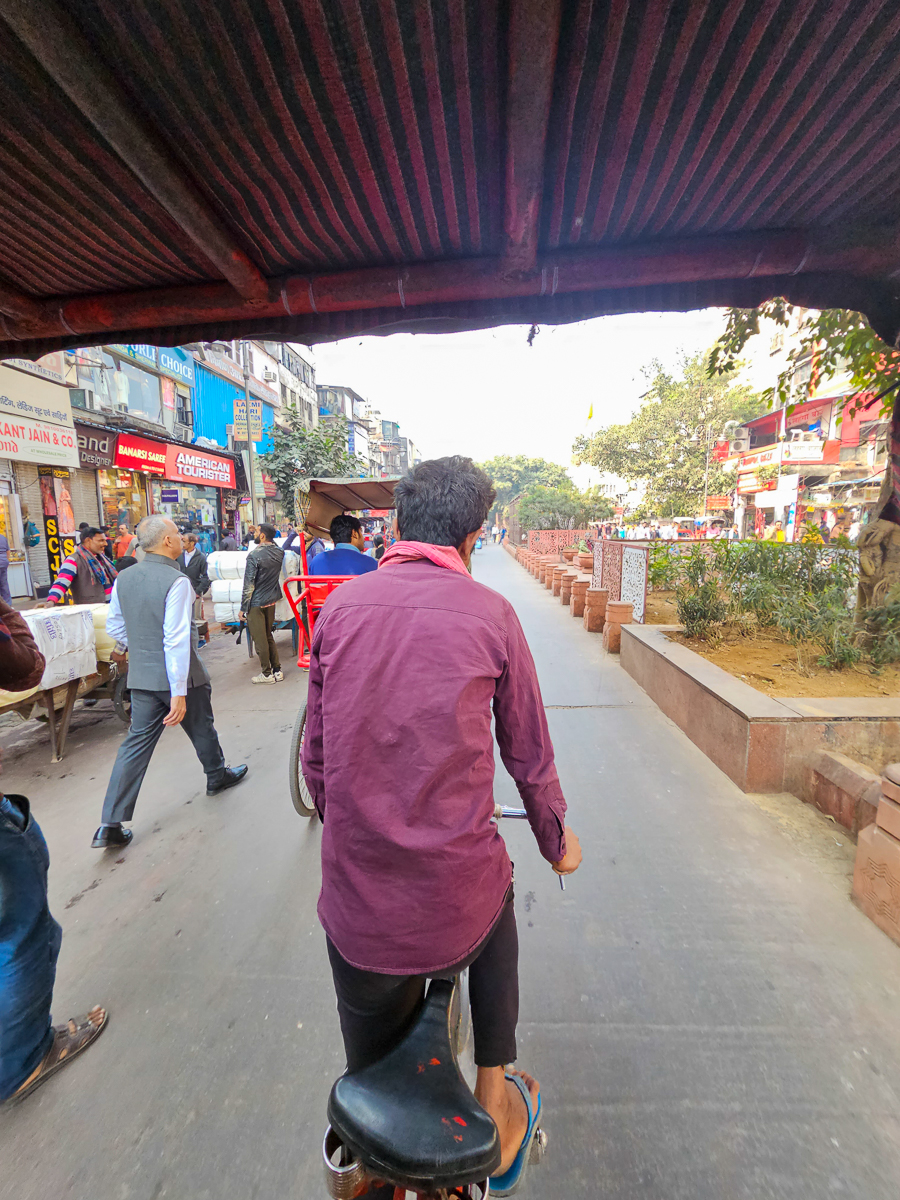
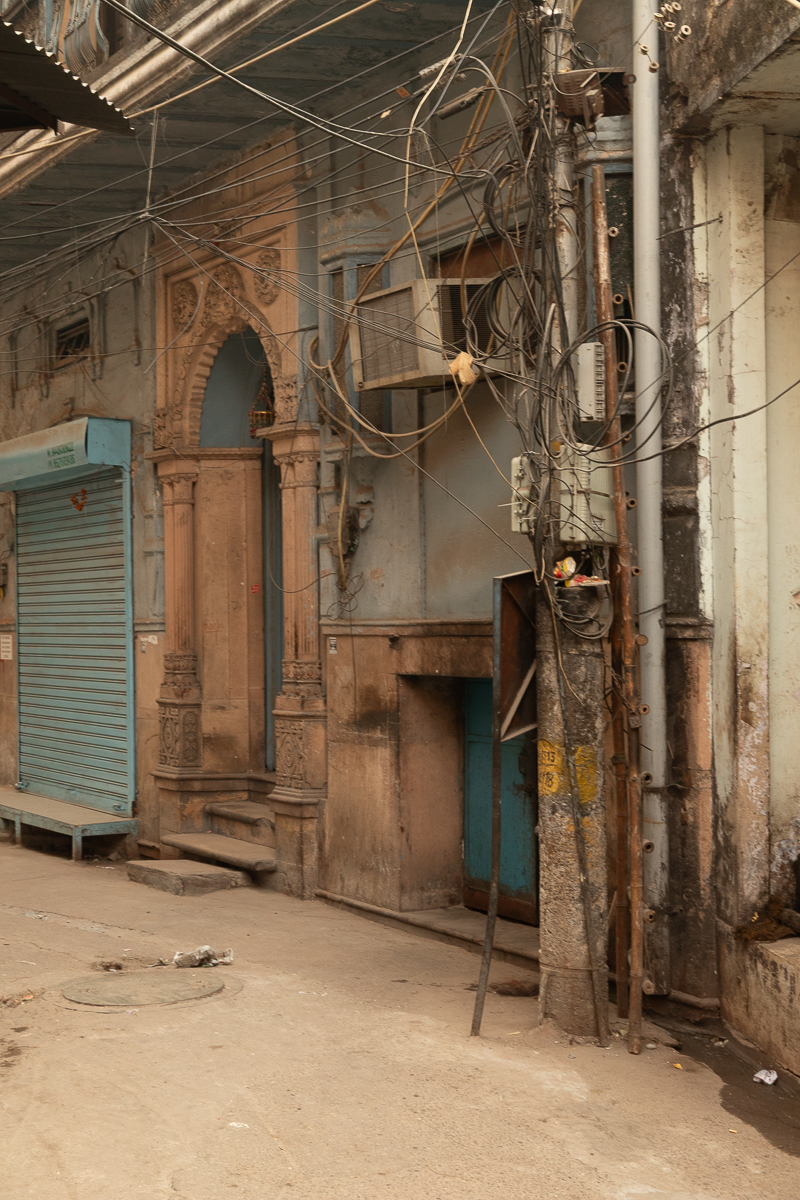
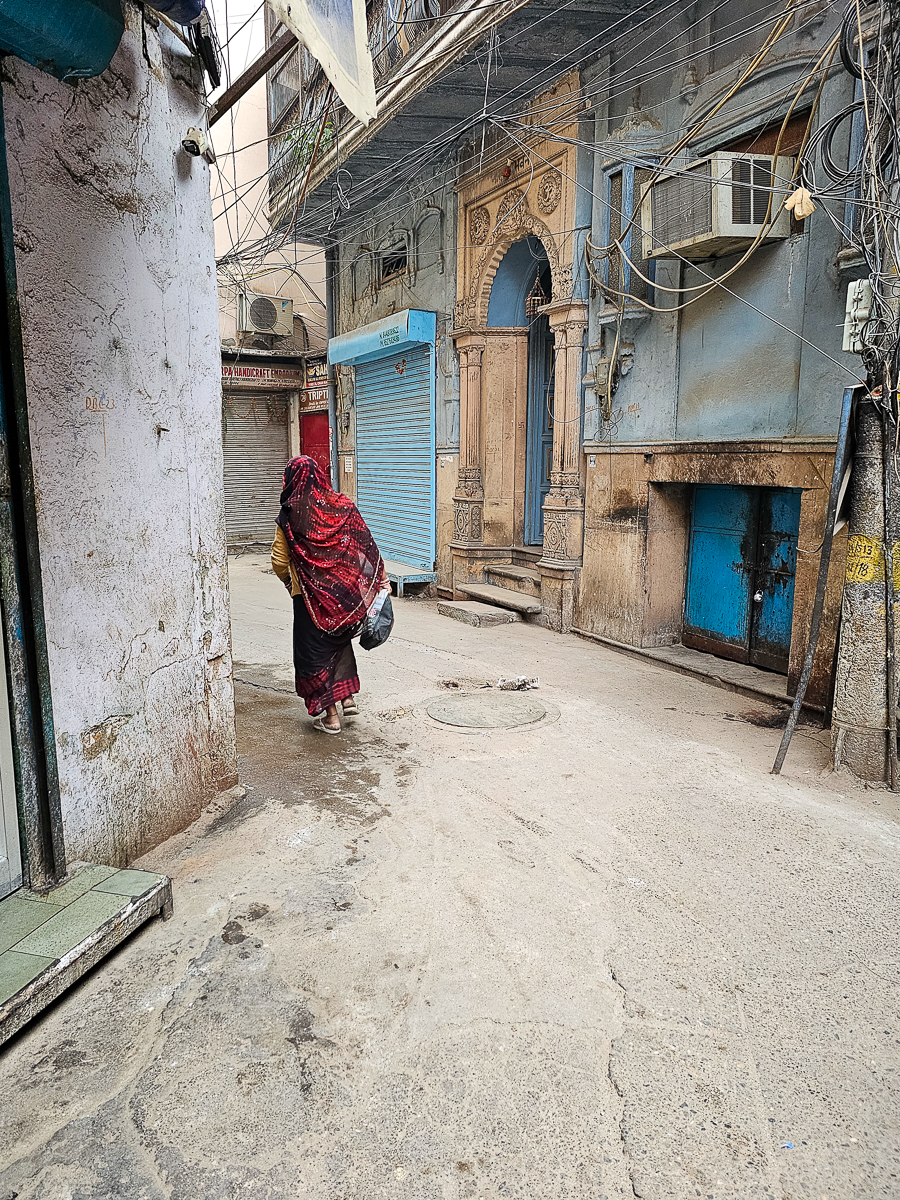
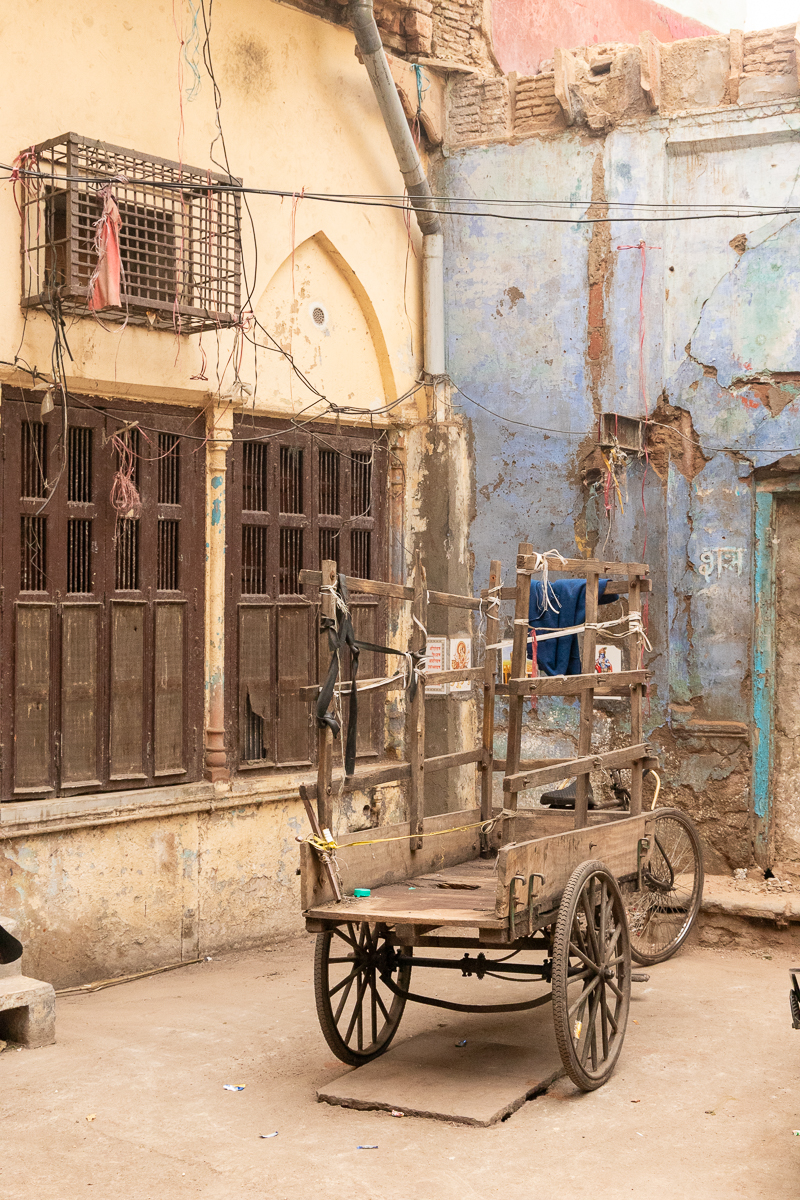
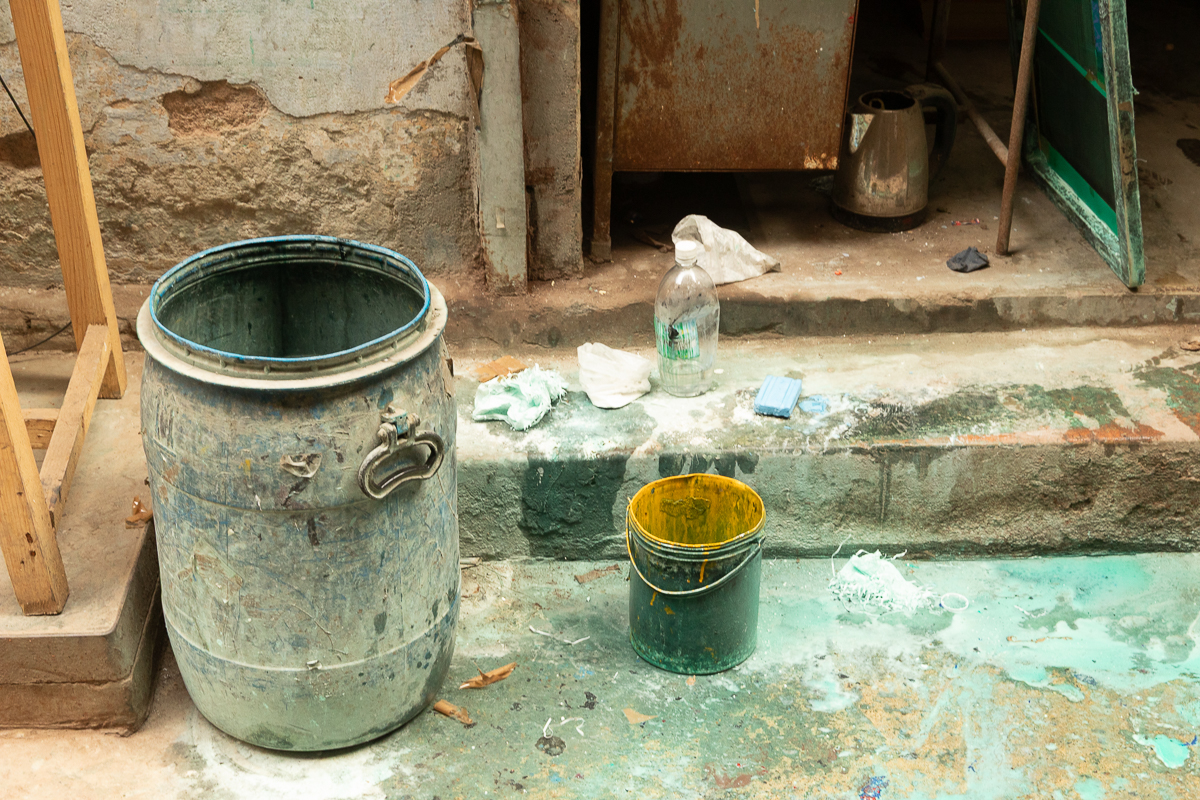
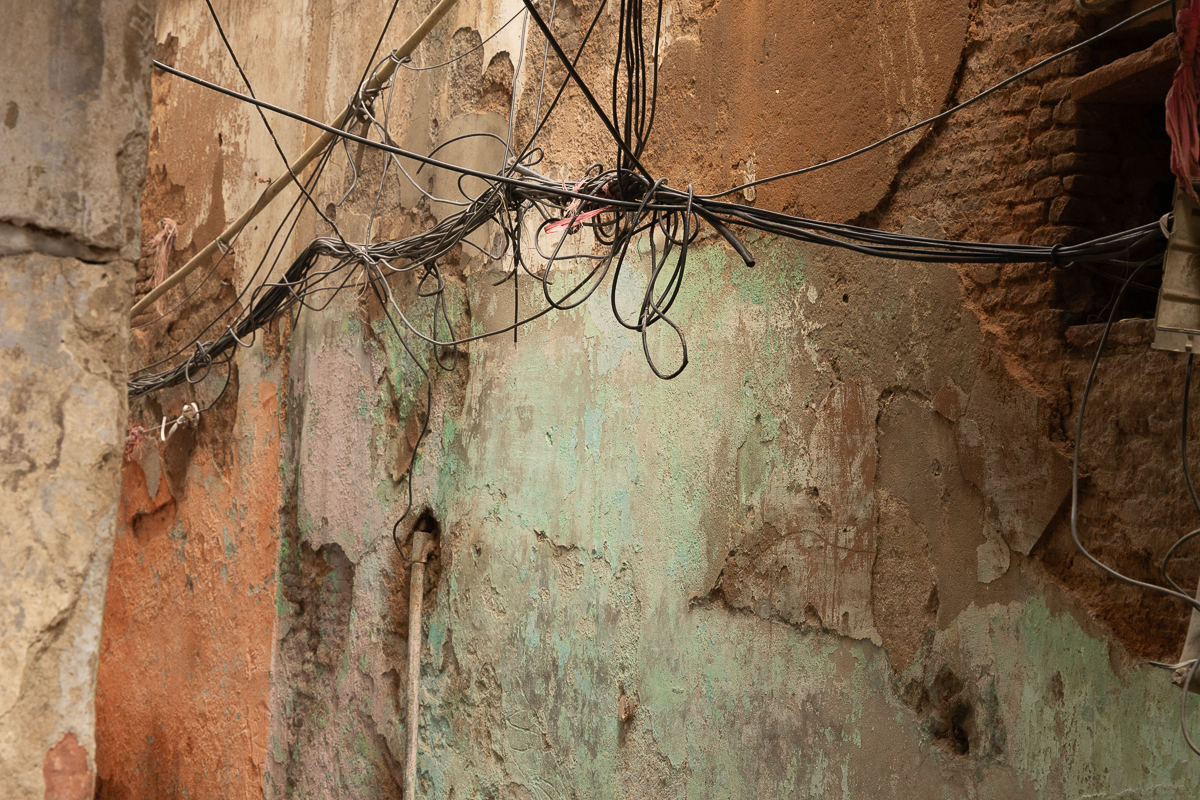
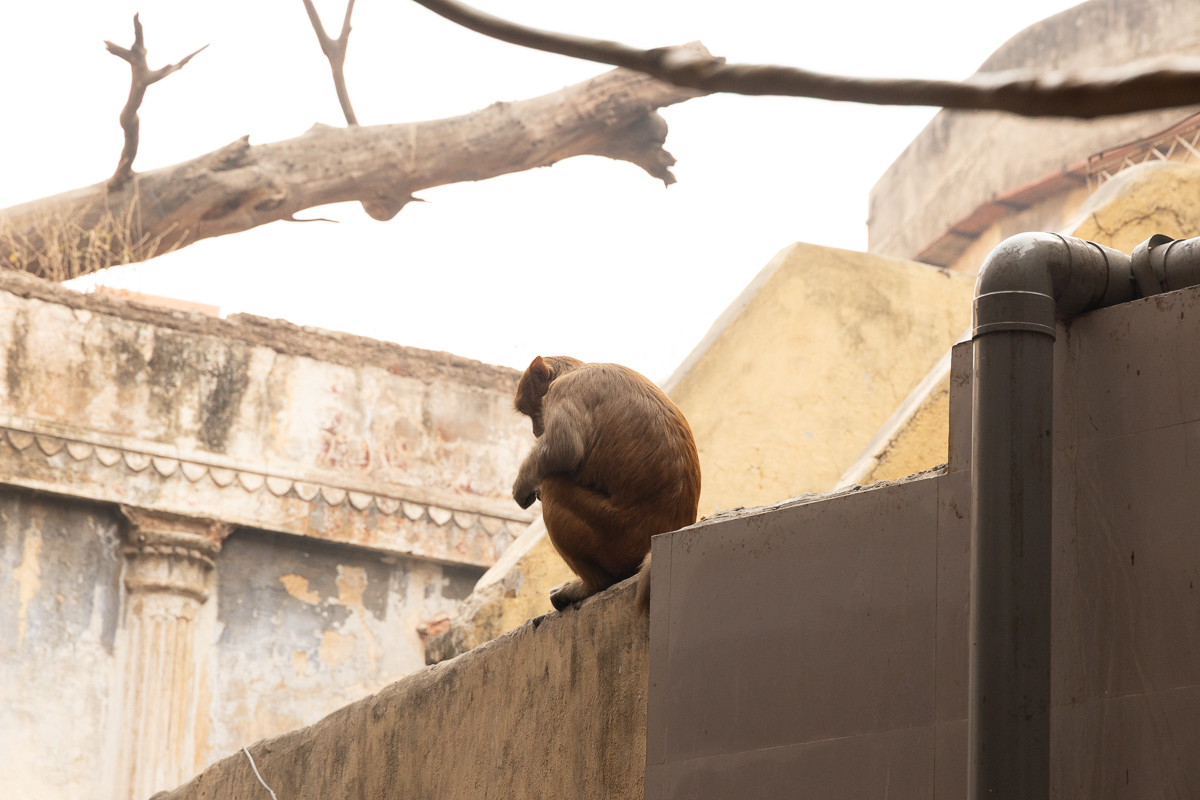
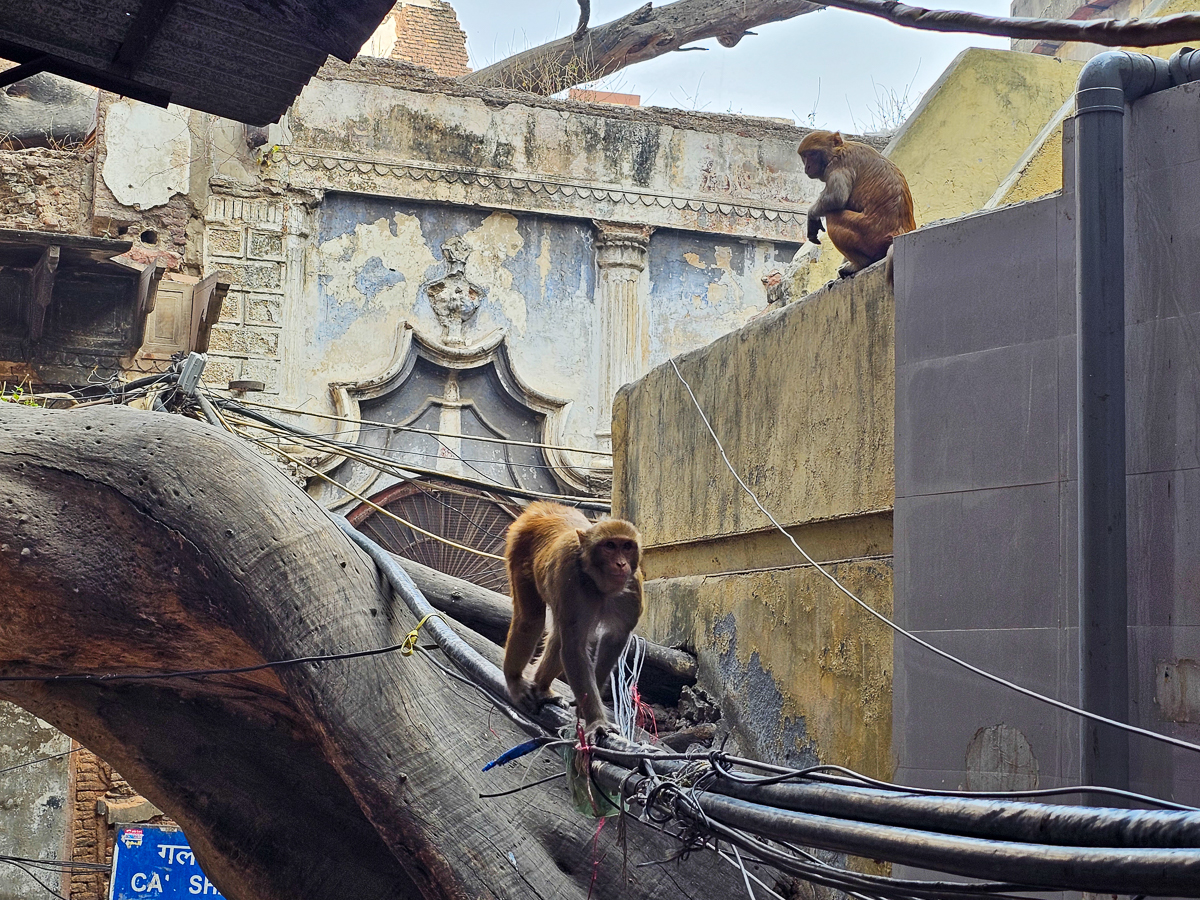
Of all the days on our itinerary, my time wandering the streets of Old Delhi made me the most nervous. I don’t do well in crowds or in dirty situations. But this turned out to be my favorite time in India. The crowds I worried about I could handle, and the dirt was not as bad as my overactive imagination had made it seem. I loved all the unique patches of paint and plaster, with one peeling away from the other, and took numerous photos. I enjoyed hearing the stories of everything we saw and watching the monkeys overhead. We took a tuk-tuk ride. I remembered learning about these in grammar school and thought how awful it was that people had to pull another person around, but it is a way for locals to make money. We took both an electric and a human-driven one; obviously, the human-driven was the preferred one.


Old Delhi
Old Delhi
Old Delhi
Old Delhi
Old Delhi
Old Delhi
Old Delhi
Old Delhi
Old Delhi
Old Delhi
Old Delhi

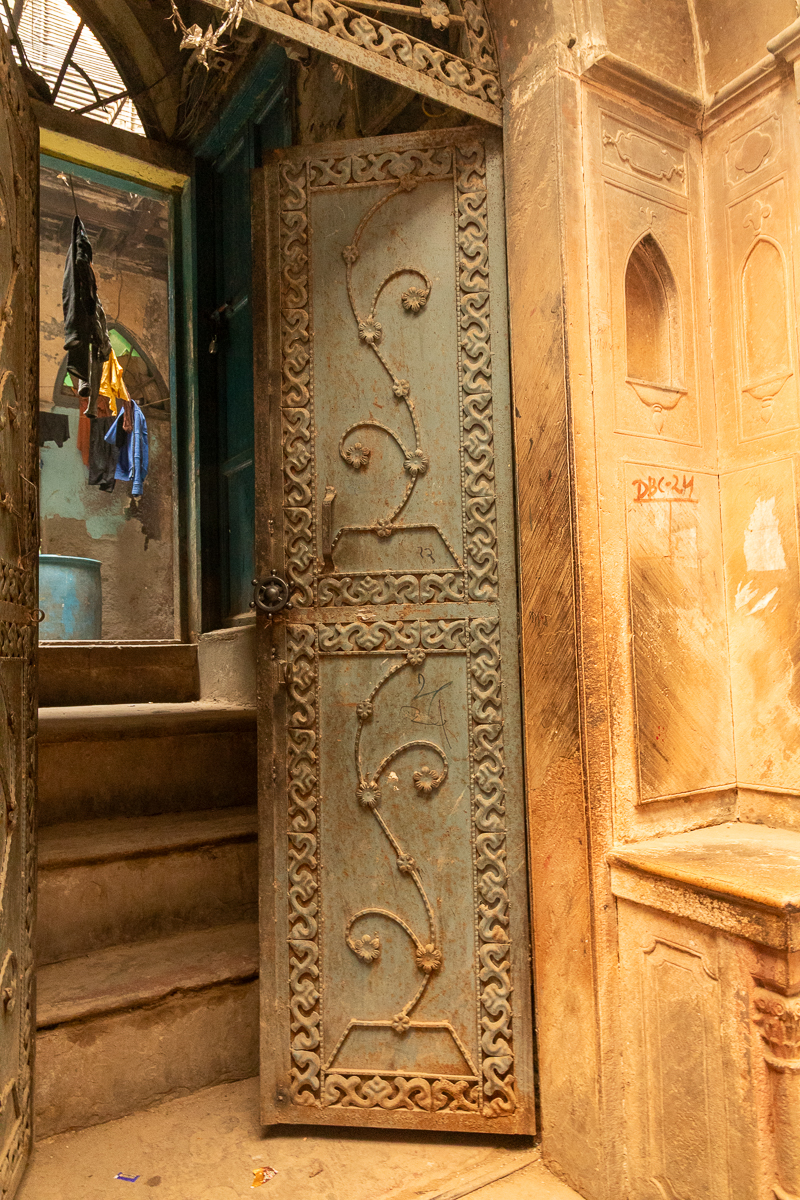
The weathered doors on the far left are likely wrought-iron from the late 19th or early 20th century, and this was probably a merchant’s house. The steep stairs suggest that the upper floor was, and perhaps still is, used as a residence. As you can see hanging clothes in the picture, this building is still inhabited. 

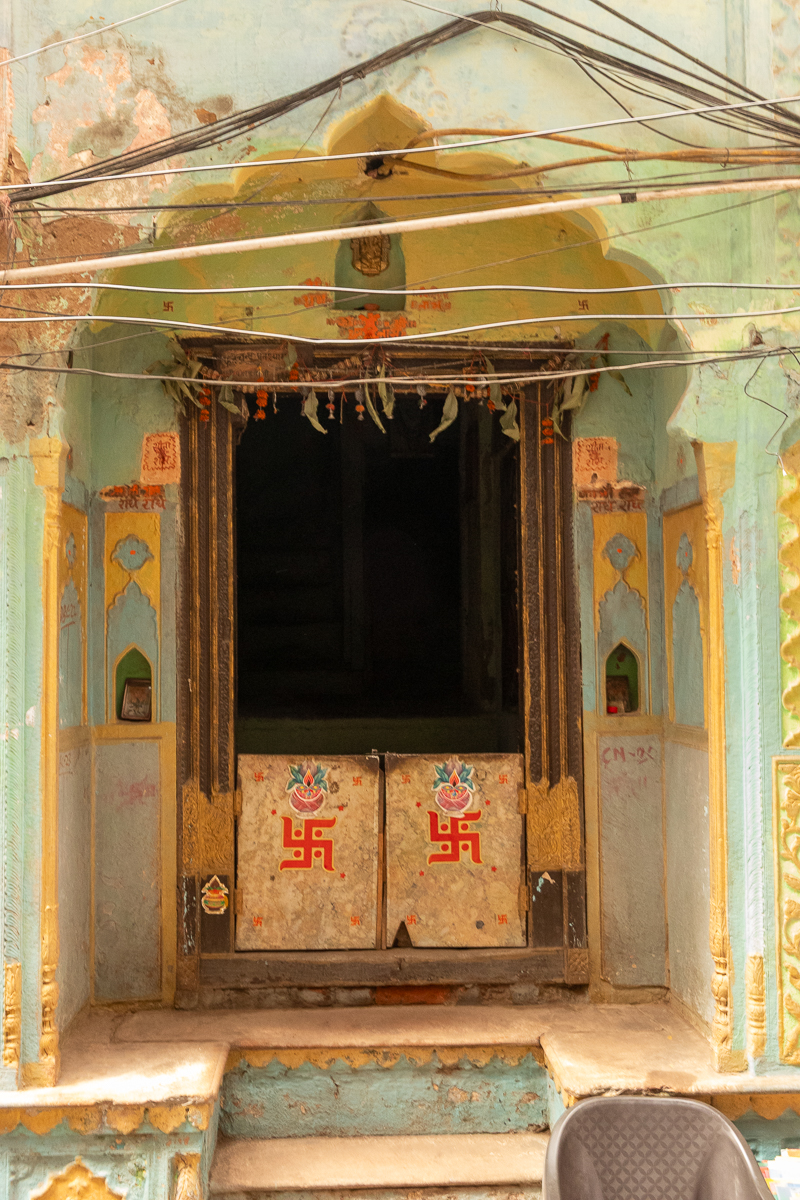
The next door to the right, with the swastikas— a symbol in India that is thousands of years old— is a sacred symbol of good fortune and protection. It goes back to the Indus Valley civilization and early Vedic Culture. It is used in Hinduism and other religions to invite blessings, so you will even see the symbol on wedding invitations. On this door, the swastikas are paired with the marigold and the turmeric marks, all part of the vocabulary of blessings.

The bending of the arms of the Indian swastika has different meanings: clockwise denotes the sun, prosperity, well-being, and the forward movement of life. Most homes use this version to invite good fortune.

The counterclockwise version is usually used in tantric traditions, temple iconography, and sometimes on objects meant to repel harm. Its meanings include protection, the goddess of energy (Shakti), warding off negativity, and representing the more spiritual, inward-seeking side of life.

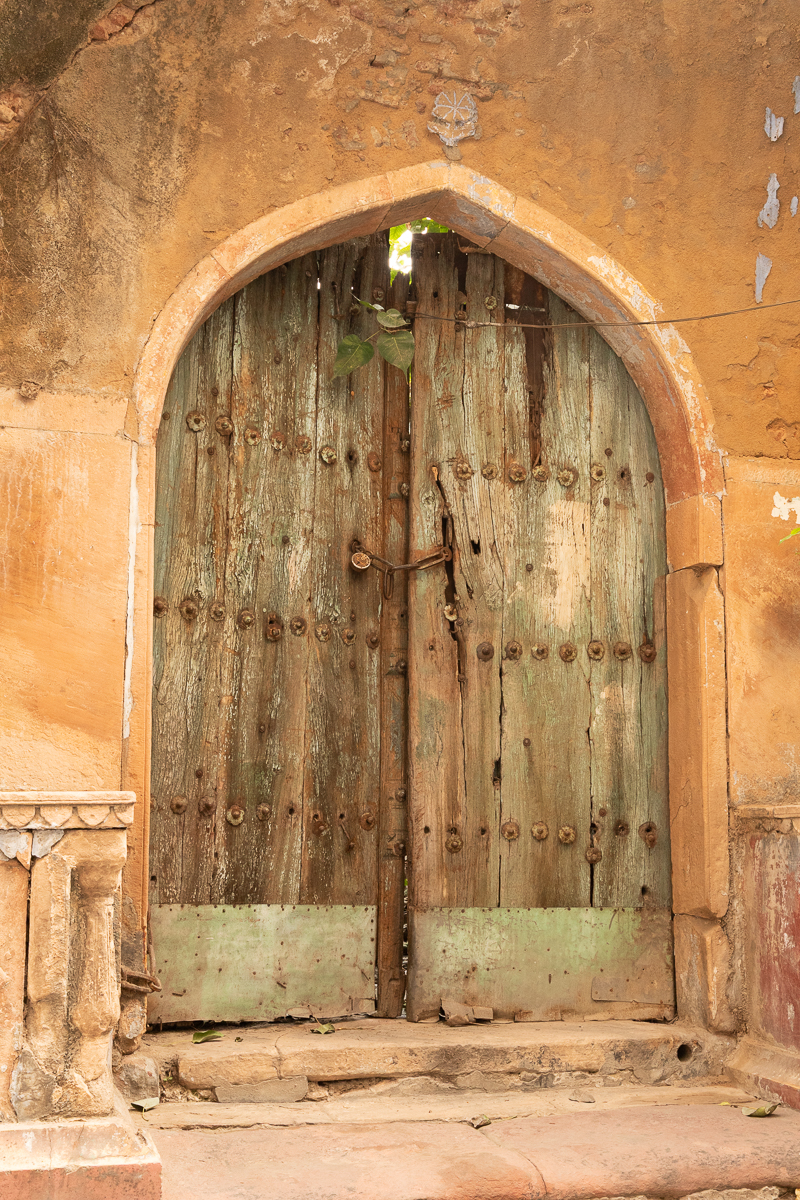
The door next to the one with swastikas has an arch that is not Gothic or Mughai in style but falls somewhere between the two, typical of an Indo-Islamic entrance used in homes or small shrines. The greenish paint on the door, made from old copper-based pigment, is lovely to see.

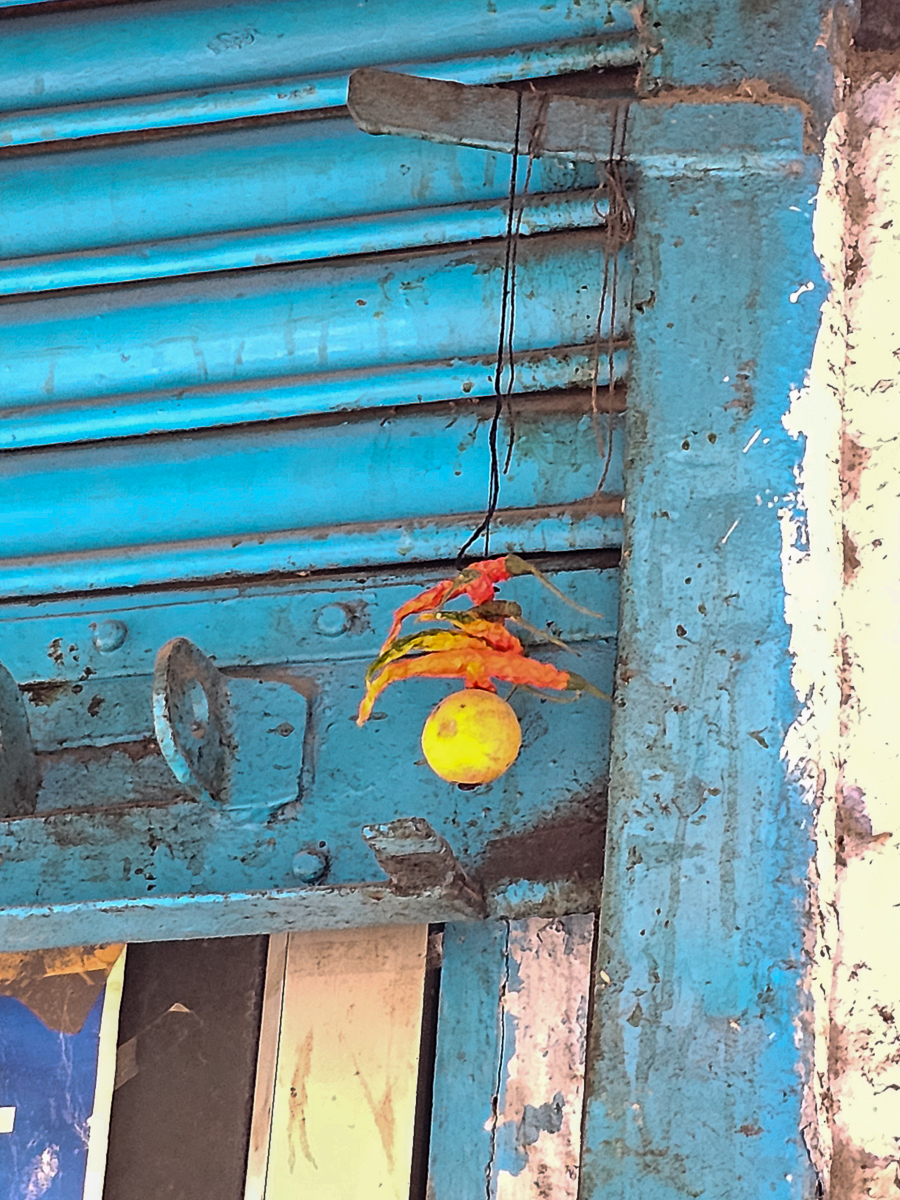
The far-right photo shows a hanging good-luck charm. It is made of lemon and seven chilis called a nimbu-mirchi, a protective talisman hung outside shops and homes across India. It is meant to ward off bad luck, jealousy, or any negative energy; the specific combination of lemon, sour, and chili, spicy, creates a symbolic shield. These are refreshed every few days. 
Old Delhi
Old Delhi
Old Delhi
Aari Embroidery

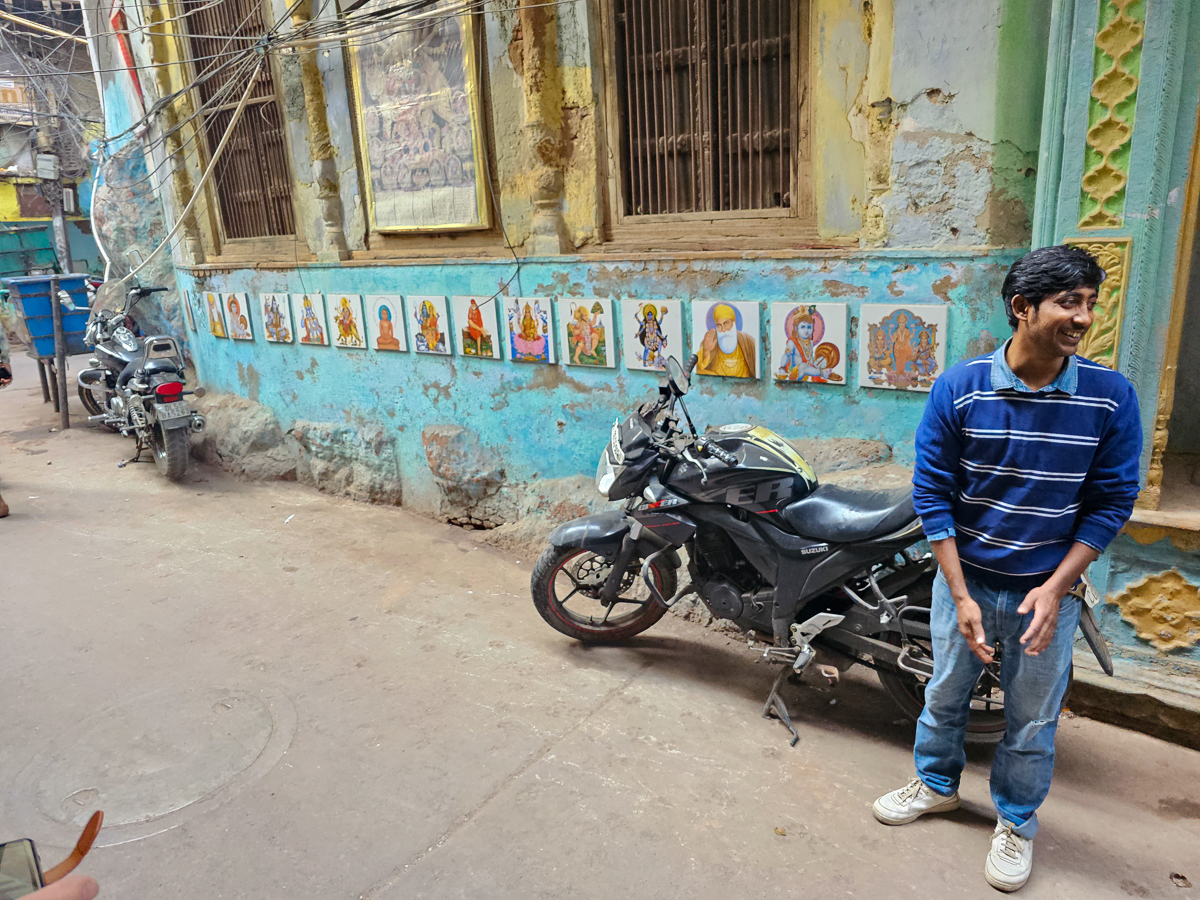
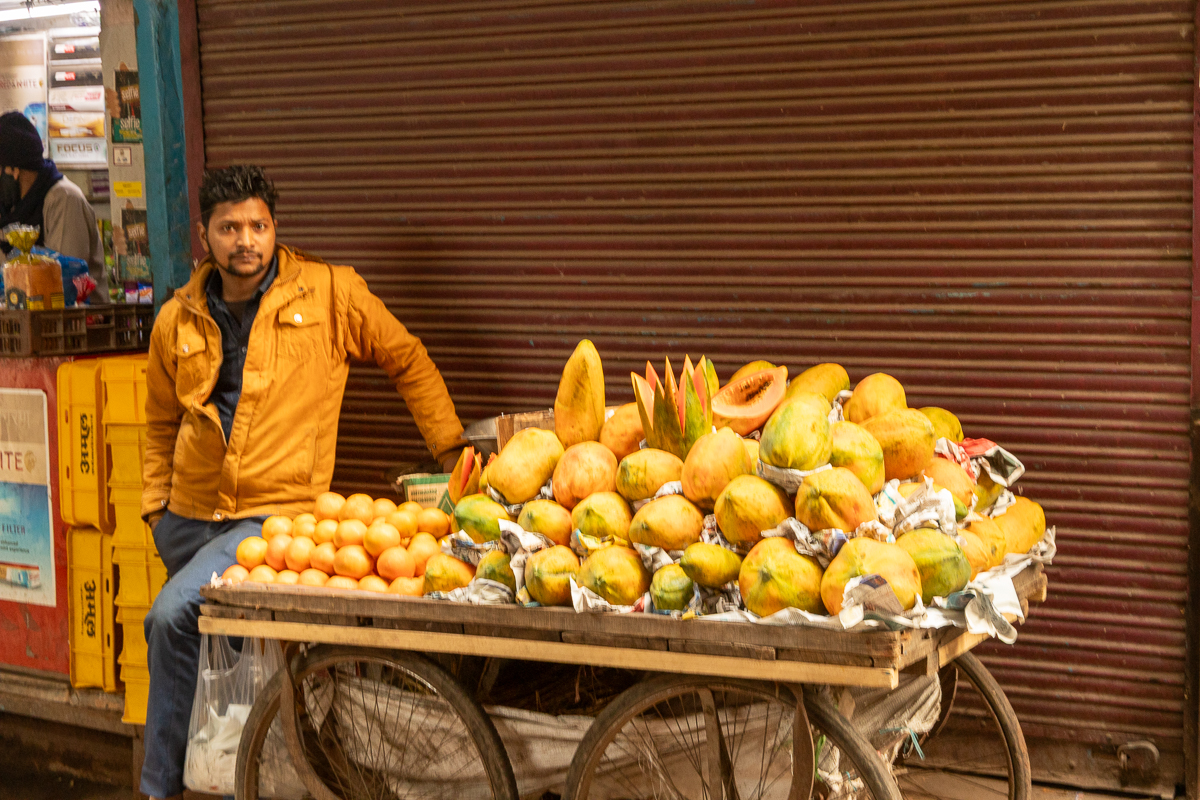
Above left, a street vendor, 

Above middle, the signs on the building caught my eye. Those small framed images are typical of Hindu devotional prints — gods, goddesses, gurus. They’re often hung as a kind of traveling shrine or simply to bless a space that needs protection — shops, alleys, doorways, workshops.

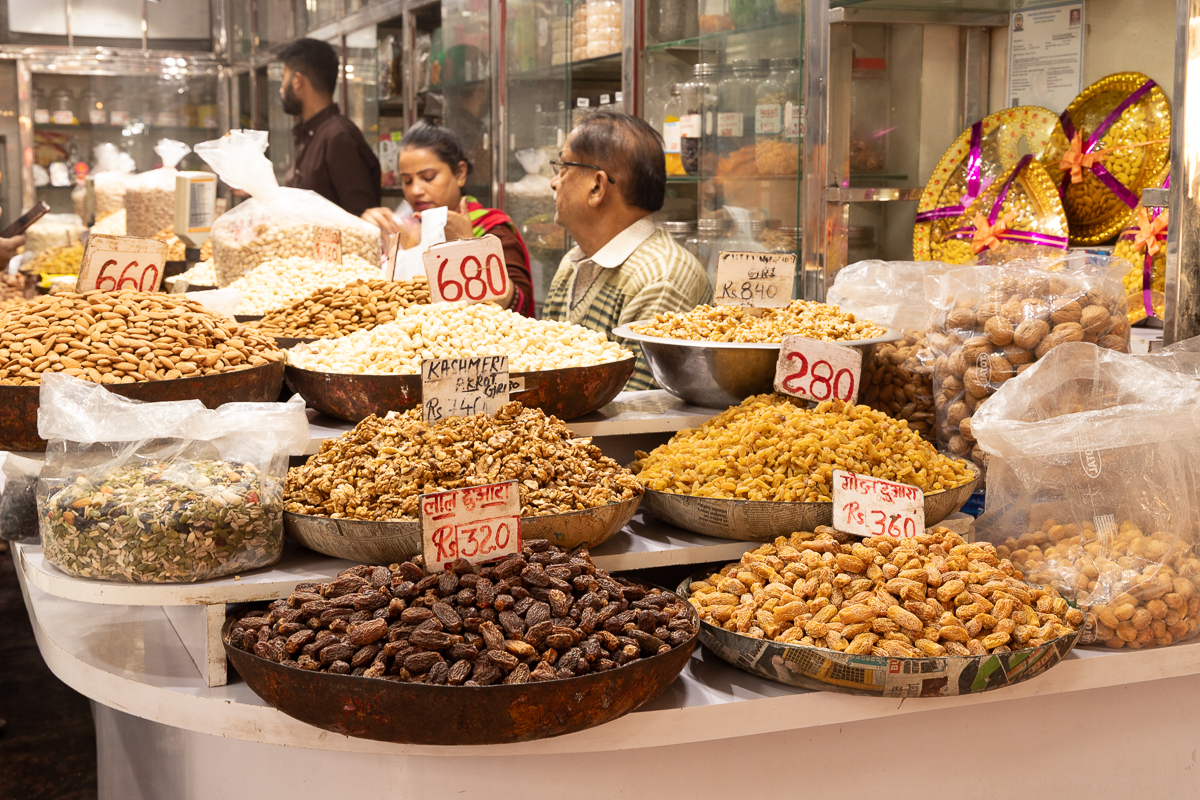
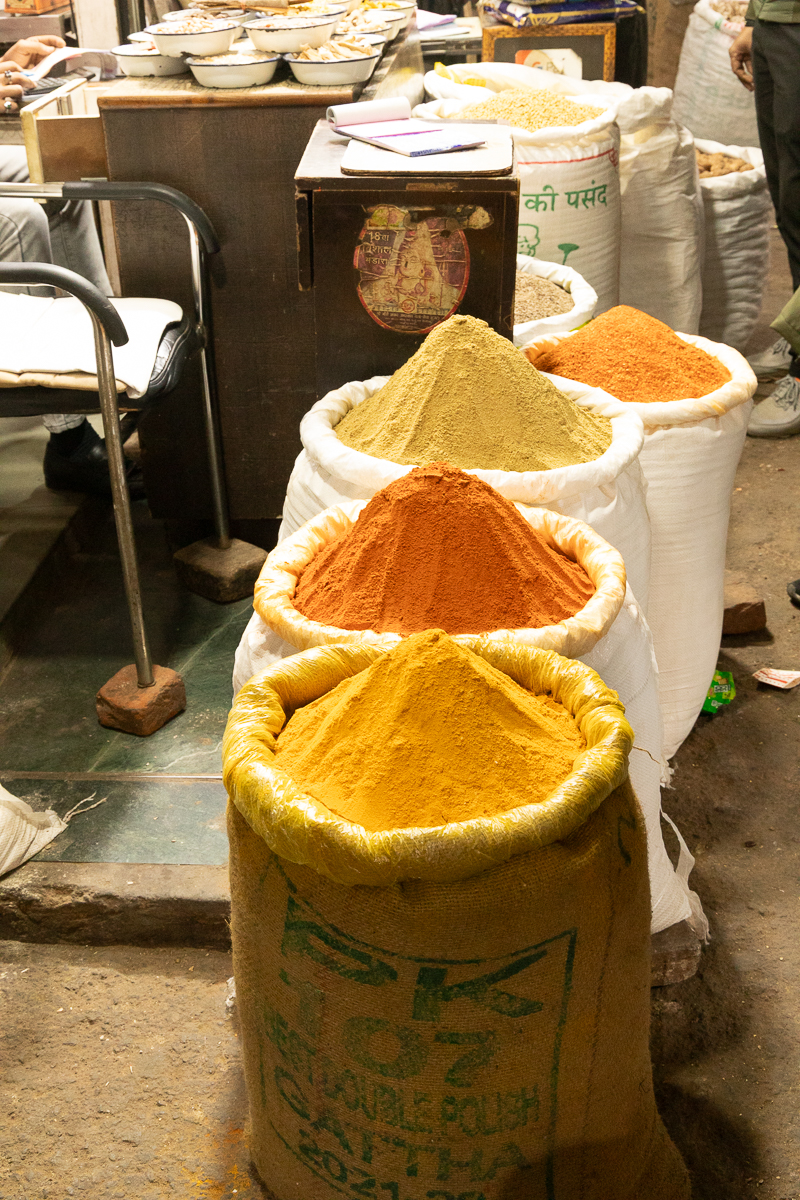
Above far right and right, the Khari Baoli – Asias larges spice market, below photo,  the spices from bottom to top:  Turmeric (Haldi), Chili powder (Lai Miarch) and Deggi Mireh (Kashmire Chili)

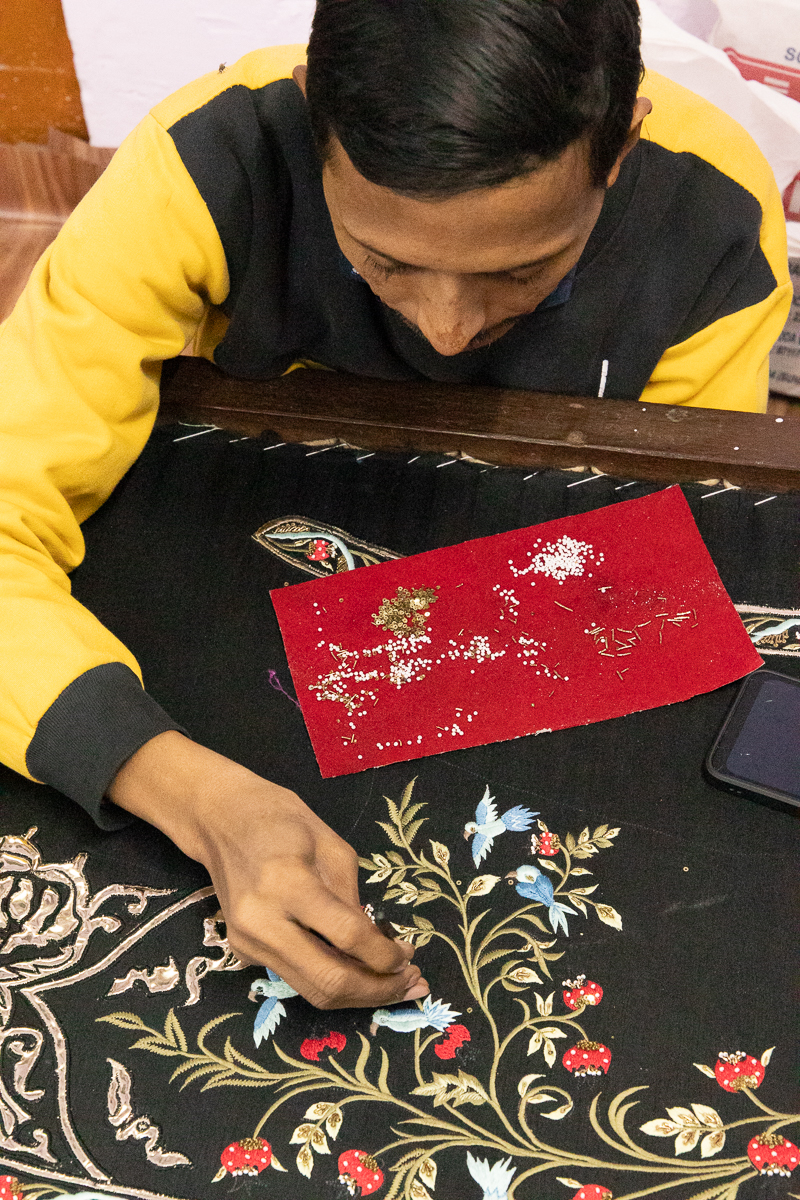
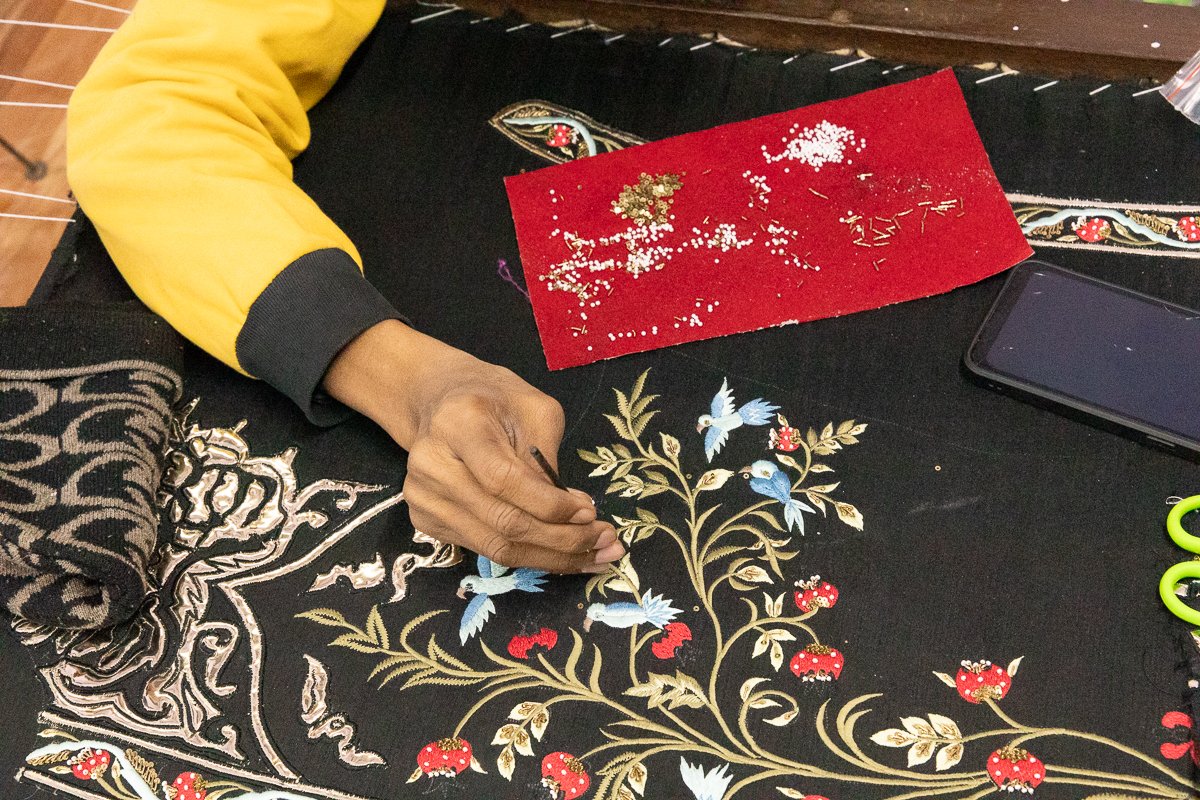
Left and below: In a tiny workshop, an artisan worked aari embroidery with a hooked needle so small it was almost invisible. Each movement pulled gold thread into delicate branches, blue birds, and bright red blossoms on black cloth. The quiet focus, his handiwork, so meticulously precise. 

Aari Embroidery
Old Delhi

Now for our tuk-tuk ride.

Tuk-Tuk Ride
Tuk-Tuk Ride
Our Tuk-Tuk Driver

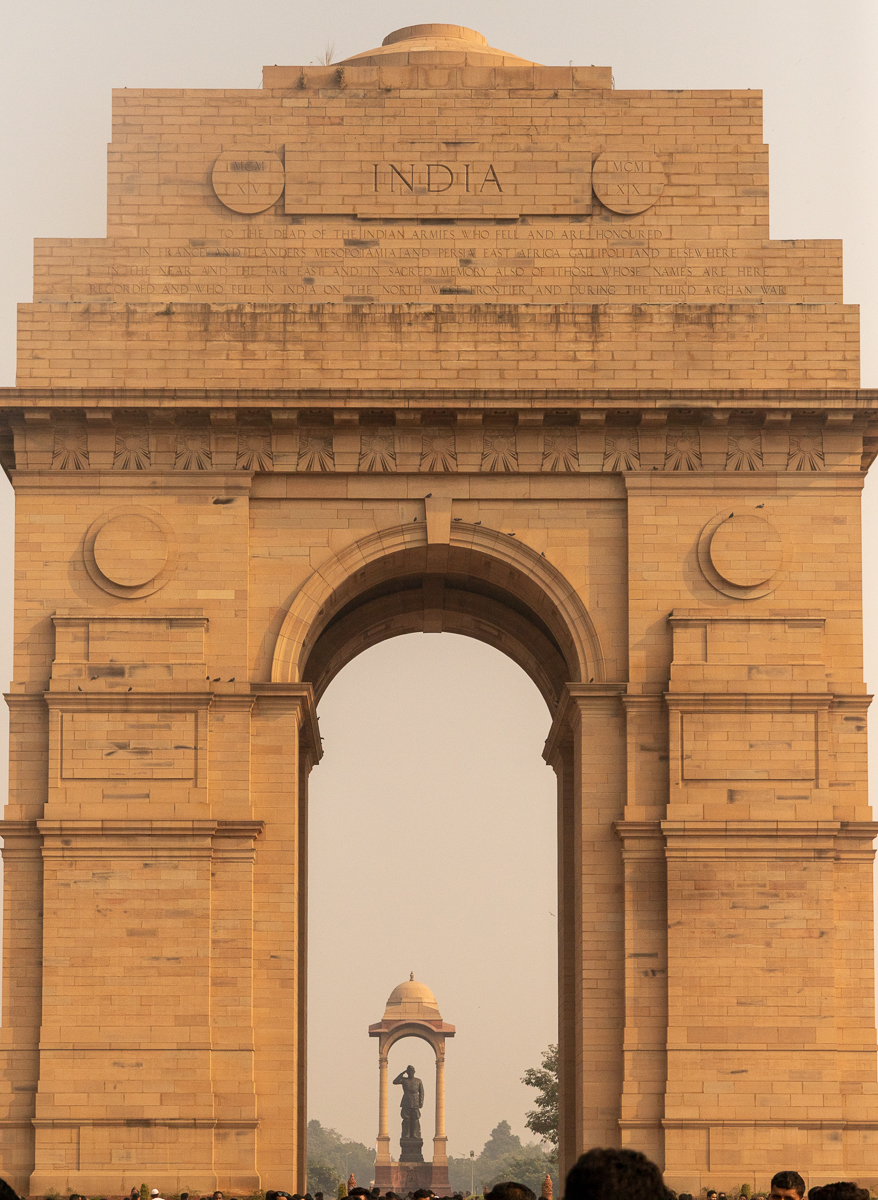
India Gate was completed in 1931, designed by Sir Edwin Lutyens as a memorial to the more than 70,000 Indian soldiers who died in World War I and the Third Anglo-Afghan War. Thirteen thousand names of fallen soldiers are inscribed in this structure.   I knew from visiting the World War I gravesides in Belgium that India’s sacrifice had been enormous; This monument emphasizes the significance of that substantial sacrifice.

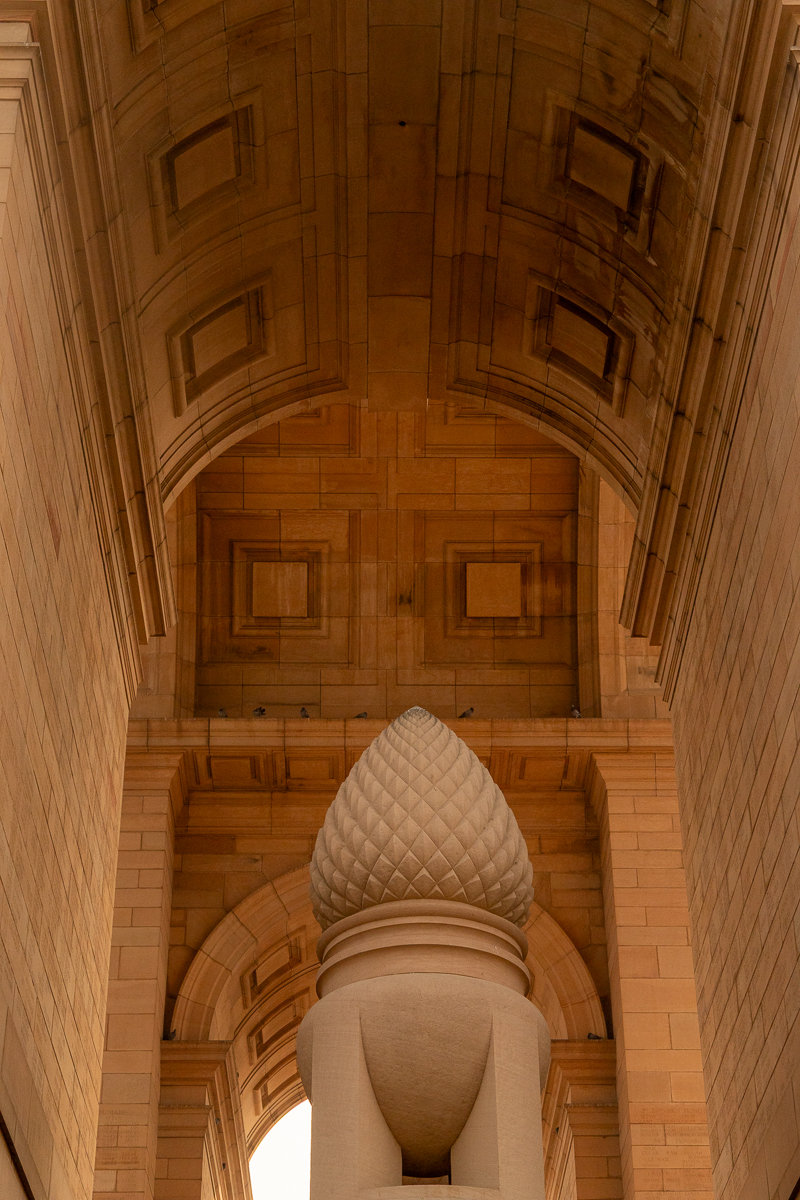
From a distance, it looks like a triumphal arch, but step inside, and you feel alone. The city noise goes quiet, the sandstone turns gold, and the details begin to speak.

One of the first things you notice looking upward — as the photograph far rught below  — is the stone funerary urn, carved like a rising flame. The coffered ceiling curves overhead in perfect geometry, the kind of craftsmanship you only see standing directly beneath the arch.

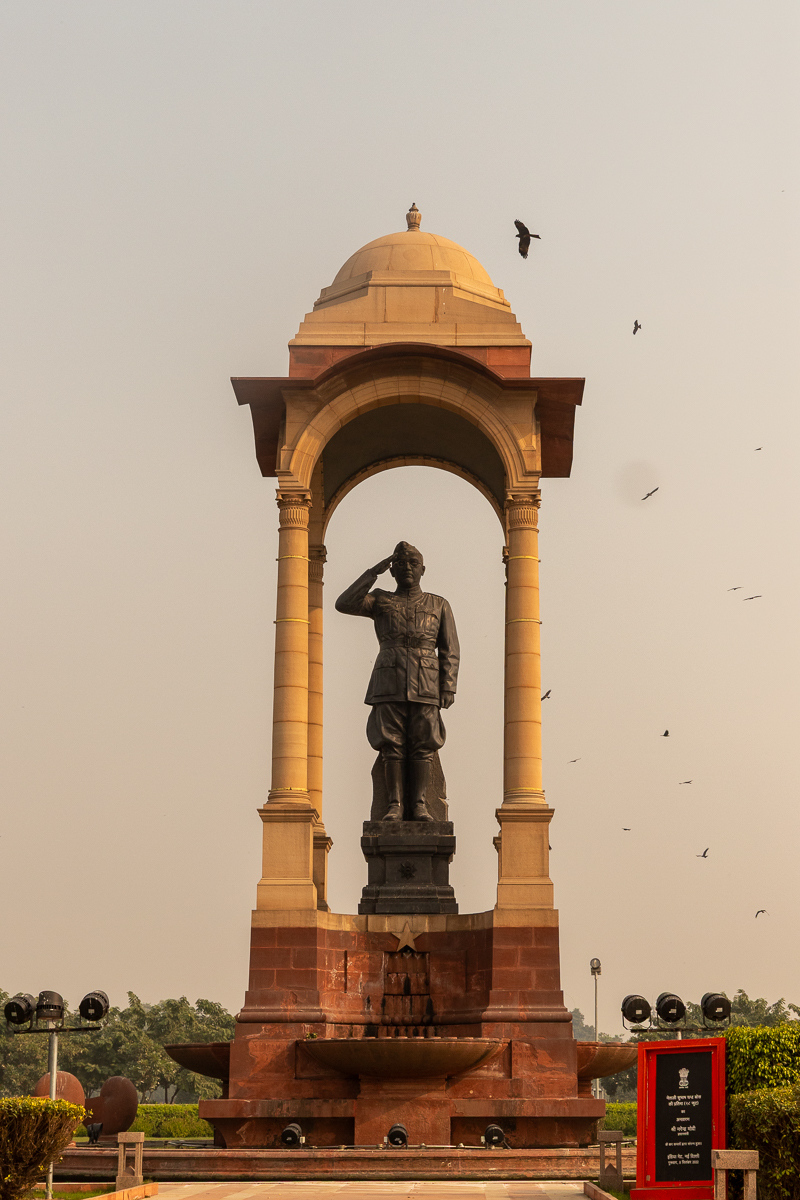
Behind India Gate, the empty colonial-era canopy now houses the statue of Netaji Subhas Chandra Bose, a leader of India’s freedom movement. (Left photograph below)  He replaced the earlier statue of King George. It’s a subtle but powerful shift from a British imperial memorial to one centered on an Indian figure, allowing history and the eventual democracy to share the same space.

India Gate
India Gate
India Gate

In the late afternoon, we visited the Qutb Complex, which is fun to photograph but overwhelming in its history.

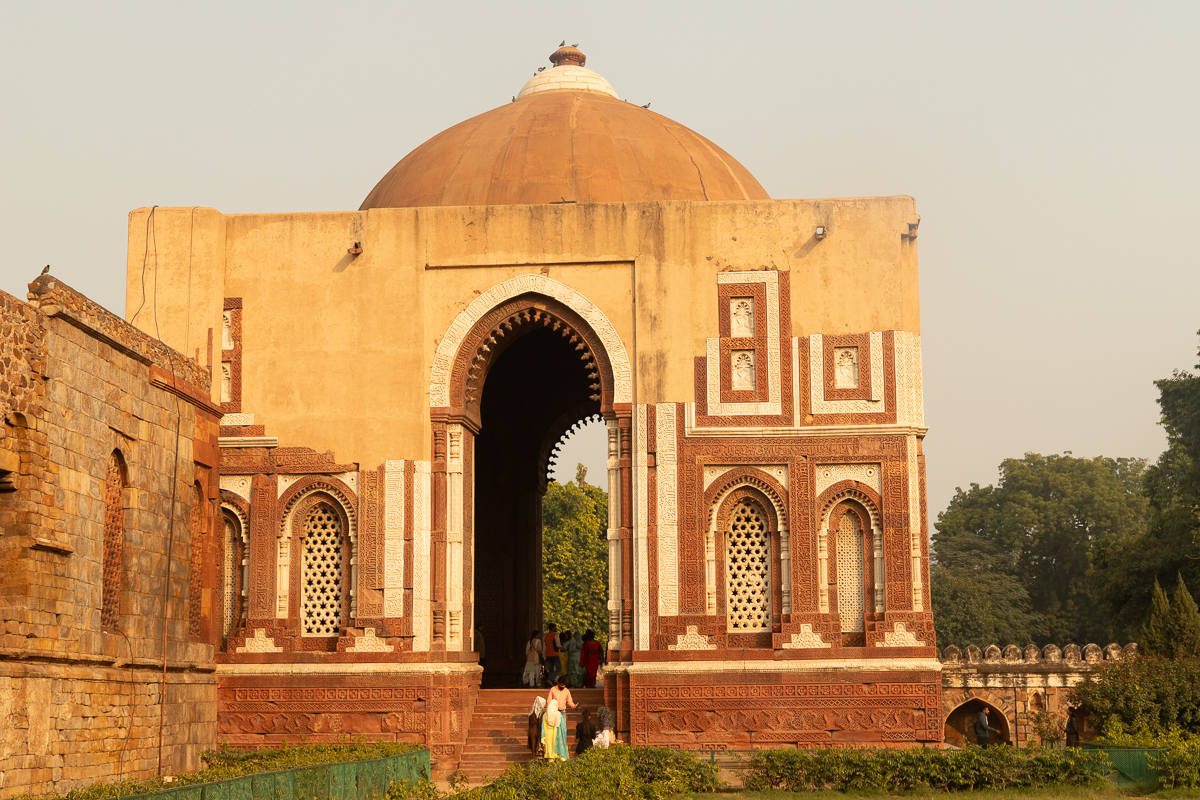
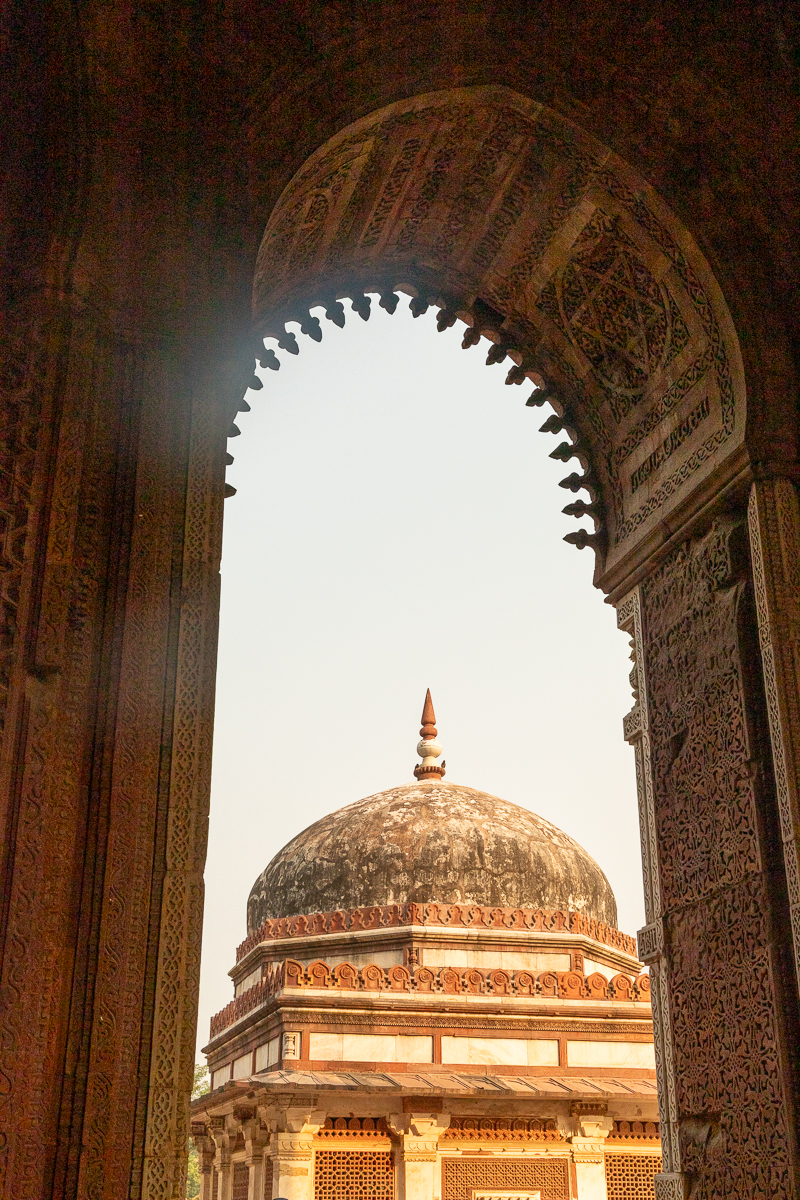
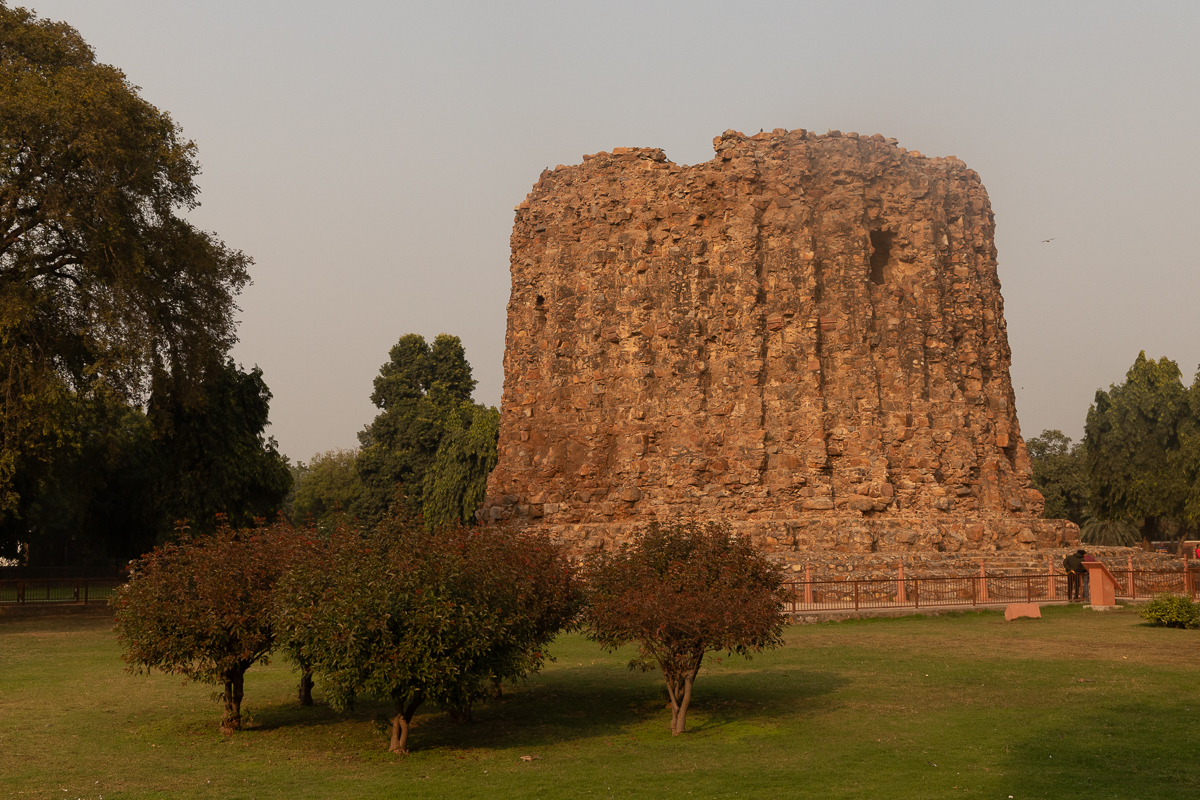
Below left: Is Alauddin Khilji’s gateway built in 1311, Indo-Islamic architecture. Aladuddin Khilji’s vision was to double the size of the Qutb Comples.  But the only completed building is the Alai Dawaza. The second building that was started is the Alai Minar, the tower was intended to surpass the height of any in the Qutb Complex, but only the base was completed, shown in the lower right photo.


Qutb Complex -Alai Darwaza

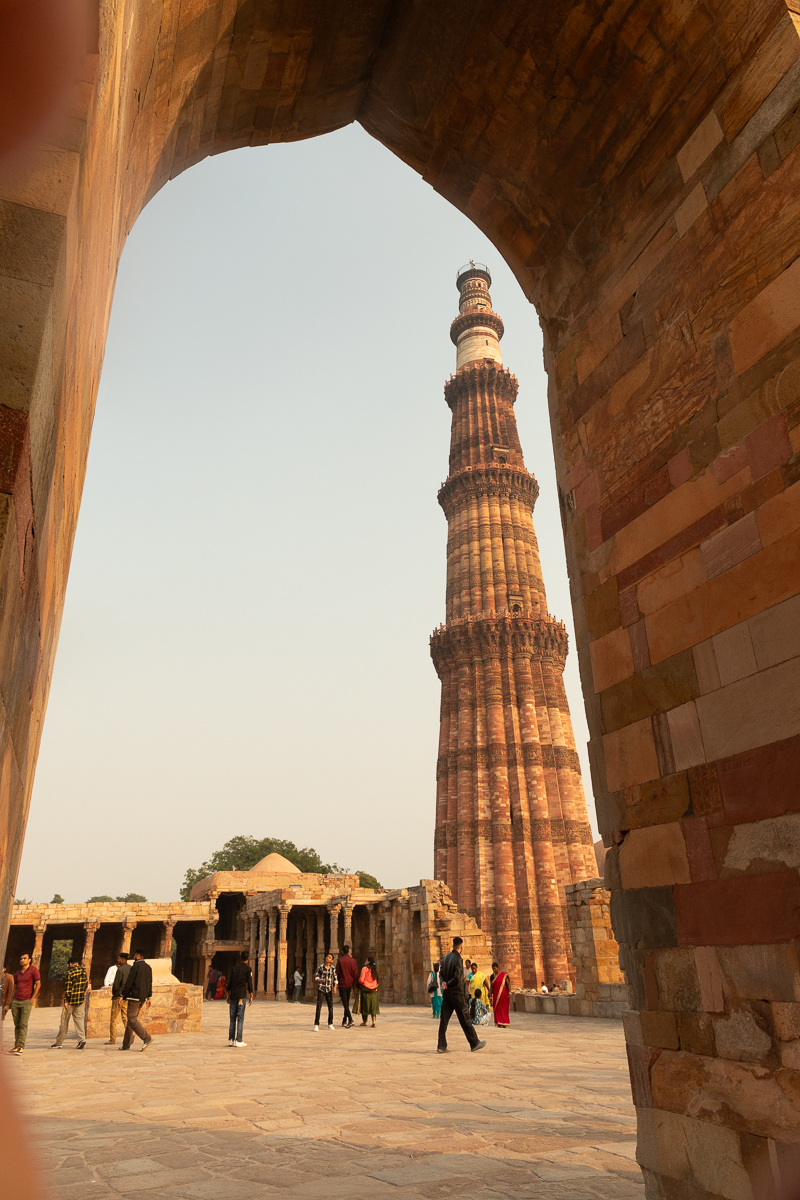
Below this tower, the Qutb Minar, is the centerpiece of the entire complex and was built in the 12th and This tower is the centerpiece of the entire complex and was constructed during the 12th and 13th centuries.13th centuries. Also in this complex is the Iron Pillar of Delhi which doesn’t rust even though it is 1600 years old.  

Qutb Complex -Qutb Minar
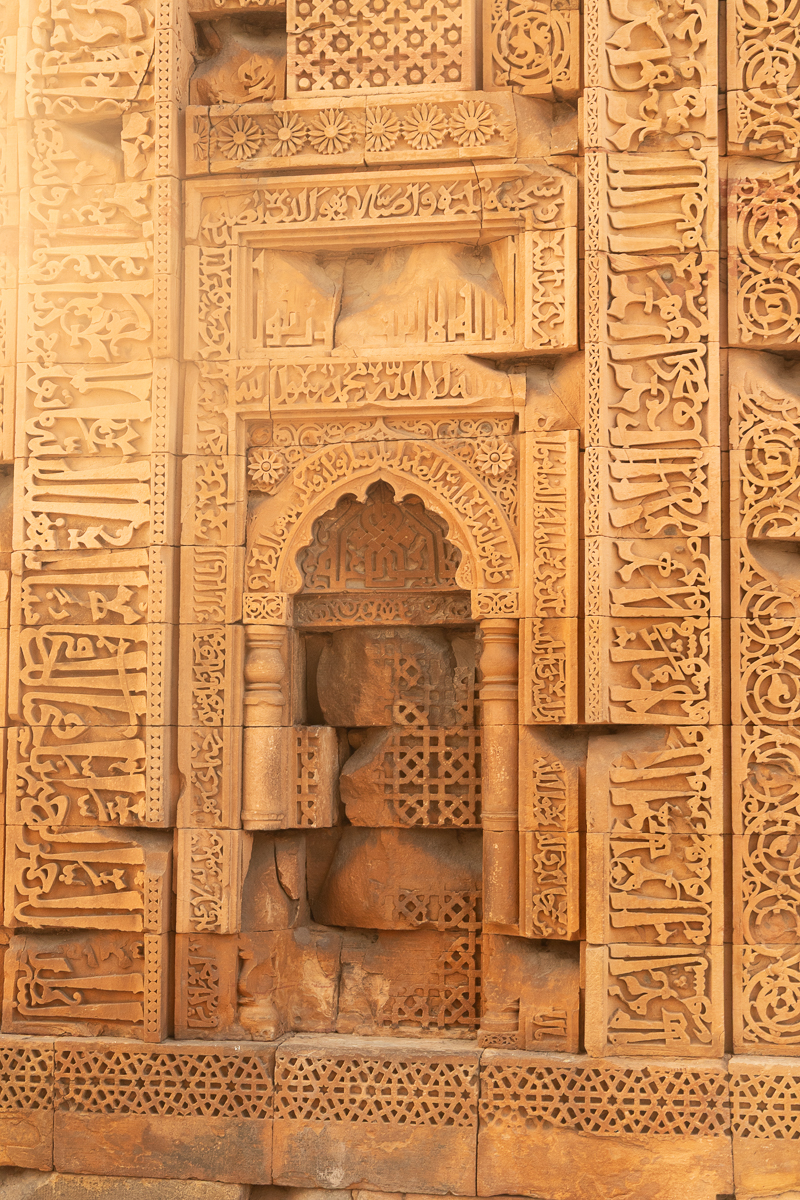
Qutb Complex- Quwwat-ul-Islam Mosque wall

The photo above, is the Quwwat-ul-Mosque Wall, the earliest mosque in Delhi built in the late twelfth century from repurposed temple pillars.

Qutb Complex - tomb
Qutb Complex Zamin's Tomb

Below is the Imam Zamin’s Tomb from the 16th century.

Qutb Complex - Alai Minar

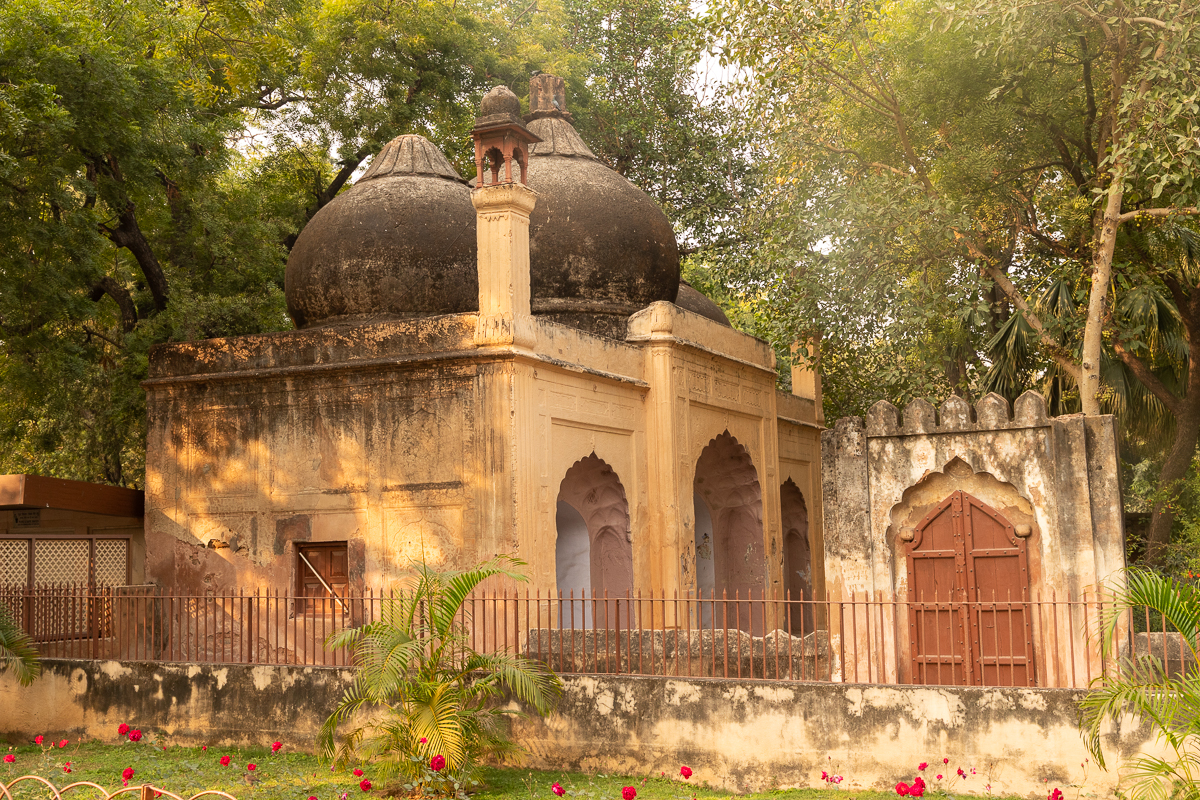
History reveals much about the architecture, but nothing about the person buried here. The weathered building is a Sultanate-period tomb dating from the 13th and 14th centuries. The internet describes the building with phrases like “the mihrab-shaped wall panels” and “the tiny chhatri-like corner turret,” on the right side of the photo. Of course, this needs more explanation. The mihrab is an opening in a wall that indicates the direction of Mecca, and chhatri is Hindi word for umbrella.  

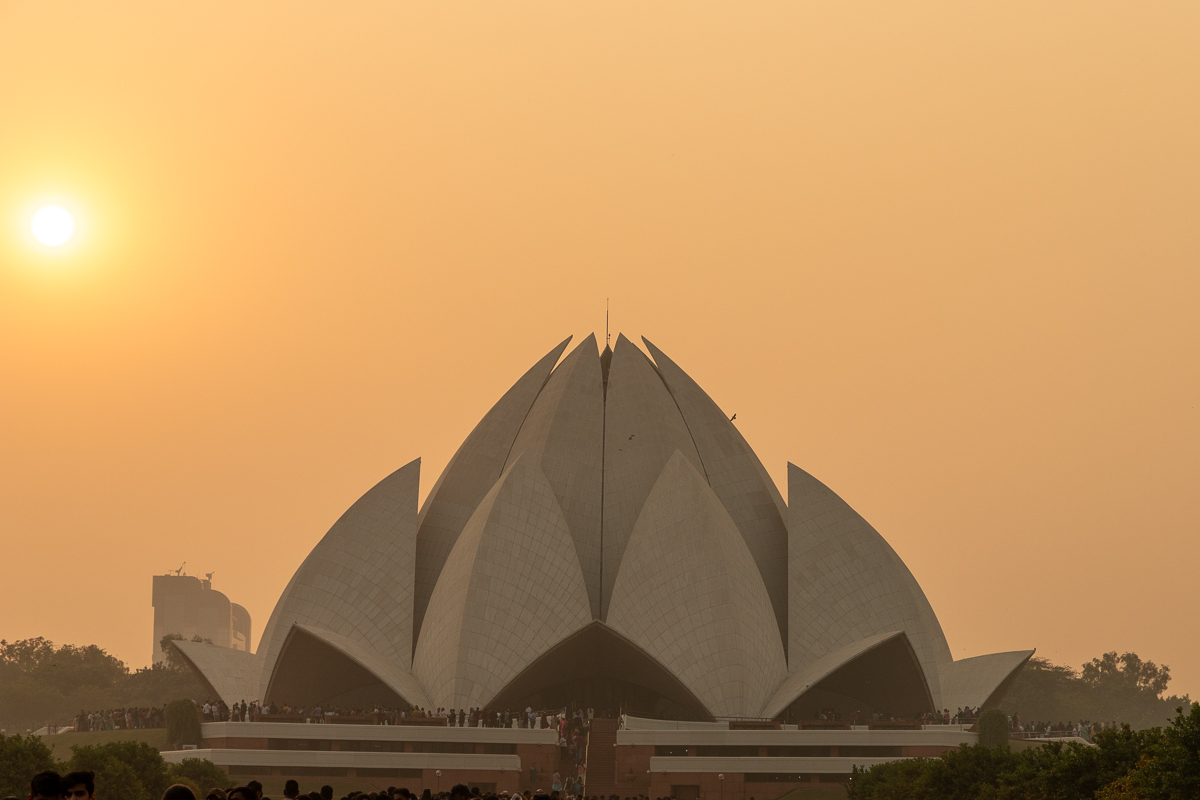
Lotus Temple

 The Lotus Temple, completed in 1986, was designed by architect Fariborz Sahba, who used 27 marble petals to form an image of the lotus, a flower sacred throughout India. The area outside the building features manicured gardens with pools of water.  

After a day of sightseeing, we took some time to shop for souvenirs. I was eager to see some Indian cotton fabric, and naturally, our guide led us into a store that specialized in rugs. In fact, the rug store was more like a storytime, as we were given an explanation of how each rug was made—the knots and the density of the weave. It was a really interesting experience. We now have two rugs hanging in our living room from that visit, and my fabric collection has grown by a dozen meters of Indian cotton, along with my pashmina scarf collection.

READ MORE

Lisa at Luxury Travel arranged both Saudi Arabia and India; see the link above to connect with her information.Saudi Arabia and India were both arranged by Lisa at Luxury Travel, see link above to connect to her information.