
QATAR
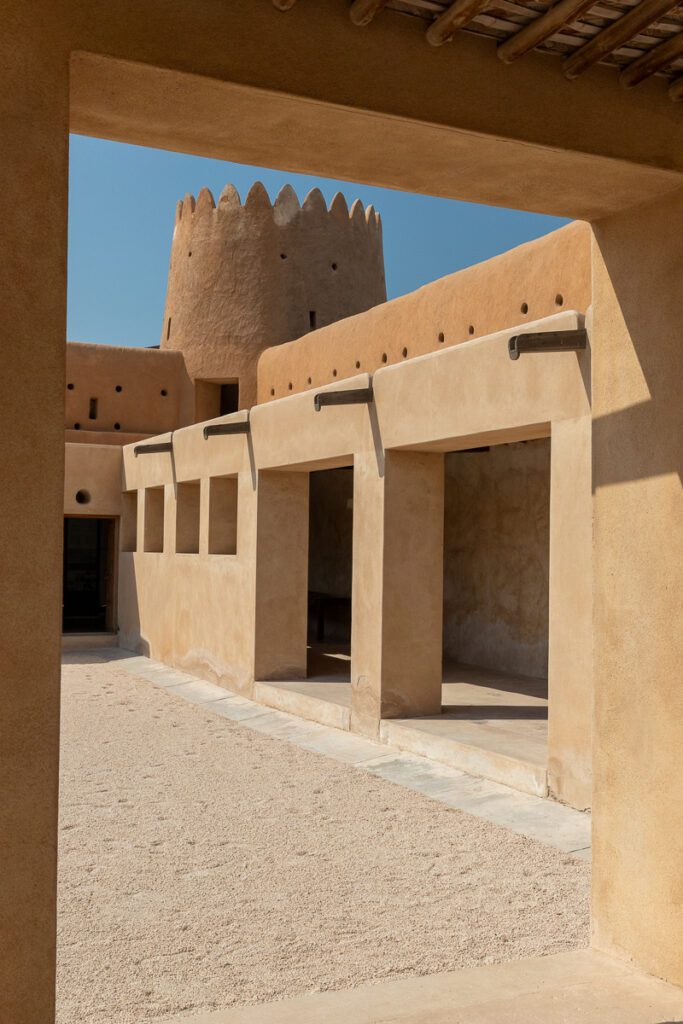
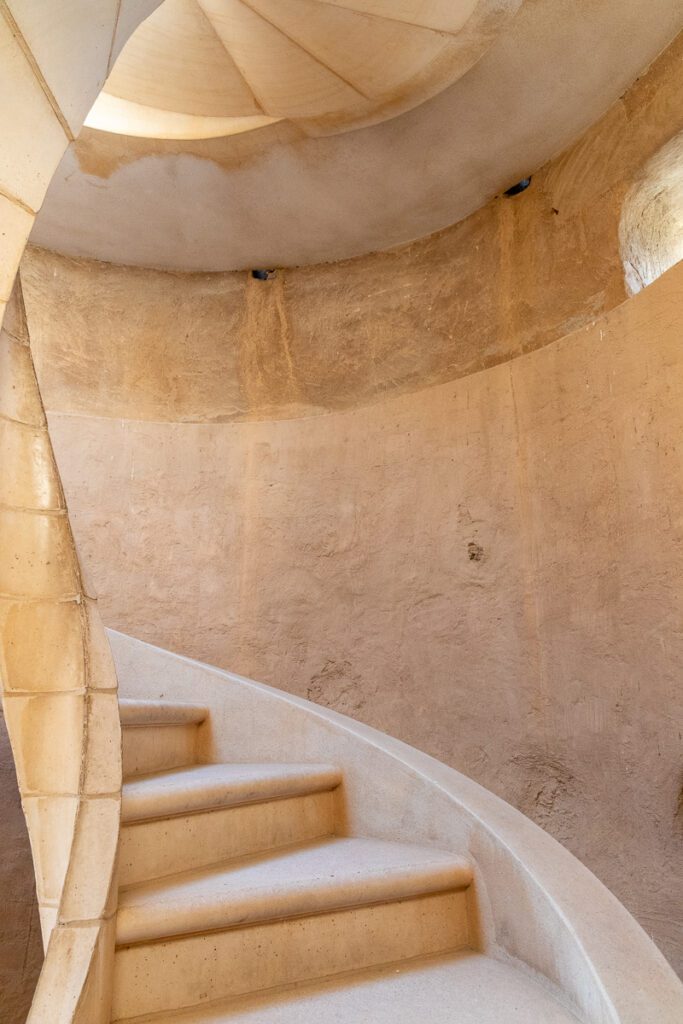
Al Zubarah Fort Al Zubarah Fort, built in 1938, was constructed to protect the ruins of Al Zubarah town and the village of Murair. In the 18th and 19th centuries, Al Zubarah was one of the richest pearling and trading ports in the Gulf. Pearl divers (ghawas) spent months at sea working on wooden boats called dhows. We encountered this type of boat when visiting the Burj Al Arab, which is shaped like the sail of a dhow. The divers, often from coastal families, pinched their noses with a turtle-shell (al-fattam) before diving into the sea, and had a small stone tied to their bodies to help them drop more quickly, holding a rope and a basket for the oysters. They typically descended up to 65 feet and stayed underwater for 45 to 90 seconds, grabbing oysters from the seabed. A tug on the rope signaled the diver to be pulled up the puller – saib). Some divers performed up to 100 dives a day.
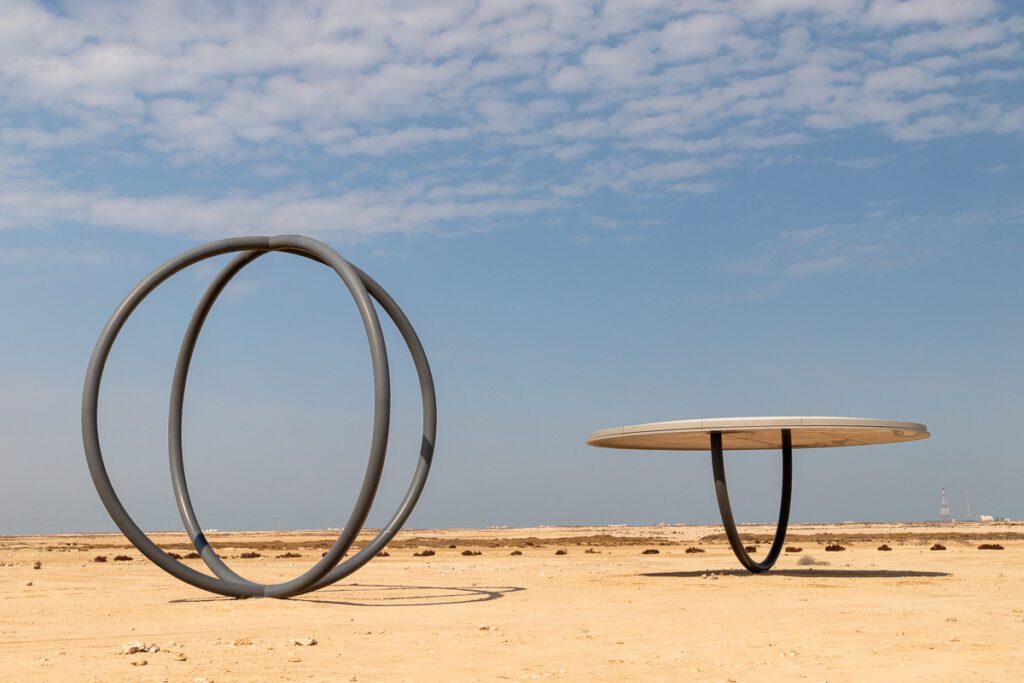
Left
Shadows Traveling on the Sea of the Day, unveiled in 2022, is by Icelandic-Danish artist Olafur Eliasson. The installation has 20 circular objects, and the underside of the roofs is mirrored to reflect the sand below.
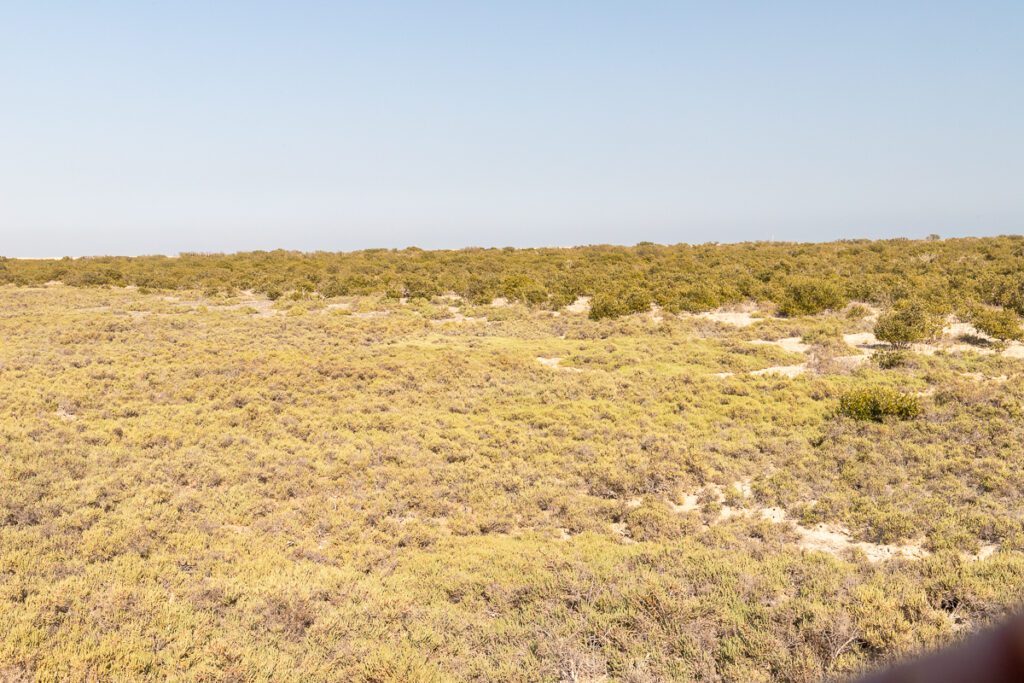
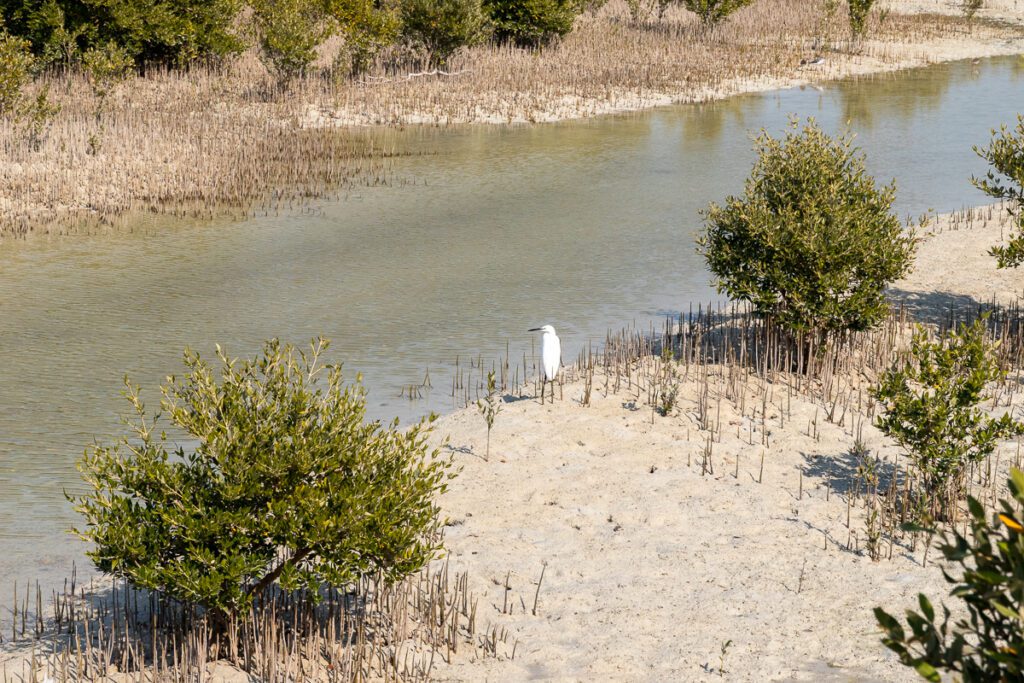
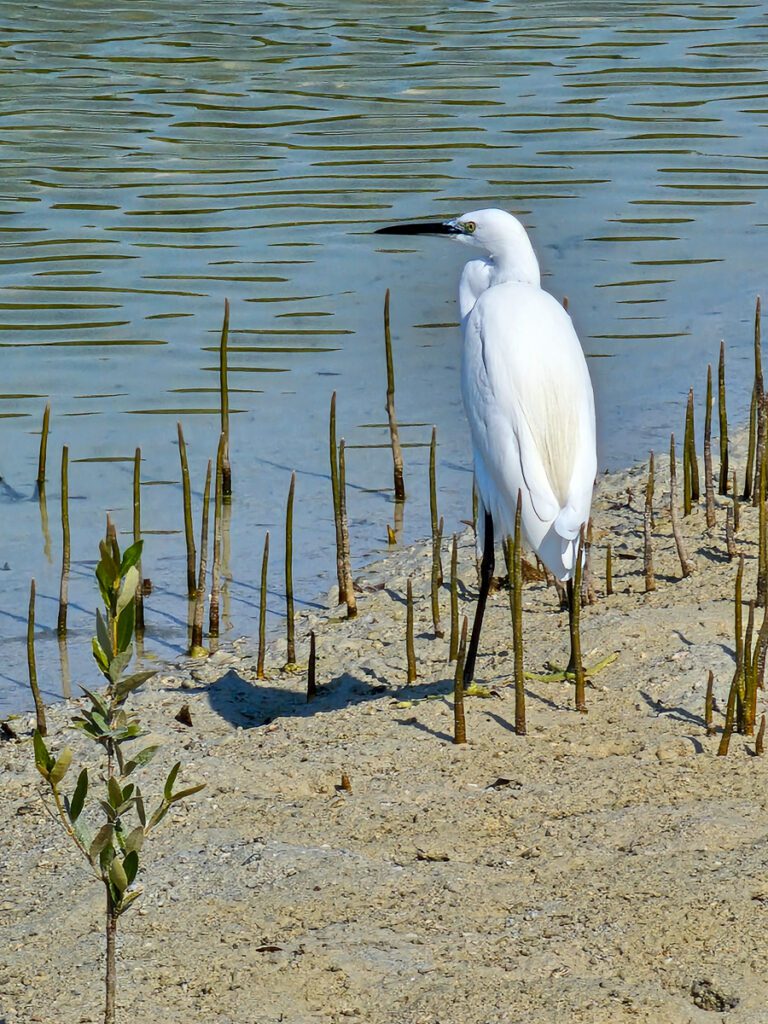
Our visit to Bin Ghannam Island better know as Purple Island, Purple Island, which gets it name from the Kassite-controlled purple dye industry in the second millennium BC. The purple dye, known for being the color of royalty, was extracted from the marine snails shelled around the island.
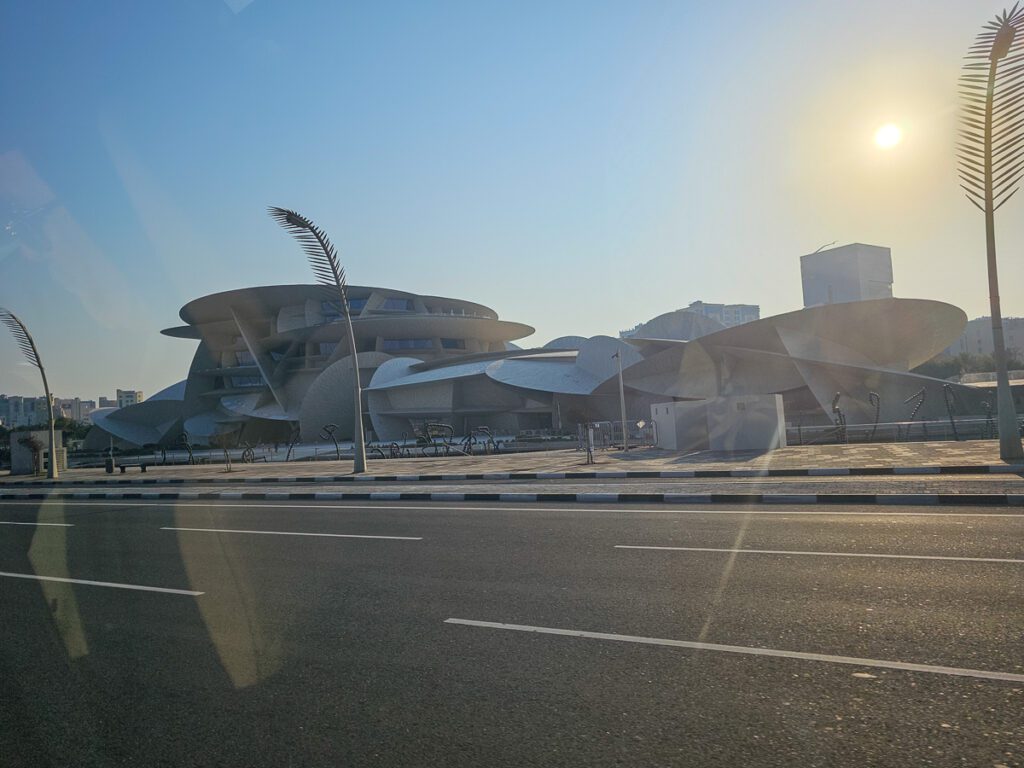
Left: National Museum of Qatar; the architect is Jean Nouvel, who drew inspiration from the Desert Rose (he also designed the Louvre Museum in Abu Dhabi). The desert rose is a crystallized formation from sand grains and gypsum or barite. They grow in clusters resembling flower petals.
This picture was taken as we whizzed by in the car. I love photographing unusual buildings, and if time permits, I will return to photograph this one.
TRAVEL AGENTS, SITES AND SERVICES
Anna at Bin Majid Tourism arranged our trips to Qatar and Oman. See link above for her contact information.