
GYEONBOKGUNG PALACE
We were lucky to visit on the first day of the Hi Seoul festival, so we saw part of the rehearsal at the Palace and also attended the Lantern Festival in the evening, along with other events throughout the day.
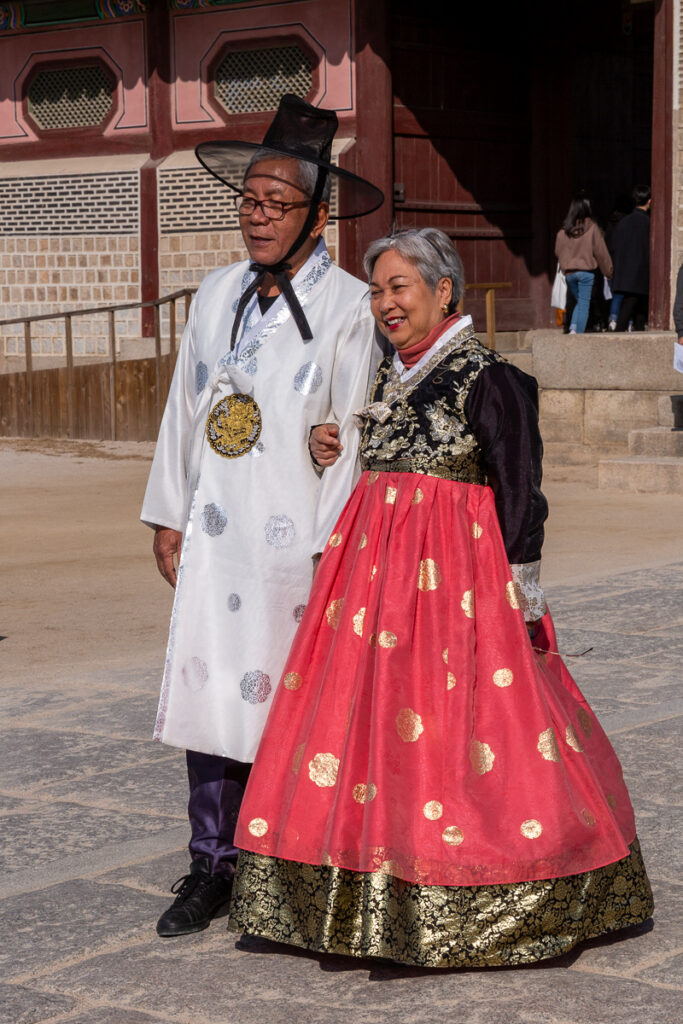
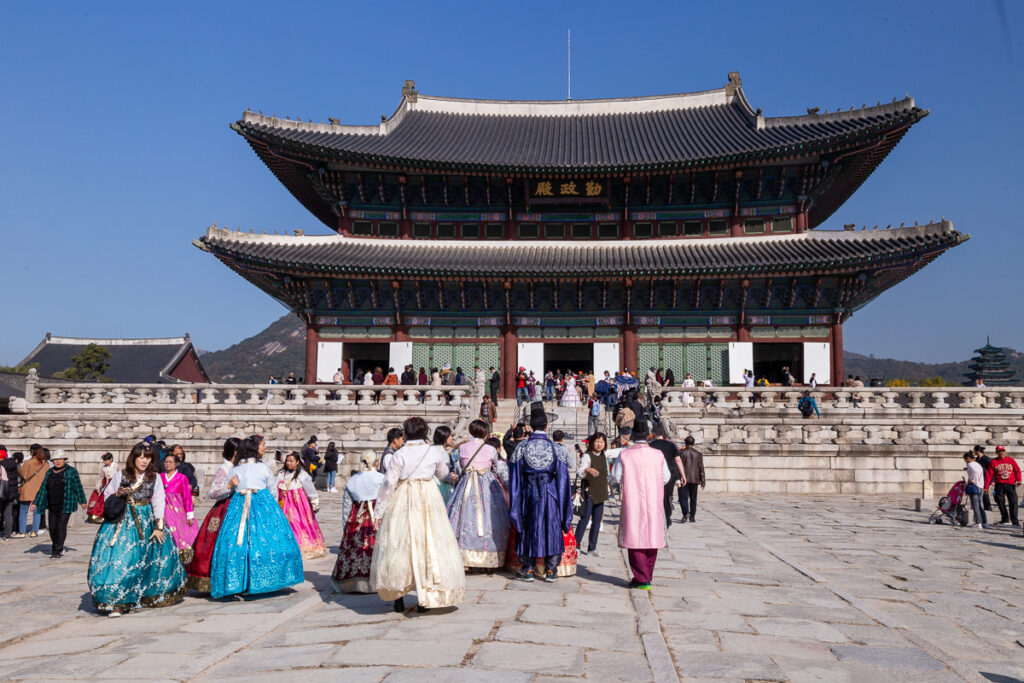
. The Palace faces the Han River, with a mountain behind it. In earlier times, no tall building could be built between the river and the Palace. Many visitors to the Palace wore traditional costumes; it was not just the young but also the elderly who joined in. The costumes were all bright colors with plenty of gold embroidery. Another attraction is free admission for those entering in costume.
Hi Seoul festival. Hi Seoul Festival
Gyeongbokgung Palace. Gyeongbokgung Palace
Drumming – My first video, I aim to do better
The Palace was built in the late 14th Century for the Joseon Dynasty; Most of the Palace was destroyed in the Japanese invasion of Korea in the 16th century.
The grounds originally had 500 buildings, and a restoration began in the 19th century and continues today. Two hundred and fifty of the destroyed buildings have been reconstructed with a projected completion date of all 500 by 2030.
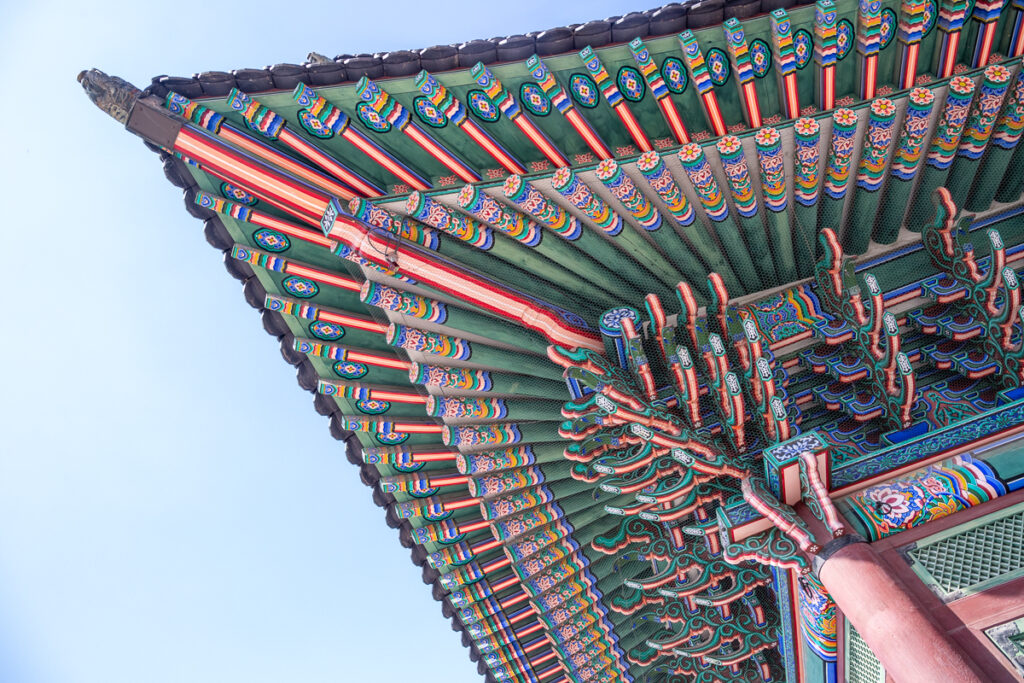
Some interesting facts: the paint on the buildings originally lasted 100 years, but now has to be repainted every 38 years, as the old method of creating paint has been lost over the centuries.
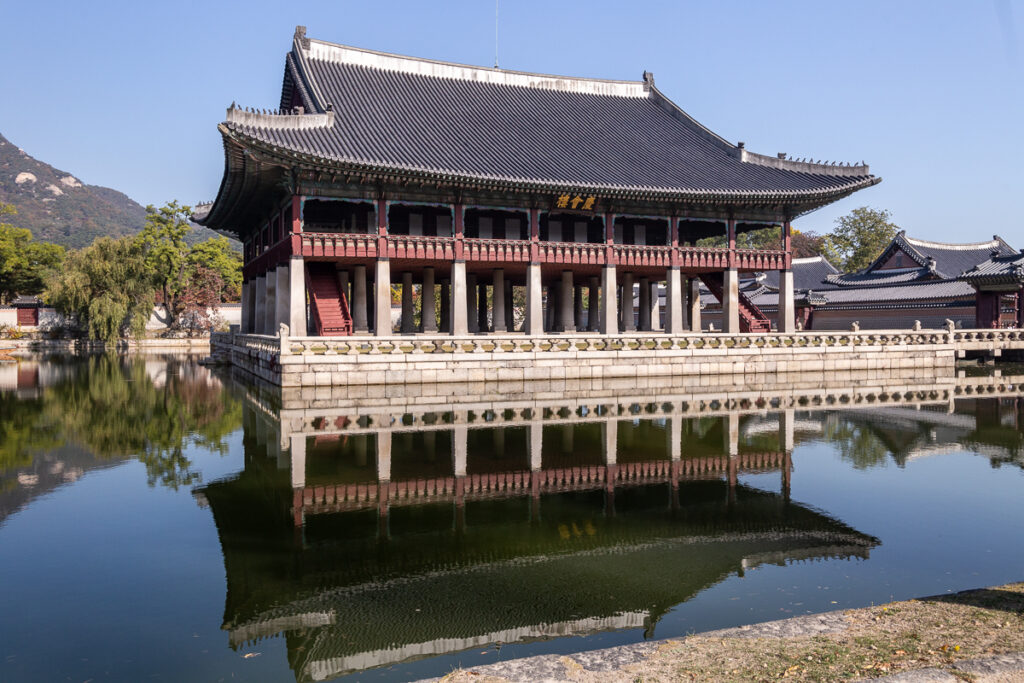
Royal Banquet Hall – still used today & where Queen Elizabeth was greeted.
Animals on all the rooftops were to protect the Palace…

The painting (right) represented the throne, whenever it appeared throughout Korea, the people knew the king was making an appearance.

We also learned that girls and boys were separated during daytime hours after the age of 7 (hopefully my memory is right on that) according to Confucianism. This applied rule also applied to married couples. So at the Palace there were King and Queen buildings.
The King buildings had one for each season and our guide explained the heating of the winter rooms – which was done by starting a fire to heat the 5 laters of stone under the buildings. The Koreans still use a similar modern version of floor heating today. So none of the beds, tables, etc have legs but are directly on the floor.