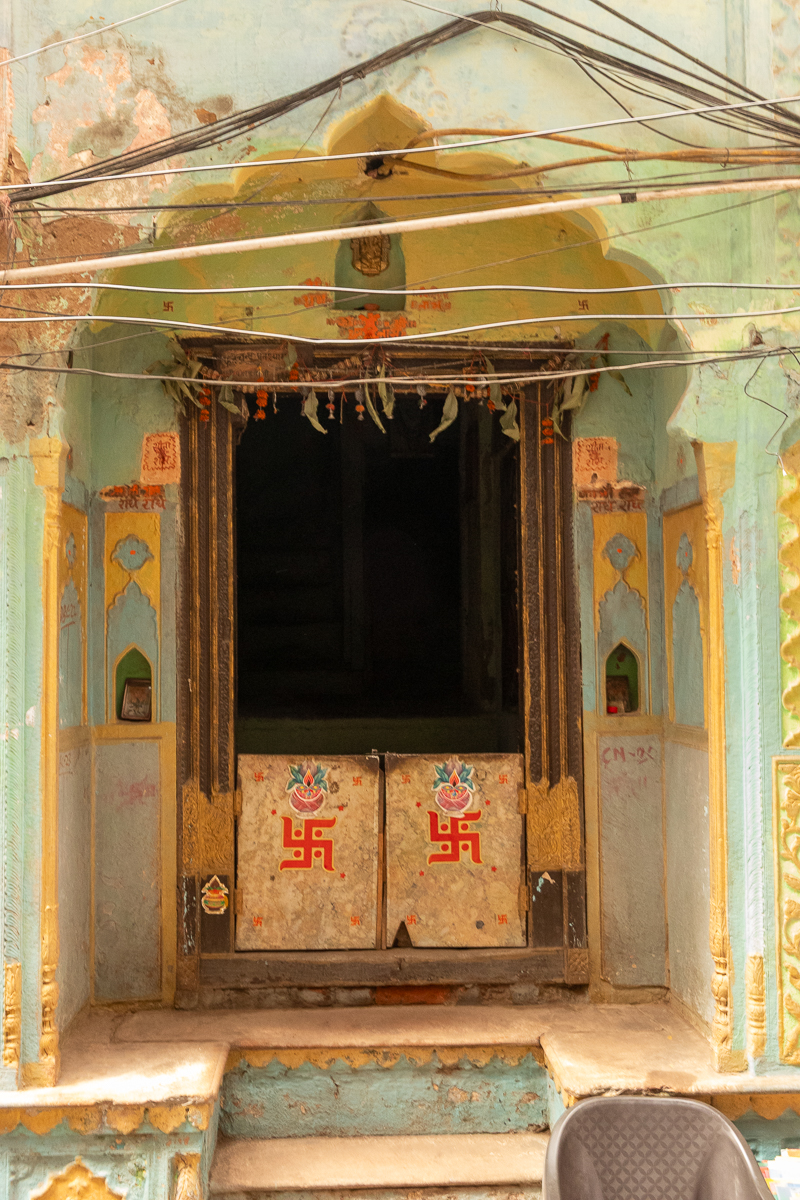
The next door to the right, with the swastikas— a symbol in India that is thousands of years old— is a sacred symbol of good fortune and protection. It goes back to the Indus Valley civilization and early Vedic Culture. It is used in Hinduism and other religions to invite blessings, so you will even see the symbol on wedding invitations. On this door, the swastikas are paired with the marigold and the turmeric marks, all part of the vocabulary of blessings.
The bending of the arms of the Indian swastika has different meanings: clockwise denotes the sun, prosperity, well-being, and the forward movement of life. Most homes use this version to invite good fortune.
The counterclockwise version is usually used in tantric traditions, temple iconography, and sometimes on objects meant to repel harm. Its meanings include protection, the goddess of energy (Shakti), warding off negativity, and representing the more spiritual, inward-seeking side of life.
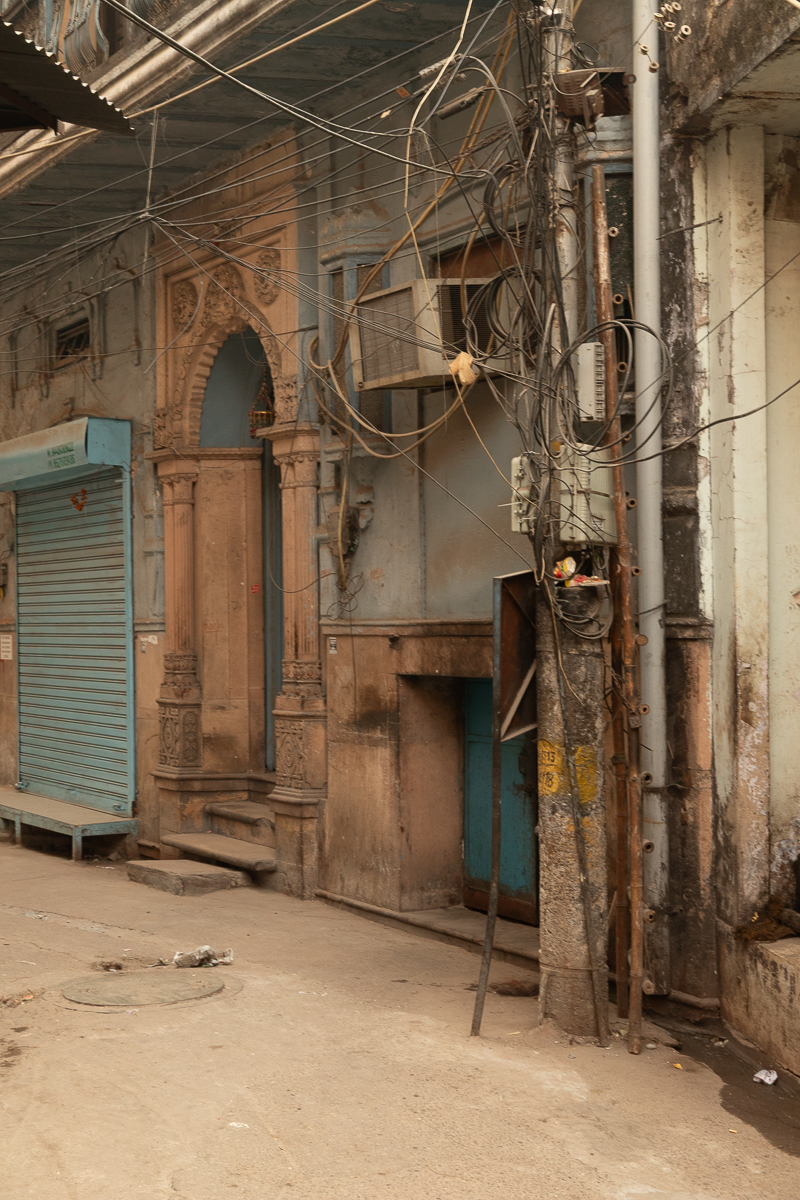
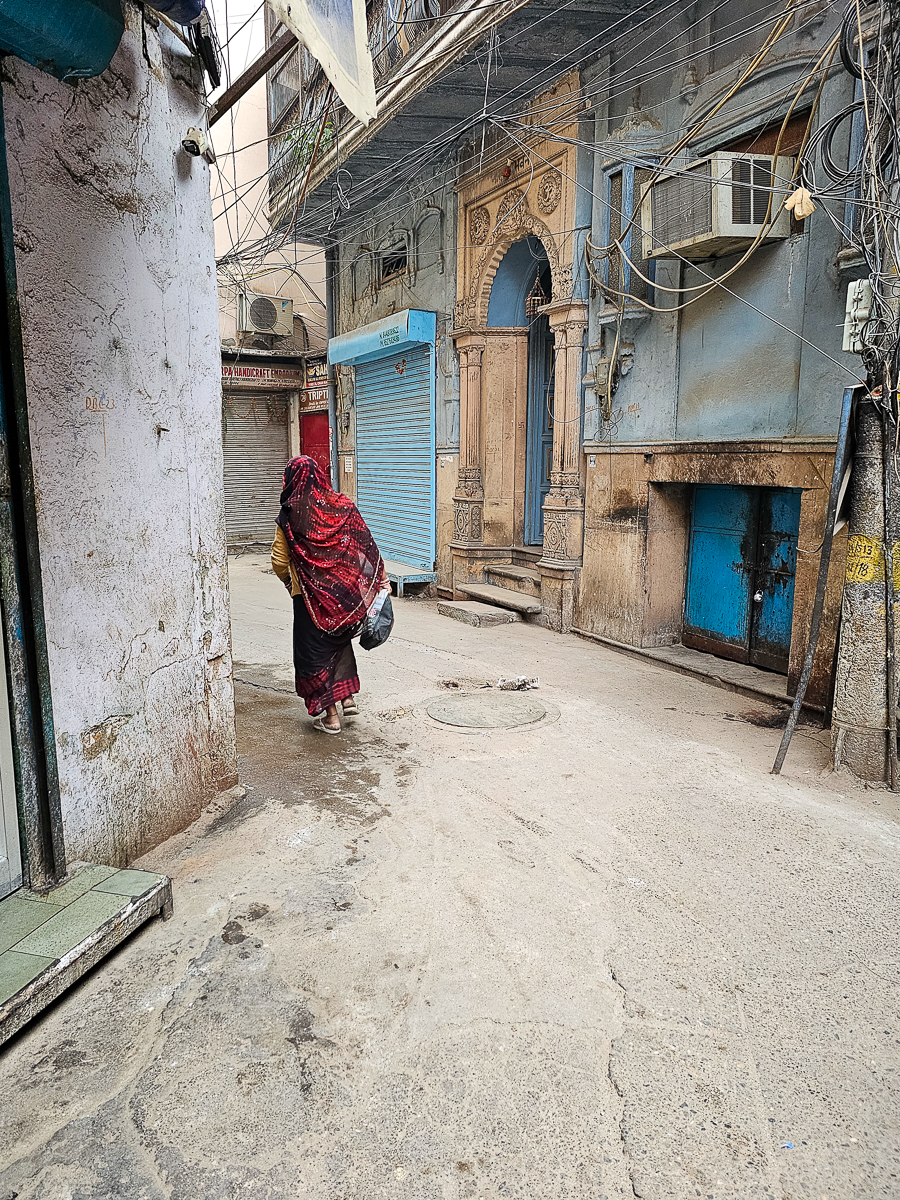
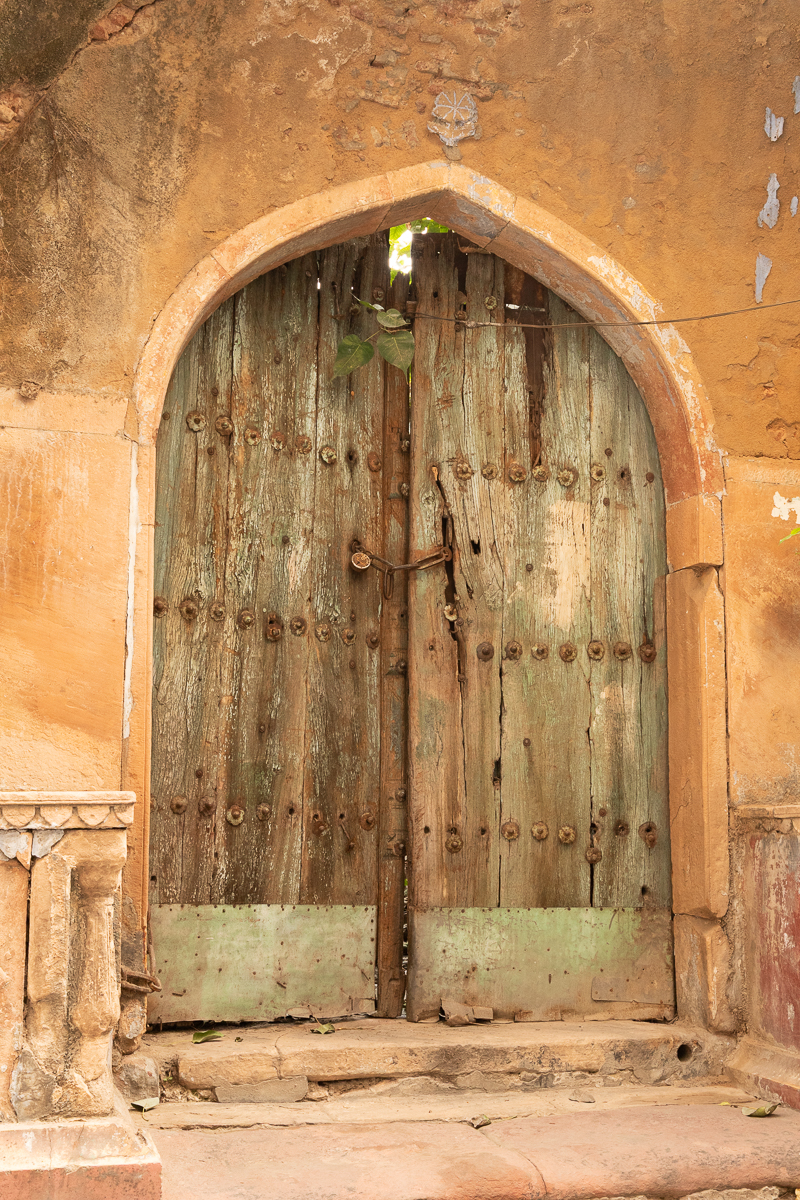
The door next to the one with swastikas has an arch that is not Gothic or Mughai in style but falls somewhere between the two, typical of an Indo-Islamic entrance used in homes or small shrines. The greenish paint on the door, made from old copper-based pigment, is lovely to see.
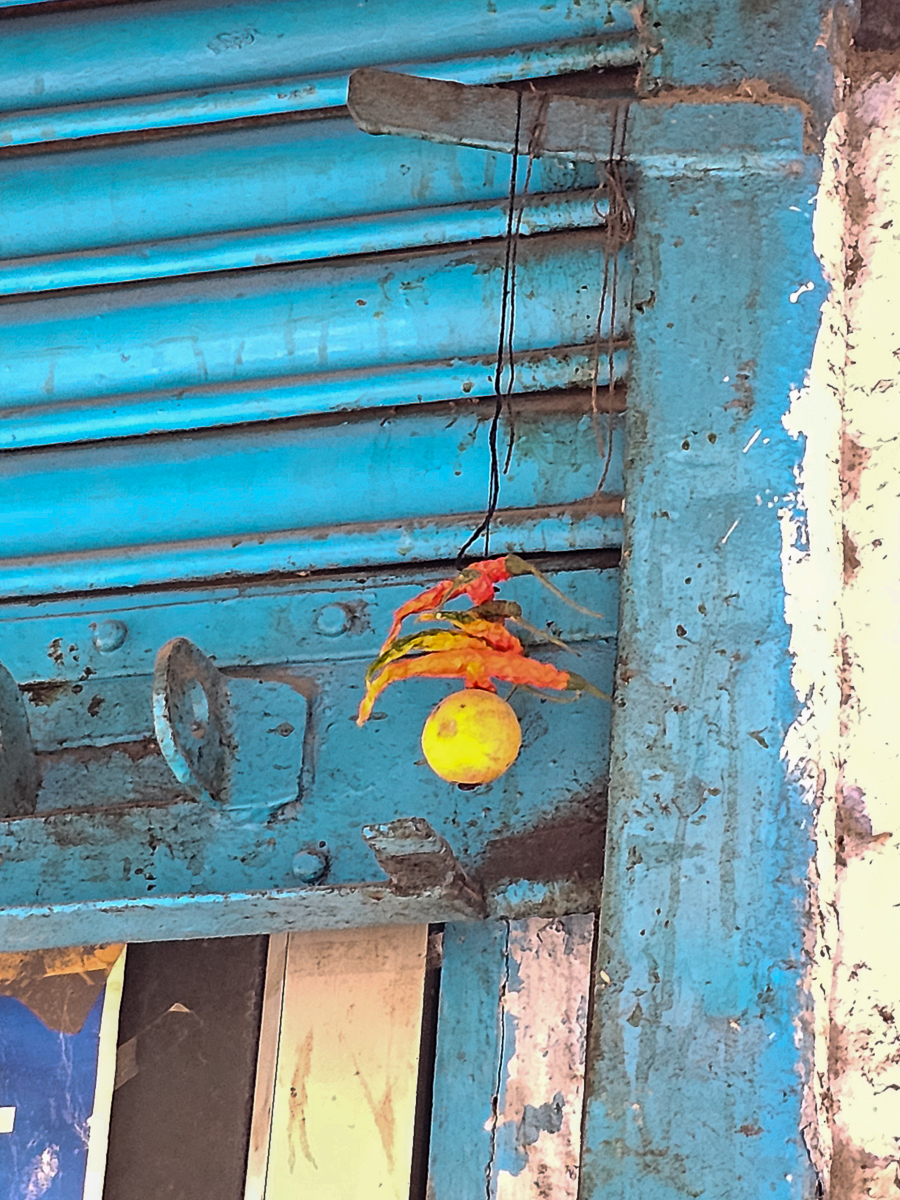
The far-right photo shows a hanging good-luck charm. It is made of lemon and seven chilis called a nimbu-mirchi, a protective talisman hung outside shops and homes across India. It is meant to ward off bad luck, jealousy, or any negative energy; the specific combination of lemon, sour, and chili, spicy, creates a symbolic shield. These are refreshed every few days.